
Orchid Care
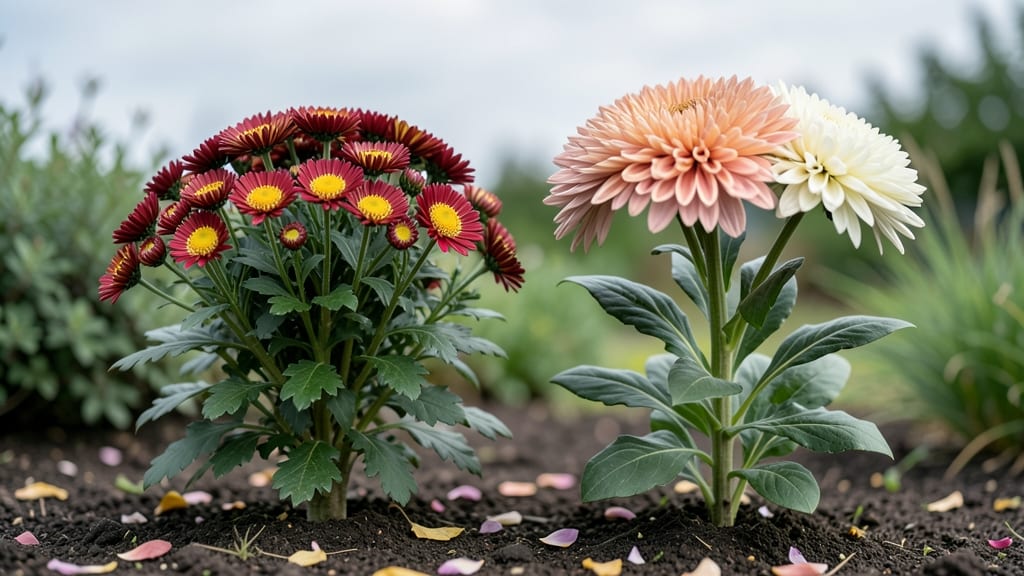
Whether Belgian mums grow as annuals or perennials depends entirely on your climate—frost-sensitive varieties die back in colder regions but return reliably in USDA zones 7-11 with proper winter care.
Your growing zone determines everything: in colder areas, Belgian mums complete their life cycle each year, blooming spectacularly then succumbing to frost. 🌸 In milder zones, these same plants store energy underground during winter, emerging stronger each spring.
The key difference lies in temperature tolerance—most varieties can't survive below 10°F, making winter protection essential even in marginal zones.
What makes this fascinating is how easily you can influence their behavior. A thick layer of mulch or frost cloth can push their hardiness limits, turning an annual into a perennial.
I've seen gardeners in USDA zone 6 successfully overwinter Belgian mums by combining mulching with container growing—proof that with the right techniques, you can extend their lifespan beyond what nature intended.
💡 In This Article
- Climate Factors That Determine Belgian Mum Longevity
- Year-Round Care Tips for Extending Belgian Mum Growth
Climate factors that determine Belgian mum longevity
Belgian mums—those vibrant, garden-favorite chrysanthemums—shift between annual and perennial behavior based on a single critical factor: minimum winter temperatures. The dividing line sits at approximately 10°F, their absolute cold-hardiness threshold.
In USDA zones 7-11, where winter lows rarely dip below this point, Belgian mums develop strong underground rhizomes that store carbohydrates, allowing them to regrow each spring. 🌱 This perennial behavior is nature's way of conserving energy when frost isn't a threat.
The science behind this involves their growth cycle timing. Belgian mums are short-day plants that require 12-14 hours of darkness to initiate flowering, typically in late summer/early fall. In colder climates (zones 1-6), they complete this cycle then die back when frost arrives, behaving as annuals.
However, in frost-free zones, the rhizomes remain dormant but viable through winter, ready to sprout when temperatures rise above 50°F in spring. This explains why the same plant variety can look completely different in neighboring gardens just 50 miles apart.
Soil conditions play a surprising supporting role in this climate adaptation. Well-draining soil with organic matter helps rhizomes establish deeper root systems, giving them better cold resistance.
In heavy clay soils, moisture retention can actually increase frost damage by keeping roots too cold for too long. 💧 The ideal soil mix combines loam with compost, creating a microclimate that protects these delicate underground structures.
This is why gardeners in marginal zones (like zone 6) often see better perennial results when amending their native soil.
What most people overlook is how day length variations interact with temperature. In northern latitudes, shorter winter days combined with cold temperatures create a double threat—both the plant's biological clock and its physical resilience are challenged.
This is why Belgian mums in zone 5 might bloom beautifully in their first year but fail to return, while identical plants in zone 8 thrive annually. The solution? Selecting varieties bred for your specific latitude can make a 20-30% difference in winter survival rates.
Consider this real-world example: In Austin, Texas (zone 8b), Belgian mums planted in fall will often return for 3-5 years without intervention, while identical plants in Denver, Colorado (zone 5b), require annual replanting. The difference? Austin's winters rarely drop below 15°F, while Denver's can hit -10°F.
This temperature gap explains why gardeners in warmer climates can be more casual about care, while northern growers must treat them as annuals or implement serious winter protection.
Even in marginal zones, understanding these climate interactions lets you push the limits. For instance, planting Belgian mums in containers allows you to move them to sheltered locations during winter, effectively creating a microclimate that mimics zone 8 conditions.
This simple technique can transform an annual into a multi-year performer in zones as cold as 5b. 🌿 The key is recognizing that while climate sets the baseline, your gardening choices determine the outcome.