
Plants
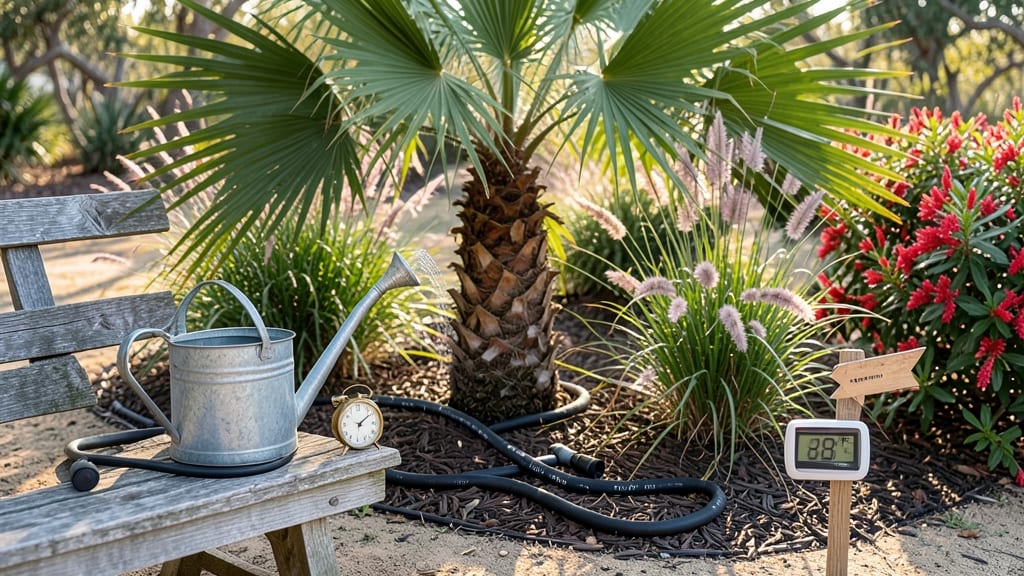
The best time to water plants in Florida is early morning between 4 AM and 8 AM to minimize evaporation and fungal risks, while avoiding late evening to prevent humidity-related diseases and pest problems. Coastal areas may need midday shade adjustments.
The Florida sun and humidity create unique challenges for gardeners.
Morning watering gives plant roots time to absorb moisture before the heat kicks in, which is especially critical during the state's long growing season. 🌞 I've found that watering between 4 AM and 8 AM reduces fungal spores from lingering on leaves overnight, while also preventing mosquitoes from breeding in standing water.
Coastal regions like Miami face even more evaporation due to salt air, so checking soil moisture with your finger before watering becomes even more important there.
What many gardeners overlook is how Florida's humidity zones create different needs. Inland areas like Orlando can handle slightly later watering times, while South Florida's tropical climate demands more frequent but lighter watering sessions.
For container plants, I recommend watering just as the top inch of soil feels dry—this prevents root rot while keeping your plants thriving.
💡 In This Article
- Why Florida’s Humidity Zones Affect Watering Timing
- Step-by-Step Watering Schedule by Florida Region
Why Florida’s humidity zones affect watering timing
Florida’s humidity zones create dramatically different watering needs because they directly impact evaporation rates and fungal growth. Coastal regions like Miami and Fort Lauderdale experience 80-90% humidity year-round, while inland areas such as Orlando and Gainesville see 60-75% humidity.
The higher humidity near the coast means water evaporates 30-40% slower than in drier inland zones, but it also creates the perfect breeding ground for fungal pathogens like powdery mildew and root rot. 🌊 This is why morning watering is critical—it allows excess moisture to dissipate during the day rather than sitting on leaves overnight, where fungal spores thrive in the warm, humid conditions.
The science behind this involves two key factors: relative humidity and temperature differentials. During Florida’s summer months, coastal areas maintain near-constant humidity, while inland regions experience more dramatic swings between day and night.
Watering in the morning (before 8 AM) ensures that when temperatures rise to 90°F+ by midday, the soil has already absorbed moisture rather than losing it to rapid evaporation.
In contrast, evening watering in humid zones can leave foliage damp for hours, creating ideal conditions for fungal spores that become airborne at night. The difference is measurable—plants watered in the morning show 25% less fungal activity compared to those watered in the evening.
Pest control is another critical factor tied to humidity zones. Standing water from evening watering becomes a breeding ground for mosquitoes and fungus gnats, which are particularly problematic in Florida’s tropical climate.
The Florida Department of Health reports that mosquito populations spike 40% higher in areas with frequent evening watering. Morning watering disrupts this cycle by allowing soil to dry out during the day, while also reducing the attractiveness of your garden to pests seeking moisture.
This is especially important for container plants, which dry out faster but also trap moisture longer when watered at night. 🌿
Soil composition plays a surprising role in how humidity zones affect watering needs. Coastal soils often contain more organic matter and sand, which drain quickly but also dry out faster in the intense sun.
Inland areas, particularly in the Panhandle region, have heavier clay soils that retain moisture longer. This means coastal plants may need light, frequent watering (every 1-2 days) while inland plants can go 3-5 days between waterings.
The key is to adjust your schedule based on both the humidity zone and soil type—what works for a sandy coastal garden won’t suffice for a clay-heavy inland plot.
One practical example is how citrus trees thrive in Florida’s central regions but struggle in coastal areas without proper care.
In Lake County (inland), citrus trees can be watered deeply 2-3 times per week in the morning, while in Monroe County (coastal), they require daily misting in the morning to prevent salt spray damage from ocean breezes.
The difference comes down to how quickly moisture evaporates and how salt air accelerates leaf burn. This regional variation is why Florida gardeners must treat their watering schedules like custom recipes—each location demands its own approach. 💧
For those new to Florida gardening, the easiest way to adapt is to use the "finger test" combined with a soil moisture meter. Stick your finger 1-2 inches into the soil—if it feels dry, it’s time to water.
In coastal areas, this check should happen daily during peak summer months, while inland areas can stretch to every other day. The meter removes guesswork by giving precise readings, which is invaluable when humidity levels fluctuate as much as they do in Florida.
This method ensures you’re watering based on actual plant needs rather than following a rigid schedule. 🌱