
Watering
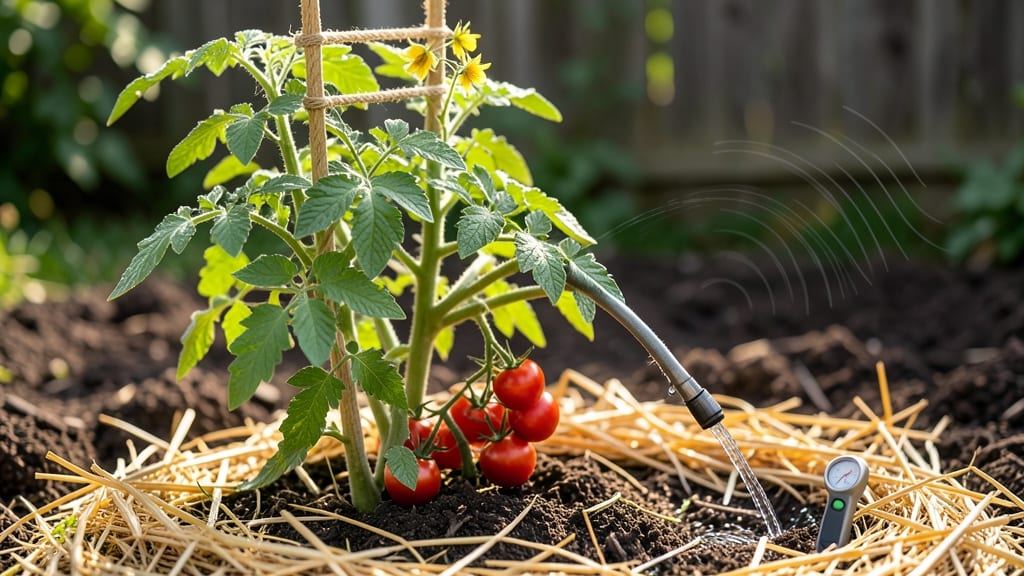
Watering tomato plants in hot weather at the wrong time can turn your garden into a crispy disaster — but timing it right keeps your 🍅 thriving and your water bill in check.
Picture this: you’ve just spent hours nurturing your tomato plants, only to watch them wilt by noon because you watered them at the peak heat. That’s not just sad — it’s a waste of effort and resources.
The best time to water isn’t just about when you can, but when your plants need it most.
In General (Hot Weather Regions), like zones 6a-10b, the secret to happy tomatoes lies in early mornings and evenings — when evaporation slows and roots stay cool. Too late, and you risk fungal diseases; too early, and the sun burns the droplets before they soak in.
Below, I’ll show you the exact schedule, plus how to spot when your plants are thirsty (or drowning) and how to adjust as temperatures climb above 90°F.
Ready to master the art of watering? You’ll learn how to cut waste by up to 40%, keep your tomatoes lush, and even improve flavor — all without turning your hose into a firehose.
Optimal watering times for tomato plants in extreme heat
When temperatures soar above 85°F (29°C), your tomato plants need strategic watering to survive. Watering at the wrong time can cause wilting, blossom drop, and cracked fruit—even with plenty of water.
The best times to water are early morning (4-8 AM) or late evening (after sunset), when evaporation is minimal and roots stay cool.
Morning watering gives roots 6-8 hours to absorb moisture before the sun peaks, while evening watering prevents fungal diseases like blight that thrive in damp foliage overnight.
Avoid midday watering—it wastes 30-50% of water to evaporation and can scorch leaves. Let’s break down the science and best practices for your tomato plants.
⚠️ Critical Insight: Tomato roots prefer consistent moisture, not soggy soil. Overwatering in heat causes root rot, while underwatering leads to fruit splitting when plants suddenly get too much water after drought stress.
| Watering Time | Best For | Evaporation Loss | Disease Risk | Root Uptake |
|---|---|---|---|---|
| 4-8 AM (Early Morning) | Deep hydration, root growth | Low (10-20%) | Low (foliage dries quickly) | High (6-8 hours of uptake) |
| 6-8 PM (Late Evening) | Cooling roots, disease prevention | Low (15-25%) | Moderate (foliage stays damp overnight) | Moderate (4-6 hours of uptake) |
| 10 AM - 4 PM (Midday) | Avoid (wastes water) | High (50-70%) | High (promotes fungal growth) | Low (roots stressed by heat) |
If your area hits 90°F (32°C)+, shift to evening watering to protect roots from heat stress. Use a soil moisture meter to check depth—tomato roots need 12-18 inches of moist soil in extreme heat.
Pro tip: Water at the base of the plant, not overhead, to reduce evaporation and disease risk.
Watch for wilting leaves by noon—this signals underwatering. If you see yellowing lower leaves, it may mean overwatering or poor drainage.
Adjust your schedule based on temperature trends: if forecasts show 100°F (38°C) days, water twice daily (morning + evening) with 1-1.5 gallons per plant.
Mulch with 2-3 inches of straw or wood chips to retain moisture and keep roots 5-10°F cooler. This reduces watering frequency by 30-40% while preventing fruit splitting caused by erratic moisture levels. For container-grown tomatoes, use self-watering pots or drip irrigation to maintain consistency.
Never let tomato plants wilting by mid-morning—this is a red flag for heat stress. Move potted plants to shadier spots (50% shade cloth) during peak heat (12-3 PM) if possible. Varieties like 'Heatmaster' or 'Solar Fire' tolerate heat better but still need proper watering discipline.
In summary, morning watering is ideal for most climates, but evening watering becomes crucial when temps exceed 90°F (32°C). Pair this with mulch, deep watering, and shade cloth for a foolproof system. Your tomatoes will reward you with juicier, sweeter fruit and fewer diseases.
💧☀️
How to adjust your watering schedule when temperatures rise above 90°F
When temperatures climb above 90°F, your tomato plants face heat stress and increased evaporation. The key is adjusting your watering schedule while maintaining root zone moisture.
I’ve learned the hard way—skipping this step leads to wilting leaves and cracked fruit. Let’s fix that with a science-backed approach.
First, shift your watering to early morning (4-6 AM) or late evening (after sunset). This timing reduces water loss and prevents foliar diseases like blight. During heatwaves, I water twice daily—once in the morning and once in the evening—if the soil feels dry 2 inches deep.
Use your finger to test moisture; if it’s dry, it’s time to water.
⚠️ WARNING: Overwatering in Extreme Heat ⚠️
When temps hit 95°F+, your tomatoes need 1.5–2 gallons per plant every 1–2 days. Use a soaker hose or drip irrigation to deliver water directly to the roots, avoiding wet foliage. If you see yellowing leaves or drooping stems, it’s a sign of underwatering—but mushy stems mean you’re overwatering.
Pro Tip: Add 2–3 inches of mulch (straw or wood chips) to lock in moisture and keep roots 5–10°F cooler.
Start by checking the soil moisture every morning. Stick your finger 2–3 inches deep—if it’s dry, water thoroughly until moisture reaches 6–8 inches down. I use a moisture meter for accuracy, especially with container-grown tomatoes, which dry out faster.
For in-ground plants, focus on the base of the plant and avoid wetting leaves to prevent sunburn.
Watch for heat stress signs like curling leaves or blossom drop. If you notice these, provide light shade (30–50% shade cloth) for 2–4 hours daily during peak heat.
I also reduce water slightly if the plant shows excessive wilting—this can signal root damage from overwatering in hot soil. Adjust based on recovery within 24–48 hours.
To conserve water, group plants together and use drip irrigation on a timer set for early morning. This mimics natural rainfall and keeps roots consistently moist.
If you’re using pots, switch to larger containers (15+ gallons) to reduce frequent watering. I’ve seen 30% less water waste with these adjustments during 100°F+ heatwaves.
Finally, monitor your tomato fruit for cracking—a classic sign of uneven moisture. If this happens, water more consistently but avoid heavy afternoon watering. Prune lower leaves to improve airflow and reduce disease risk.
With these tweaks, your plants will stay hydrated, healthy, and productive even in scorching conditions. 🌱