
How To
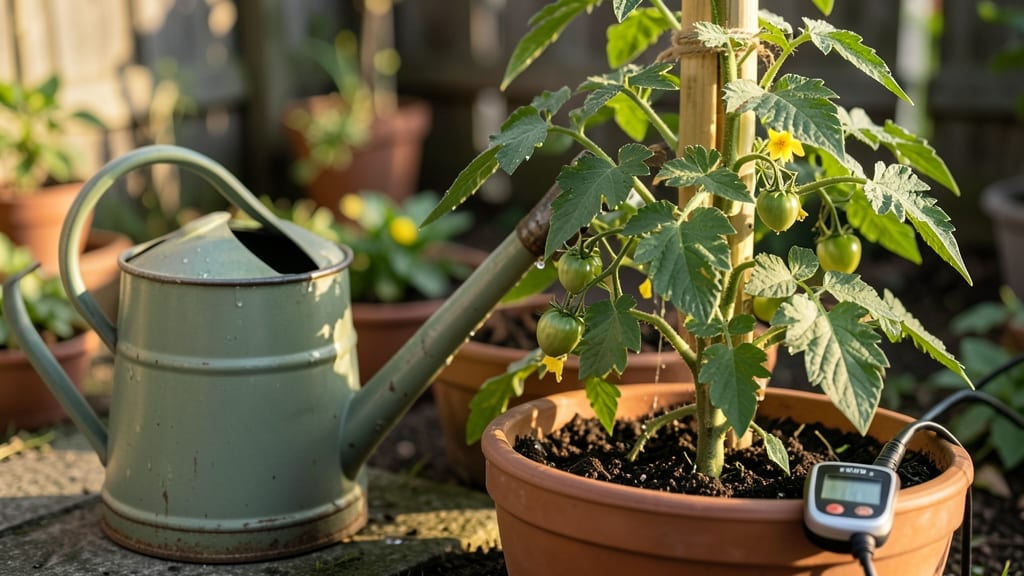
Watering potted tomato plants the right way ensures your 🍅 vines thrive and produce juicy fruit—because inconsistent moisture kills more container-grown tomatoes than pests ever will.
Here’s the hard truth: Overwatering or underwatering potted tomato plants can kill your harvest faster than blight—so mastering the right watering schedule is non-negotiable for thriving vines and juicy tomatoes.
Think you’re doing it right? Many gardeners water based on guesswork, leading to soggy roots or wilted leaves. The key is checking soil moisture daily with a simple finger test, adjusting for pot size, climate, and even the season.
In this guide, I’ll break down the exact watering routine for your potted tomatoes—from the 1-2 finger test to seasonal tweaks—so you never over- or under-water again.
The 1-2 finger test: the science-backed method to water potted tomatoes
Guessing how often to water potted tomato plants is like playing Russian roulette with your harvest—one wrong move, and you're either drowning roots or leaving them parched.
The 1-2 finger test is my go-to method because it cuts through the guesswork, using simple science to tell you exactly when your tomatoes need hydration. Unlike rigid schedules, this approach adapts to your pot size, climate, and even the tomato variety you're growing.
Here's why this method works: Tomato roots thrive in consistently moist (not soggy) soil, and potted plants dry out faster than in-ground ones. The 1-2 finger test checks moisture at the root zone—where it matters most—without overcomplicating things.
Plus, it accounts for factors like terracotta pots (which dry quicker) versus plastic containers (which retain moisture longer). Let's dive into the step-by-step process so you can master it too.
How Often to Water Potted Tomato Plants: Step-by-Step Guide
- 🌱 Step 1: Choose the Right Time – Test soil in the morning (6-9 AM) when evaporation is lowest. Avoid checking after watering or in extreme heat.
- 👆 Step 2: Insert Your Finger – For small pots (under 5 gallons), use your index finger (1 inch deep). For large pots (5+ gallons), use your index + middle finger (2 inches deep).
- 💧 Step 3: Check Moisture Level –
- Dry (no moisture): Water immediately.
- Slightly damp (moisture but not wet): Water in 1-2 days.
- Wet (water beads on finger): Wait 2-3 more days.
- 🌡️ Step 4: Adjust for Climate –
- Hot/dry days: Water every 1-2 days (test daily).
- Humid/rainy: Extend to 3-4 days between tests.
- Indoor pots: Reduce frequency by 20% (less evaporation).
- ✅ Step 5: Water Correctly – When watering, soak until water runs out drainage holes. Use room-temperature water to avoid shocking roots.
- 📅 Step 6: Track Patterns – Keep a watering journal for 2 weeks. Note pot size, location, and weather to refine your schedule.
This method beats the "water every other day" advice because it’s dynamic. A 5-gallon pot in full sun might need watering daily in July, while the same pot in partial shade could go 3 days.
The key is consistency at the root zone, not a one-size-fits-all approach. Ignoring these nuances is how you end up with blossom end rot (from uneven moisture) or root rot (from overwatering).
Pro tip: If your tomato leaves start curling upward during the day, it’s often a sign of underwatering. But wait until morning to test—afternoon heat can trick you into thinking the soil is drier than it is.
Always let the soil cool slightly before checking moisture levels for accurate results.
Another common mistake? Watering just the top inch of soil. Tomatoes have deep roots, and surface moisture evaporates quickly. That’s why the 1-2 finger test targets the lower 1-2 inches, where the roots actively absorb water.
Think of it like checking your pulse—you don’t just feel the surface, you go deeper to get the full picture.
For container-grown tomatoes, pot material matters too. Terracotta pots dry out faster because they’re porous, so you’ll need to water more frequently than in plastic or resin containers, which trap moisture.
If you’re using a self-watering pot, the test still applies—but reduce frequency by 30% since these systems regulate moisture better. Always drain excess water after 10 minutes to prevent soggy roots.
Seasonal shifts also demand adjustments. In spring, when tomatoes are establishing roots, they need less frequent but deeper watering (every 2-3 days). But once they’re flowering and fruiting (summer), increase frequency to daily or every other day—especially if you’re growing heirloom varieties, which are thirstier.
Pay attention to your plant’s growth stage and tweak accordingly.
Finally, don’t rely solely on a calendar. Factors like humidity, wind exposure, and even the color of your pot (dark pots absorb heat and dry soil faster) can change your watering needs.
The 1-2 finger test keeps you flexible, ensuring your potted tomatoes stay hydrated without the risk of over- or under-watering. Master this, and you’ll be harvesting plump, juicy tomatoes all season long.
Watering schedule by season: adjusting frequency for heat, rain, and growth stages
Your potted tomato plants need different watering approaches depending on the season and growth stage. In spring, focus on establishing roots with consistent moisture, while summer demands daily checks to prevent wilting. Clay pots dry faster than plastic, so adjust accordingly—especially when temperatures rise above 85°F.
During early growth (first 4-6 weeks), water every 1-2 days to encourage root development. Once flowering begins, increase frequency to daily or every other day—tomatoes need steady moisture for fruit set. Rainy seasons reduce watering needs, but always check soil moisture first to avoid root rot from overwatering.
| Season | Growth Stage | Watering Frequency (Potted) | Pot Material Note |
|---|---|---|---|
| Spring | Seedling/Vegetative | Every 1-2 days | Clay: Check daily; Plastic: Every 2 days |
| Summer | Flowering/Fruiting | Daily (morning) | Both: Mulch to retain moisture |
| Fall | Harvest | Every 2-3 days | Reduce by 30% |
| Rainy Season | All Stages | Check soil; skip if damp | Clay: Dries faster; Plastic: Holds moisture |
In drought-prone areas, move pots to shaded spots midday to slow evaporation. Morning watering is critical—it reduces fungal diseases like blight by keeping foliage dry.
For container sizes, larger pots (10+ gallons) need watering every 2-3 days, while small pots (1-3 gallons) dry out faster and require daily checks.
Watch for wilting leaves or yellowing as signs of underwatering, but soggy soil or drooping stems signal overwatering. Adjust your schedule weekly based on weather patterns—heatwaves mean more frequent watering, while cool spells allow longer intervals. Always water until drainage holes release excess moisture.
Pro tip: Use a moisture meter for precise readings, especially in plastic pots where soil stays damp longer. Mulch with straw to lock in moisture and reduce evaporation by up to 30%. Consistency is key—fluctuating moisture stresses plants and stunts fruit production.
Remember, potted tomatoes rely entirely on you for hydration. Seasonal shifts and growth demands mean your watering routine should evolve alongside your plants. Stay attentive, and your vines will reward you with bountiful harvests all season long. 🌱💧☀️