
Advice
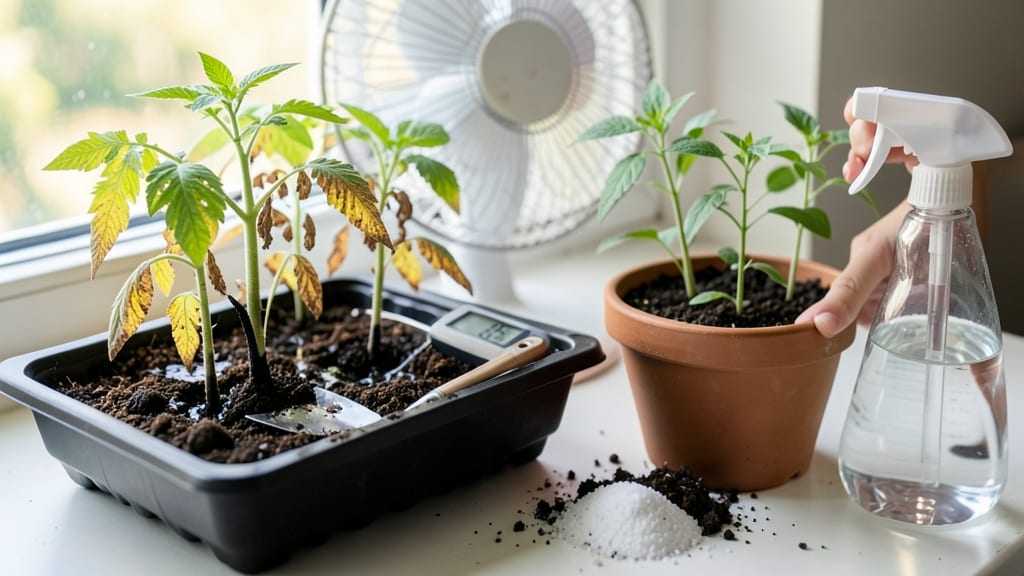
Overwatered seedlings often recover if you act fast, but if roots turn black or smell foul, the damage may be permanent. Snip away rotted roots, replant in dry, well-draining soil, and cut back on watering to let them breathe. Keep a close eye for any signs of new growth.
Overwatering creates a suffocating environment where roots can't breathe, leading to rot and fungal infections like Pythium. 🌱 The key to revival is catching it early—within 24-48 hours—before the roots turn mushy or develop that classic foul odor.
I've seen seedlings bounce back after repotting in a mix of perlite and coco coir, which drains excess moisture while retaining just enough humidity. The trick is patience: some plants show improvement within days, while others may take weeks to fully recover.
For severe cases, consider a hydroponic setup with nutrient-rich water to give roots a fighting chance. This method bypasses soil-borne pathogens while providing direct access to oxygen and food.
Always test soil moisture with your finger before watering—if it's still damp after 24 hours, hold off until it's dry to the touch.
💡 In This Article
- How Overwatering Damages Seedling Roots
- Step-by-Step Rescue Guide for Overwatered Seedlings
How overwatering damages seedling roots
When seedlings receive too much water, their roots suffocate because excess moisture displaces the vital oxygen they need to respire. In normal conditions, roots consume oxygen to break down sugars for energy, but when submerged or saturated, they switch to anaerobic respiration—producing toxic ethanol as a byproduct.
This process, called fermentation, weakens cell walls and leads to root collapse within 24-48 hours of prolonged saturation.
The damage isn't just physical—waterlogged soil also creates the perfect breeding ground for fungal pathogens like Pythium and Phytophthora. These microbes thrive in anaerobic conditions, releasing enzymes that dissolve root cell membranes.
You'll notice this as black, mushy roots that crumble at the touch, often accompanied by a foul, sour odor. The fungus spreads rapidly through soil moisture, cutting off the seedling's ability to absorb water and nutrients, which is why recovery becomes nearly impossible once these pathogens establish.
Even without fungal invasion, overwatering disrupts the delicate balance of soil microbes that help roots absorb nutrients. Beneficial bacteria and mycorrhizal fungi, which normally form symbiotic relationships with roots, become inactive in waterlogged conditions.
This nutrient starvation causes leaves to yellow (chlorosis) and stems to weaken, making seedlings more susceptible to physical stress like wind or handling. The visual cues—soggy soil, limp stems, and a general "washed-out" appearance—are your first warning signs that roots are struggling.
What most gardeners don't realize is that the damage often starts at the root tips first. These are the youngest, most active parts responsible for water and nutrient uptake, and they're the first to die off when oxygen levels drop below 5%—a threshold reached in many overwatered containers.
The roots then begin to rot inward, creating hollow channels that make the entire root system vulnerable to collapse. This is why even a brief period of overwatering can have long-term consequences if not addressed immediately.
Consider this: a healthy seedling root system maintains a balance of 20-30% air space in the soil. When you overwater, that air space fills with water, reducing oxygen availability by up to 90%. The roots essentially "drown" because they can't perform cellular respiration efficiently.
This is why repotting in a well-draining mix—like a 50/50 blend of perlite and peat moss—can make such a dramatic difference in recovery rates. The key is restoring that critical air-to-water ratio to give roots a chance to heal.
One of the most telling signs of overwatering damage is how the roots feel when you gently separate them from the soil.
Healthy roots should be firm with a slight white or tan color, while damaged roots will be dark brown or black, slimy to the touch, and may even fall apart when handled.
This physical test is your best indicator of whether recovery is still possible or if the seedling has reached the point of no return.