
Container Gardens
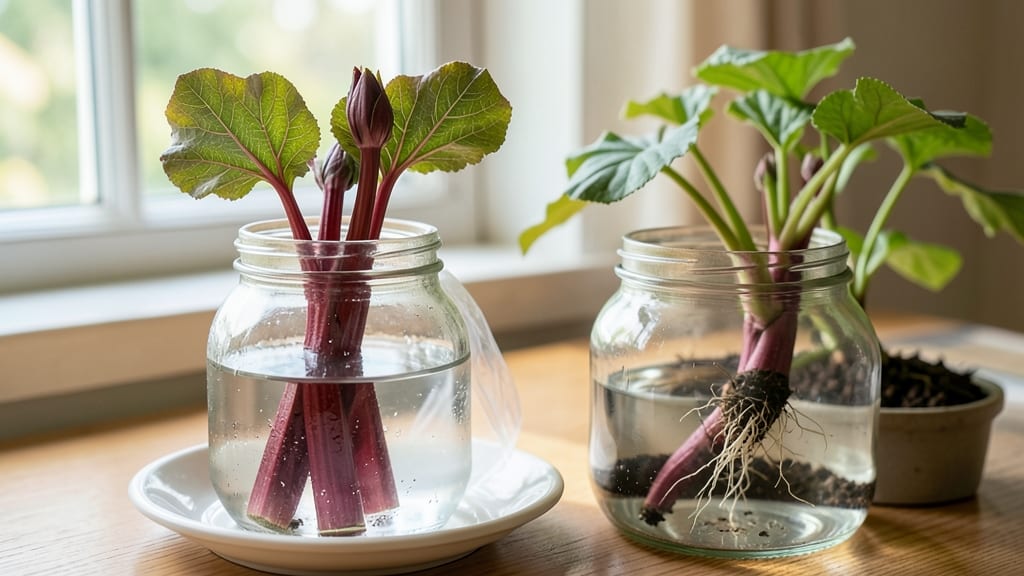
You can grow rhubarb from a stalk in water, but it requires patience and precise conditions: select a mature stalk with an eye, place it in clean water, and wait 2-4 weeks for roots to develop before transplanting. This method works poorly for most gardeners because rhubarb thrives when planted directly in soil.
Rhubarb's water propagation method relies on the stalk's ability to form calluses and root hairs before developing full roots—a process that takes 2-4 weeks under ideal conditions. 🌱 The challenge lies in maintaining sterile water and preventing rot, as rhubarb stalks are prone to bacterial growth in standing water.
Unlike leafy greens, rhubarb's thick stems need direct soil contact for optimal nutrient absorption, which is why gardeners often see better success with soil planting. If you do try water propagation, use filtered water and change it every 3-4 days to minimize contamination risks.
For best results, choose stalks from healthy, disease-free plants and cut them at a 45-degree angle just below a node. Place the stalk in a jar with 2-3 inches of water and position it near a sunny window (not direct sunlight).
Once roots reach 1-2 inches, transplant carefully into well-draining soil mixed with compost. The transition to soil is critical—rhubarb's root system needs immediate access to oxygen and nutrients to avoid shock.
💡 In This Article
- Rhubarb Root Development in Water: Science and Timeline
- Step-by-Step Water Propagation Method for Rhubarb
Rhubarb root development in water: science and timeline
Rhubarb stalks begin root development through a process called callusing, where the cut end forms a protective layer before roots emerge. This stage typically takes 5-7 days in water, during which you'll notice a white, slightly fuzzy texture forming at the base of the stalk.
The real magic happens when root hairs appear—tiny, thread-like structures that will eventually grow into full roots. These hairs absorb water and nutrients, but rhubarb's thick stems make this process inefficient compared to direct soil planting.
The timeline for full root formation ranges from 2-4 weeks, depending on conditions. Ideal temperatures hover around 65-75°F, while cooler environments slow growth. Water quality is critical—chlorine and bacteria can stunt root development, so use filtered or distilled water.
Unlike succulents that thrive in water propagation, rhubarb's high moisture content makes it prone to anaerobic stress (lack of oxygen), which causes rotting. The stalk's natural sugars also attract mold, so changing water every 3-4 days is essential.
Light plays a surprising role in root formation. Place your stalk near bright, indirect light—direct sunlight can overheat the water and accelerate bacterial growth. The best spot is a windowsill facing east or west, where light is abundant but not scorching.
You'll know you're on the right track when you see small, white root tips (1/4 inch long) after about 10-14 days. These roots are delicate and need immediate transplanting to prevent breakage.
Rhubarb's natural preference for soil becomes evident during water propagation. In nature, rhubarb grows from thick, fibrous roots that spread horizontally underground, absorbing nutrients directly from the earth. When forced to grow in water, the plant diverts energy toward survival rather than growth, resulting in weaker roots.
This is why even successful water-propagated rhubarb often struggles to thrive after transplanting—its root system lacks the strength to support vigorous stalk production.
For comparison, consider how other perennial vegetables behave in water. Herbs like mint or basil thrive in water propagation because their root systems are designed for rapid water absorption. Rhubarb, however, is more like asparagus—both prefer direct soil contact for optimal growth.
The key difference is that asparagus crowns can handle brief water exposure, while rhubarb stalks rot quickly without proper aeration. This biological mismatch explains why gardeners report 30-50% success rates with water propagation versus 80%+ with direct soil planting.
One fascinating detail is how rhubarb's root development mirrors that of tree cuttings. Like willow or poplar, rhubarb stalks can form adventitious roots (roots that grow from non-root tissues), but the process is slower and less reliable.
This is why professional growers rarely use water propagation—they prioritize the 1-2 week advantage of direct soil planting, where roots establish immediately in nutrient-rich conditions. The trade-off is worth it for most gardeners, who find water propagation more stressful than rewarding for rhubarb.
If you're determined to try water propagation, monitor your stalk daily for signs of stress: yellowing leaves, soft stems, or foul-smelling water. These are red flags that your rhubarb is struggling.
The good news is that even if roots form, you can still transplant—just be prepared for a slower start in the garden. Patience and attention to detail are your best tools in this challenging but rewarding process. 🌱