
Watering
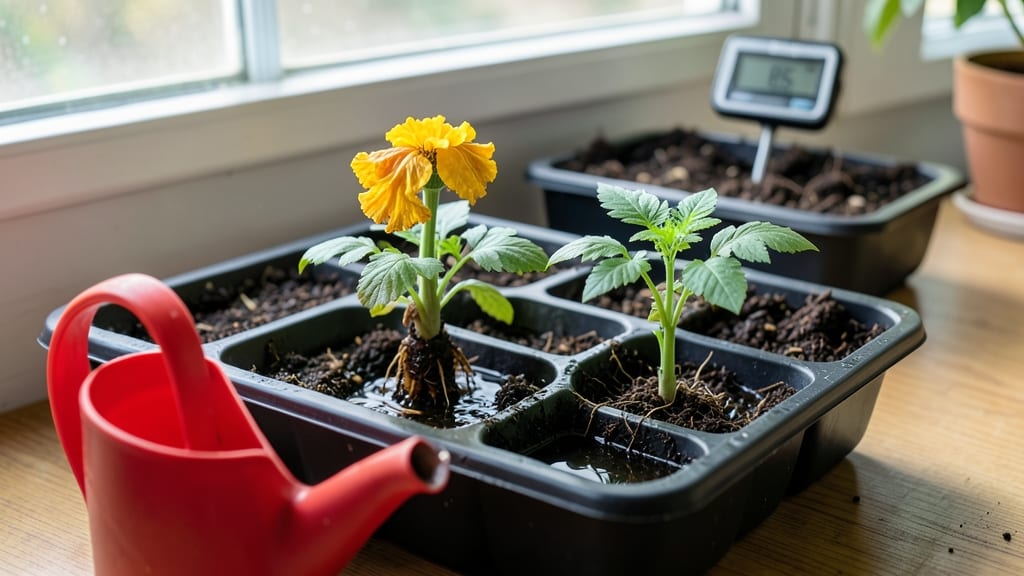
You can overwater seeds, which suffocates them by drowning roots or causing mold growth, leading to rot or failed germination. Keep soil consistently moist but not soggy, and ensure proper drainage to prevent damage.
Overwatering seeds creates a suffocating environment where roots can't breathe, cutting off oxygen and triggering mold or bacterial growth. 💧 The ideal soil should feel like a damp sponge—not dripping wet—so water just enough to moisten the top inch without pooling.
I've learned the hard way that even well-draining mixes can trap excess moisture if watered too frequently, especially in humid climates where evaporation slows down.
Signs of overwatering include yellowing leaves, mushy stems, or a foul smell from the soil. If you notice these, pause watering immediately and let the top layer dry out before trying again.
Using a spray bottle for gentle misting (rather than pouring) gives you better control over moisture levels, especially when dealing with delicate seedlings.
💡 In This Article
- How Overwatering Damages Seed Germination
- Proper Watering Techniques for New Seeds
How overwatering damages seed germination
Overwatering seeds creates a deadly paradox: too much moisture starves roots of the very thing they need—oxygen. Seeds require a delicate balance of hydration to activate enzymes that break down stored nutrients, but excess water displaces air from soil pores, suffocating emerging roots.
This oxygen deprivation slows cellular respiration, which seeds rely on for energy to push through the soil. Think of it like trying to breathe through a wet sponge—your lungs can't function properly, and neither can a seed's root system.
The damage doesn't stop there. Excess moisture creates the perfect breeding ground for fungal pathogens like Pythium or bacterial infections such as damping-off disease.
These microorganisms thrive in waterlogged conditions, attacking tender seedlings at their most vulnerable stage. 🌱 For example, a study by the University of Florida found that seeds kept in saturated soil for more than 48 hours showed a 70% increase in fungal contamination compared to properly moistened soil.
The ideal moisture level should maintain soil at about 60% of its water-holding capacity, similar to how a wrung-out sponge holds water—firm but not dripping.
Root suffocation also triggers anaerobic conditions, where harmful byproducts like ethanol and acetic acid build up in the soil. These compounds are toxic to developing roots, causing them to rot before they can establish themselves.
You might notice this as blackened, mushy stems or seeds that fail to sprout despite appearing healthy. Even if a seedling manages to break through, its weakened root structure makes it prone to collapse when you handle it—imagine trying to stand on jelly instead of solid ground.
Another critical factor is how excess water disrupts the seed's natural germination process. Many seeds contain enzymes that require oxygen to activate, and flooding the soil prevents these enzymes from working properly. For instance, legume seeds like beans need specific oxygen levels to produce the proteins necessary for early growth.
Without proper aeration, the seed's metabolic processes stall, leaving it unable to produce the energy needed to break through the soil surface.
Temperature plays a surprising role too. In warmer conditions (75-80°F), excess moisture accelerates microbial growth, while cooler temperatures (60-65°F) slow evaporation but still trap harmful gases.
This is why seedling trays often fail in humid climates—what feels like adequate watering in dry air becomes deadly in tropical conditions. The key is to monitor soil moisture rather than follow rigid schedules, adjusting based on your environment.
Visual clues help identify overwatering early. Healthy seedling soil should crumble slightly when pressed, while overwatered soil stays compact and leaves a damp imprint. If you run your finger through the soil and it feels slick or leaves a groove, that's a sign of excess moisture.
The goal is to maintain soil that feels like a well-wrung sponge—just damp enough to support germination without drowning the roots.