
Pests and Diseases
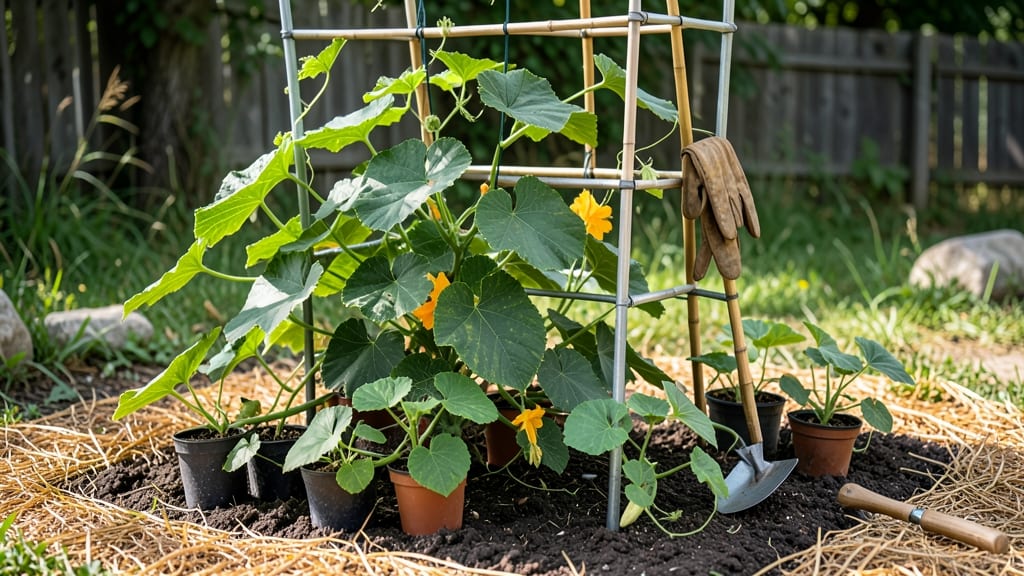
You can plant cucumbers and watermelons together, but it's risky because they compete aggressively for space, water, and nutrients, which can stunt both plants. To try it, space them at least 3 feet apart and use raised beds or trellises to manage their sprawling growth.
Cucumbers and watermelons share similar growing conditions, but their competitive nature makes them poor neighbors. 🌱 Watermelons spread wide with vines up to 20 feet long, while cucumbers climb aggressively on trellises—both will overcrowd each other.
The real issue is root competition: watermelons need deep soil moisture, while cucumbers prefer consistent but not soggy conditions. This mismatch often leads to uneven growth or even plant failure.
If you're determined to grow them together, prioritize spacing and monitor soil moisture closely to prevent one from outcompeting the other.
For better results, consider planting them in separate sections of a raised bed or using vertical growing systems to maximize space. This way, you avoid the stress of managing their conflicting needs while still enjoying both crops in your garden.
💡 In This Article
- Why Cucumbers and Watermelons Clash in the Garden
- Smart Companion Planting Alternatives for Cucumbers and Watermelons
Why cucumbers and watermelons clash in the garden
The core issue stems from their radically different growth habits and resource demands. Watermelons develop sprawling vines that can stretch 15-20 feet long, while cucumbers grow aggressively upward on trellises or sprawl horizontally.
This creates a physical battle for sunlight at canopy level, where watermelon leaves can shade cucumbers by 40-50%—reducing photosynthesis and fruit production in both plants. 🌿
Their root systems also conflict: watermelons need deep, moist soil to develop their heavy fruits, while cucumbers prefer consistent moisture without waterlogging. Watermelons draw water from 12-18 inches deep, while cucumbers primarily use the top 6-12 inches.
This mismatch leads to uneven water distribution, where one plant may suffer from drought while the other sits in overly saturated soil. The result? Stunted growth, bitter-tasting fruits, or even plant death in extreme cases.
Disease susceptibility adds another layer of risk. Both plants are prone to powdery mildew and cucumber mosaic virus, but their dense foliage creates a humid microclimate that accelerates fungal growth. When planted together, the combined leaf mass traps moisture, creating ideal conditions for spores to spread rapidly between plants.
This is why you might see watermelons developing mildew within 3-4 weeks of planting near cucumbers.
Nutrient competition is the final straw. Watermelons are heavy feeders, requiring high nitrogen and potassium levels to support their large vines and fruits. Cucumbers, while also hungry, need a more balanced approach with phosphorus-rich soil for flowering.
When grown together, watermelons often outcompete cucumbers for nitrogen, leading to yellowing leaves and poor fruit set in cucumbers while the watermelons thrive—at the expense of their neighbor. 🌱
Even their ideal planting times conflict: watermelons prefer warm soil (70°F+) and longer growing seasons, while cucumbers tolerate cooler temperatures (60°F+) and mature faster.
This timing mismatch means one plant may be in its peak growth phase while the other is still struggling to establish roots, further intensifying competition.
What most gardeners don't realize is how quickly this competition escalates. Within just 4-6 weeks of planting, you'll notice watermelon vines beginning to dominate the space, while cucumbers start showing signs of stress—smaller leaves, fewer flowers, and slower vine growth.
By this point, reversing the damage is nearly impossible without drastic intervention like pruning or complete separation.