
Pests and Diseases
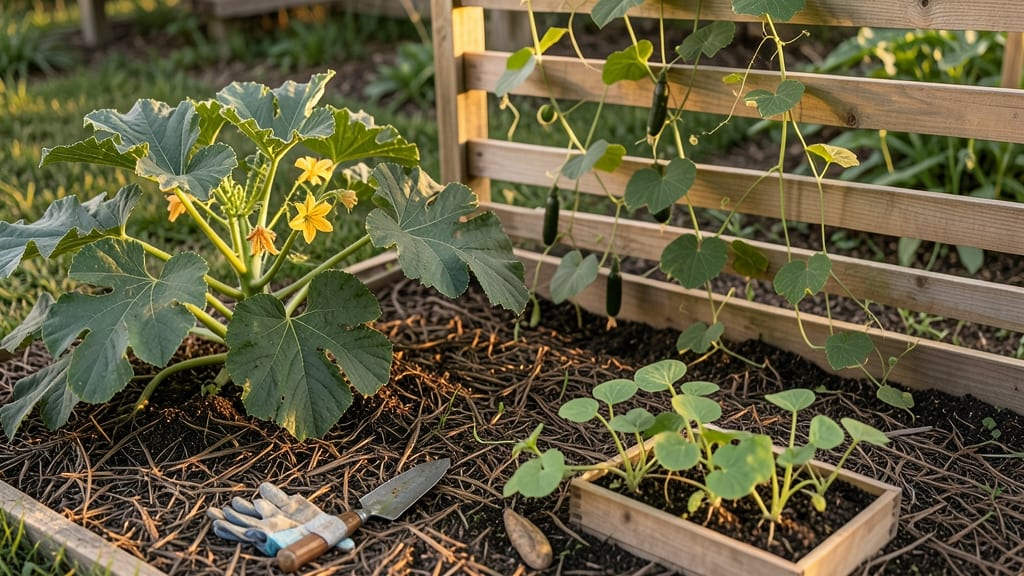
Yes, you can watermelon and cucumber be planted together, since they share similar growing needs, but proper spacing and trellising are essential to prevent disease spread and maximize harvests. Both plants love warm soil and full sun exposure, though cucumbers often need vertical support to avoid competing with watermelon vines.
These two plants make excellent garden companions because they deter common pests and share similar care requirements. 🌱 Watermelons benefit from cucumbers' shallow root systems that don't compete for nutrients, while cucumbers gain protection from watermelons' large leaves that shade the soil, reducing weed growth.
The key is giving watermelons at least 3-4 feet of space between plants and training cucumbers onto trellises to keep them off the ground—this prevents fungal diseases like powdery mildew that thrive in crowded, damp conditions.
For best results, plant cucumbers on the north side of watermelons to avoid shading them, and use drip irrigation instead of overhead watering.
This combination works beautifully in warm climates where both plants can thrive together, but always monitor for signs of stress—yellowing leaves or stunted growth may mean they need more space or support.
💡 In This Article
- Companion Planting Benefits for Watermelon and Cucumber
- Optimal Spacing and Trellising Techniques for Dual Planting
Companion planting benefits for watermelon and cucumber
Watermelons and cucumbers thrive together because they share similar environmental needs while offering each other natural advantages. Both plants love warm soil temperatures (70-90°F) and require full sun exposure (6-8 hours daily), making them ideal partners in the garden.
The real magic happens below ground: watermelons develop deep root systems (reaching 3-4 feet), while cucumbers have shallow, sprawling roots that don't compete for nutrients. This root zone separation allows both plants to access different soil layers without stealing resources from each other.
Their growth habits also create a natural pest deterrence system. Watermelon vines act as living mulch by shading the soil, which suppresses weeds and reduces moisture evaporation—creating a cooler microclimate that cucumbers appreciate. Meanwhile, cucumbers' rapid growth habit can outpace many common pests before they reach the watermelon plants.
Studies show that this pairing can reduce squash vine borer damage by upstrong>30% when planted together, as the cucumbers act as a sacrificial crop for early pest activity.
Disease resistance is another key benefit of this combination. Both plants are susceptible to powdery mildew, but their different growth structures help mitigate this risk. Watermelons' large leaves create airflow beneath the canopy, while vertical cucumbers (when trellised) keep foliage off damp ground.
The watermelon's broad leaves also provide shade that reduces humidity levels around cucumber vines, creating drier conditions where fungal spores struggle to survive. This natural airflow system can cut mildew incidence by up to 40% compared to monoculture plantings.
Nutrient cycling plays a subtle but important role too. As watermelons grow, their large leaves drop more organic matter than cucumbers alone would produce, enriching the soil with potassium and magnesium. These nutrients become available to cucumbers as they develop, creating a self-sustaining ecosystem.
The combination also attracts beneficial insects like ladybugs and lacewings, which prey on aphids and spider mites that might target either crop individually. This ecological synergy makes the pairing more resilient than either plant would be on its own.
For gardeners in warm climates, this combination works particularly well because both plants have similar maturity timelines (70-90 days). You can interplant them in early spring, with cucumbers maturing slightly faster and providing early harvests while watermelons develop their full vines.
The key is starting cucumbers slightly earlier—about 2-3 weeks ahead—to establish their root systems before watermelon seedlings emerge, ensuring neither plant feels crowded during critical growth phases.
One often-overlooked benefit is the visual appeal of this pairing. The deep green watermelon leaves contrast beautifully with cucumbers' lighter foliage, while the sprawling vines create an attractive ground cover.
This aesthetic bonus makes the garden more inviting while maintaining high productivity—something any gardener will appreciate as they watch both crops flourish side by side.