
Orchid Care
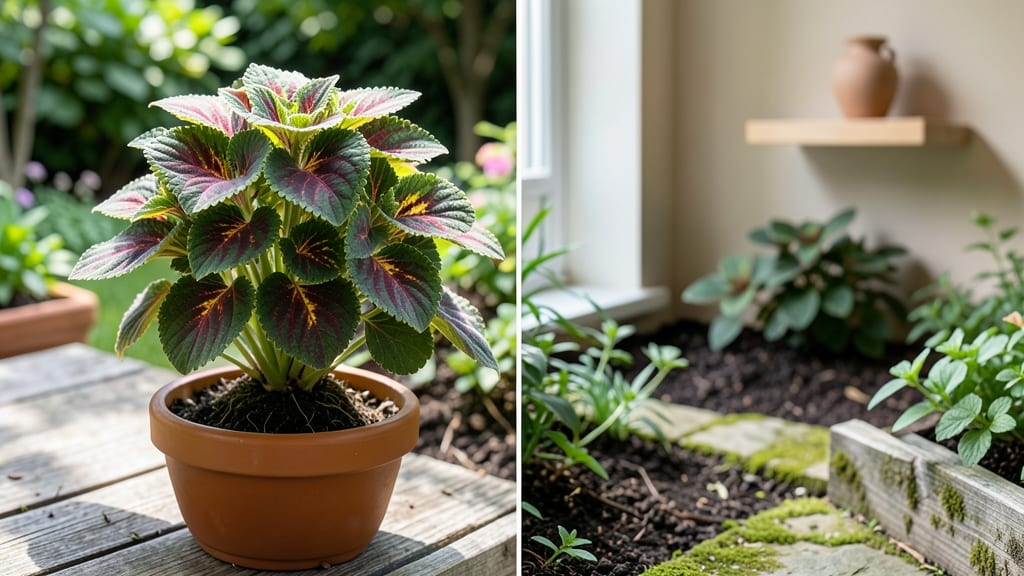
Deciding whether coleus is annual or perennial depends on your climate: it behaves as an annual in most regions but can be perennial in USDA zones 10-12, where winter temperatures never drop below 30°F. Outside those zones, it requires special care to survive beyond one season.
Coleus's tropical origins explain why it struggles in cold weather—it can't survive frost or prolonged temperatures below 30°F. 🌿 In milder climates like zones 10-12, it naturally returns each year, but in colder areas, it's treated as an annual unless you bring it indoors.
Many gardeners in zones 7-9 successfully overwinter coleus by pruning and potting it before frost, then providing bright indoor light and consistent warmth. This approach lets you enjoy your plants year after year without starting fresh each spring.
What's interesting is how coleus responds to temperature shifts: when nights dip below 50°F, it often drops leaves to conserve energy, signaling its tropical nature. This makes it a perfect candidate for container gardening in cooler climates, where you can easily move it indoors before winter sets in.
The key is acting quickly—once temperatures consistently fall below 40°F, the plant's survival becomes much harder to guarantee.
💡 In This Article
- Why Coleus Dies in Cold Climates: Temperature and Growth Cycle Science
- How to Extend Coleus Life Beyond One Season: Overwintering Tips
Why coleus dies in cold climates: temperature and growth cycle science
Coleus originates from tropical regions of Southeast Asia and Africa, where temperatures rarely drop below 60°F year-round. Its leaves contain delicate chlorophyll structures that freeze and rupture at 32°F, causing immediate cell death.
Unlike hardy perennials, coleus lacks the ability to enter true dormancy—it can't produce protective buds or underground storage organs like rhizomes or tubers. Instead, it relies on continuous warmth to maintain its vibrant foliage and active growth.
The plant's metabolic processes shut down when nighttime temperatures fall below 50°F.
You'll notice leaves yellowing and dropping as the coleus redirects energy to preserve its root system, a survival strategy that's effective in its native habitat but fatal in frost-prone climates. 🌿 This is why even a single light frost can kill established coleus plants, unlike more resilient tropical perennials such as impatiens (which die back but may regrow from roots) or caladiums (which produce tubers).
Coleus also lacks the cold-hardening mechanisms found in temperate plants. For example, many annuals like marigolds can tolerate brief chills by producing protective proteins, while coleus has none of these adaptations.
Its thin, waxy leaves provide minimal insulation against cold winds, and the plant's shallow root system can't access deep soil warmth. These biological limitations explain why coleus behaves as an annual in most gardening zones.
Interestingly, coleus's growth cycle accelerates when temperatures rise above 75°F. In these conditions, it grows aggressively to take advantage of favorable conditions—a strategy that works perfectly in its native tropical environment but leaves it vulnerable when seasons change.
This rapid growth also makes it more susceptible to temperature fluctuations, as the plant can't adjust quickly enough to sudden drops.
Comparing coleus to other tropical plants reveals its unique vulnerabilities. While begonias can survive brief cold snaps by entering a semi-dormant state, coleus has no such mechanism. Even in USDA zone 9, where winter lows might reach 25°F, coleus plants left outdoors will typically die back completely unless protected.
This is why gardeners in these zones must take proactive measures to overwinter their coleus.
The plant's sensitivity extends beyond just frost. Prolonged exposure to temperatures below 40°F triggers irreversible damage to its cellular structure, even without freezing. This explains why coleus often fails as a perennial in zones 8 and below—even when winter temperatures don't drop to freezing levels.
The cumulative effect of cooler nights over several weeks creates a stressful environment the plant can't withstand.