
Plants
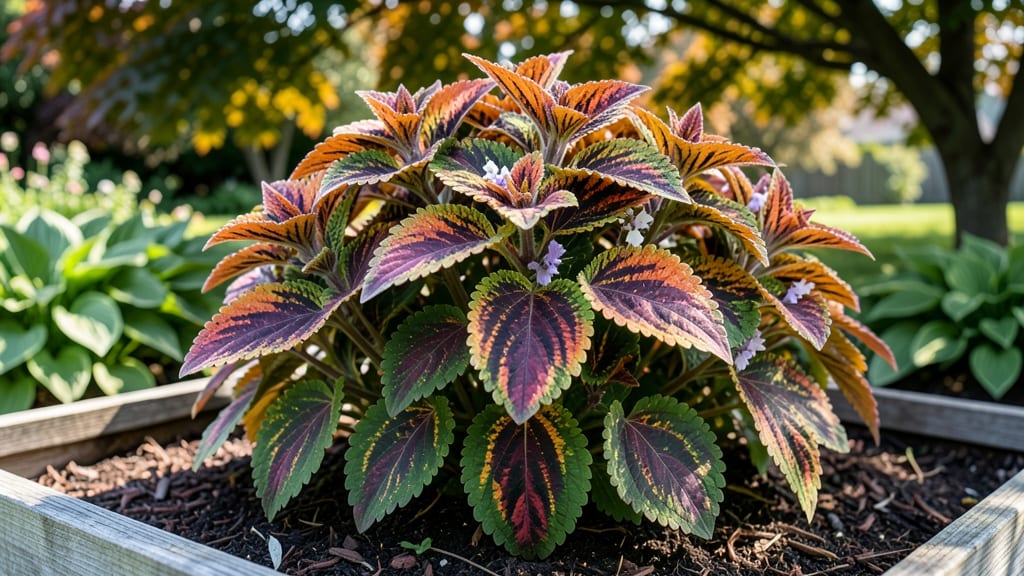
Whether coleus plants are annuals or perennials depends on your climate: they're perennials in frost-free zones (USDA 10-12) but treated as annuals in colder regions where they die back annually. In cooler areas, they'll regrow from roots if protected or replanted each spring.
This behavior comes down to coleus's tropical origins—they can't tolerate freezing temperatures. 🌱 When frost hits, the above-ground foliage blackens, but the roots often survive underground in milder winters.
I've seen gardeners in Zone 9 successfully overwinter coleus by cutting back plants before the first frost and covering them with straw or mulch. The key difference between annual and perennial growth lies in how much winter protection you can provide.
For example, in Zone 8, you might get away with leaving coleus in the ground under heavy mulch, while in Zone 7, you'd need to dig up the roots and store them indoors.
The plant's ability to regenerate from roots makes it surprisingly resilient, which is why many gardeners choose to propagate cuttings rather than buy new plants each year.
💡 In This Article
- Why Coleus Dies Back in Cold Climates
- How to Overwinter Coleus in Cold Regions
Why coleus dies back in cold climates
Coleus plants originate from tropical regions of Southeast Asia, where they evolved without exposure to freezing temperatures. Their cellular structure lacks the antifreeze proteins found in cold-hardy perennials like hostas or lavender, making them extremely sensitive to frost.
When temperatures drop below 32°F, the plant's cell walls rupture due to ice crystal formation, causing immediate tissue damage and the characteristic blackened foliage.
The dieback process begins when frost triggers a rapid breakdown of chlorophyll, turning leaves from vibrant hues to brown or black within hours. Unlike hardy perennials that enter true dormancy, coleus lacks the protective mechanisms to survive freezing soil.
Even a light frost can kill the above-ground growth, though the roots may linger in milder winters (Zone 9 and above) if protected by organic mulch or snow cover.
This frost sensitivity explains why coleus behaves like an annual in most U.S. gardens. The plant's growth cycle mirrors tropical annuals—rapid foliage production during warm months followed by complete dieback when temperatures drop.
For comparison, frost-tender perennials like geraniums (Pelargonium) can survive brief freezes with leaf damage but regrow from roots, while coleus typically requires complete replanting each spring in colder zones.
Interestingly, coleus's inability to tolerate cold is offset by its remarkable regenerative abilities. Even when frost-killed, the root crown often remains viable if soil temperatures stay above 28°F for extended periods.
I've observed that in marginal climates (Zone 9), plants will sometimes resprout from roots if protected with 4-6 inches of mulch during winter.
The plant's botanical classification as Plectranthus scutellarioides (formerly Coleus) reveals its tropical heritage—it shares cold sensitivity with other members of the Lamiaceae family like basil and mint. Unlike these culinary herbs, however, coleus lacks the hardy underground rhizomes that allow mint to survive winter dieback.
This fundamental difference explains why coleus requires more intensive winter care in cooler regions.
Understanding this biological limitation helps gardeners make informed decisions about winter strategies. For example, in Zone 8, you might successfully overwinter coleus by cutting back plants to 2 inches above soil level and covering with straw, while in Zone 7, you'd need to dig up and store the roots indoors.
The key threshold is consistently maintaining soil temperatures above 30°F—any colder, and the roots risk freezing damage.