
Orchid Care
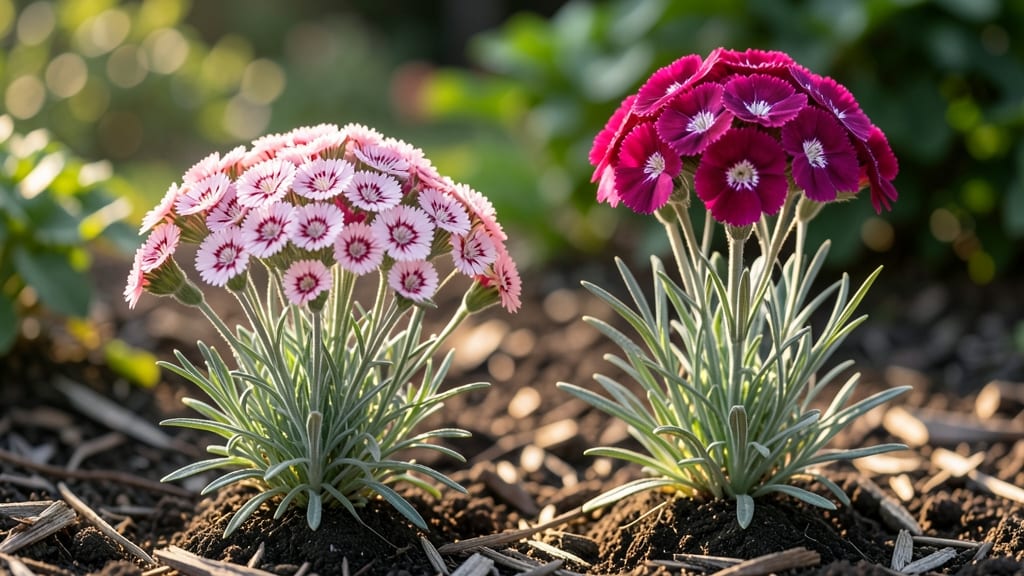
Whether dianthus grows as an annual or perennial depends entirely on your climate and the specific variety: tender perennials thrive in warm zones, while cooler regions see them as biennials or short-lived perennials, and harsh winters force them to behave as true annuals.
This distinction matters because dianthus species like Sweet William (Dianthus barbatus) often return year after year in mild climates, while pinks (Dianthus plumarius) may only survive one season in freezing temperatures. 🌱 The key difference lies in their cold tolerance—perennial types store energy underground to regrow, whereas annuals complete their life cycle in a single season.
For gardeners in transitional zones, choosing cold-hardy varieties or providing winter protection can extend their lifespan significantly.
If you're planning your garden layout, consider that perennial dianthus varieties like Cheddar Pink need well-draining soil and full sun to establish strong roots, while annual types like Rainbow mix can handle poorer soil but require replanting yearly.
The trade-off? Perennials offer long-term color returns, while annuals provide bold seasonal displays with less maintenance. Understanding these patterns helps you match plants to your growing conditions for maximum success.
💡 In This Article
- How Climate and Species Type Affect Dianthus Lifespan
- Choosing the Right Dianthus Variety for Your Garden
How climate and species type affect dianthus lifespan
The lifespan of dianthus plants hinges on their biological classification and environmental conditions. Perennial species like Dianthus barbatus (Sweet William) store carbohydrates in their roots during summer, allowing them to regrow when conditions improve.
This process is called dormancy adaptation, where the plant conserves energy underground until temperatures rise above 40°F (4°C). In contrast, annual varieties like Dianthus chinensis complete their entire life cycle—from seed to flower—in just one growing season, typically 60-90 days, before dying back in winter.
Climate plays a decisive role in determining whether dianthus acts as an annual or perennial. In USDA Hardiness Zones 5-7, many dianthus varieties behave as biennials or short-lived perennials, flowering in their second year before gradually declining.
However, in Zone 8 and above, the same varieties often persist for multiple years as true perennials. The critical factor is winter survival: perennial dianthus can tolerate brief frosts down to -10°F (-23°C) if protected by mulch, while annual types succumb to prolonged freezing temperatures below 20°F (-6°C).
Species-specific traits also influence longevity. For example, Dianthus plumarius (Garden Pinks) typically thrives as a perennial in mild climates but may die back to the ground in harsh winters, only to regrow from the same root system.
Meanwhile, Dianthus caryophyllus (Carnation) often behaves as an annual in colder regions due to its sensitivity to frost. The key difference lies in their root structure: perennial types develop deeper, more robust root systems that store nutrients, while annuals prioritize rapid above-ground growth for quick reproduction.
Temperature extremes trigger physiological changes that determine whether dianthus survives or resets its life cycle. During winter, perennial dianthus enter a state of endodormancy, where hormonal signals suppress growth until spring. In contrast, annual types lack this adaptation and complete their life cycle before winter's onset.
This biological mechanism explains why perennial dianthus often return year after year in Zone 9+ climates, while annual varieties dominate in Zone 4 or colder regions.
Soil conditions further interact with climate to influence lifespan. Perennial dianthus require well-draining soil with pH 6.0-7.0 to prevent root rot during winter dormancy, while annual types tolerate poorer soils but need consistent moisture during their short growing season.
The combination of cold tolerance and soil quality determines whether dianthus will persist as perennials or reset annually. 🌡️
For gardeners in transitional zones (Zones 6-7), the challenge lies in protecting tender perennials during winter. Mulching with 4-6 inches of organic matter (like straw or leaves) can raise soil temperatures by 5-10°F, providing critical insulation.
Without this protection, even perennial varieties may behave like annuals, completing their life cycle in a single season.
Understanding these biological and environmental interactions helps gardeners make informed choices. Whether you're planting Sweet William for perennial color or Rainbow Mix for annual displays, matching the variety to your climate ensures successful growth and minimizes disappointment.
The key takeaway? Dianthus lifespan isn't fixed—it's a dynamic interplay between species traits and growing conditions. ✨