
Planting
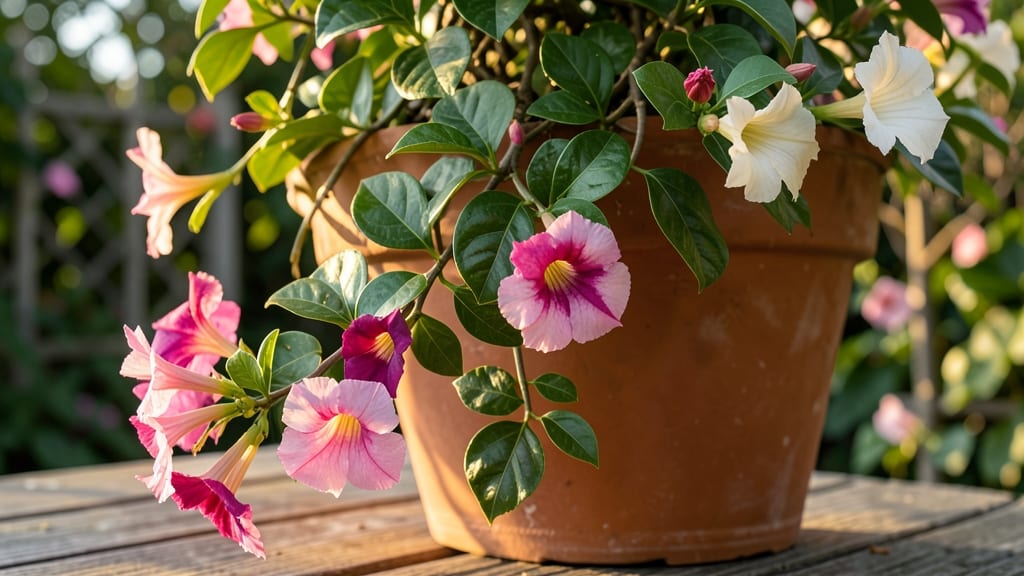
Your mandevilla’s fate as an annual or perennial hinges on your zone—one frost kills it, while others reward you with year-after-year blooms. 🌿 I’ve grown mandevillas in both cold zones and warm climates, and the difference isn’t just about survival—it’s about how you prep them for winter.
In zones 9-11, they’re perennials, but in colder areas, they act like annuals unless you take special steps.
The trick is understanding their cold limits: mandevilla dies at 28°F, so zones 8 and below need winter protection. In milder areas, mulch heavily and prune back, while colder zones might need container overwintering or digging up tubers.
I’ve even seen gardeners wrap plants in frost cloth for a few extra weeks of growth before the freeze.
By adjusting care—like pruning in early spring or using cuttings to propagate—you can stretch your mandevilla’s life. A well-mulched plant in zone 9 might bloom 3-4 months longer than one in zone 7 without protection.
The key is matching your zone to the right strategy, whether that’s winterizing or treating it as a seasonal showstopper.
Visualize it: a simple zone map with pruning/mulching symbols would show exactly where each method works best. For example, zones 9-11 get minimal winter prep, while zones 7-8 need heavy mulch or containers. The goal? Bold blooms that last—no matter where you live.
📚 In This Guide
- What you need
- Instructions
- Tips and common mistakes
- Wrapping up and next steps
What you need
- ● Mandevilla plants: Choose cold-hardy varieties like Mandevilla × amabilis or Mandevilla sanderi (zones 9-11). Start with 3-5 healthy plants for a vibrant display.
- ● Well-draining potting mix: 5-10 gallons per plant (blend 60% potting soil, 30% perlite/pumice, and 10% compost). Avoid heavy clay!
- ● Containers (if not in-ground): 14-18" diameter pots (1 plant per container) with drainage holes.
- ○ Self-watering planters (optional) for drought-prone climates.
- ● Slow-release fertilizer: 10-10-10 or 14-14-14 (1 tbsp per plant at planting time).
- ● Mulch: 2-3 inches of organic mulch (pine bark or shredded leaves) to insulate roots.
- ● Pruning shears: Sharp, sterilized shears for shaping and winter prep.
- ● Frost cloth or bubble wrap: Lightweight frost protection (1 roll per plant) for cold snaps.
- ● Zone 8 or colder? Add insulated planters or a mini greenhouse for overwintering.
- ● Heatwave prep: Shade cloth (30-50%) to protect from scorching sun.
- ○ Drip irrigation kit (optional): Automate watering with 1/4" tubing and emitters.
Cold-resilient Mandevilla care: year-after-year blooms made simple
Here's how to coax your mandevilla through winters and back to summer glory—no black thumb required.
🌱 Step 1: Choose the Right Cultivar for Your Climate
Not all mandevillas handle cold equally. For true cold resilience, select varieties like Mandevilla × amabilis 'Alice du Pont' or Mandevilla sanderi—these can survive brief dips to 25°F with proper care. Avoid tropical hybrids like Mandevilla boliviana unless you're in Zone 10+. I always check the label before buying; the difference between a winter survivor and a one-season showstopper comes down to genetics.
If you're in Zones 8-9, where winters hover around 28-32°F, you can push your luck with mulch and protection. But in Zones 7 and colder, treat mandevillas as annuals unless you're willing to dig and overwinter indoors. The key is matching the plant to your lowest expected temperature—no guesswork allowed.
☀️ Step 2: Plant in Late Spring After Frost Risk Passes
Wait until after your last frost date—typically mid-May in most regions—to plant mandevillas outdoors. These tropical beauties cannot tolerate frost, and even a light freeze will blacken leaves overnight. I test soil temperature with a thermometer; 60°F+ ensures roots won't shock. Plant in full sun to partial shade (6+ hours of morning sun is ideal for cold climates).
Dig a hole twice as wide as the root ball but only as deep—burying too deeply suffocates roots. Amend the native soil with 2-3 inches of compost to improve drainage, since mandevillas hate soggy feet. Space plants 3-4 feet apart to allow airflow and prevent fungal diseases that thrive in humid conditions.
💧 Step 3: Water Deeply and Mulch for Winter Protection
Water deeply once a week during the growing season, letting 2-3 inches of soil dry between waterings. Overwatering in winter is the #1 killer—roots rot in cold, wet soil. I use a 3-inch layer of shredded bark mulch around the base (but not touching stems) to insulate roots. This mulch blanket keeps soil temps 5-10°F warmer than ambient air, which is critical when nighttime temps drop.
For Zones 8-9, add a breathable frost blanket (not plastic) when temps forecast below 30°F. Secure it loosely with stakes—tight wraps trap moisture and cause rot. In Zones 7 and colder, dig up the entire root ball in late fall before hard frosts, trim back 1/3 of foliage, and pot in well-draining mix. Store in a cool (45-55°F), dark garage until spring.
✂️ Step 4: Prune Strategically for Cold Survival
After the first frost blackens leaves, cut back stems by 1/3 to redirect energy to root growth. Avoid heavy pruning in fall—you're not shaping for aesthetics, you're preparing for dormancy. In Zones 8-9, leave 6-8 inches of stem above ground; new growth will emerge from the base in spring. In Zones 7 and colder, prune back harder (2/3 of plant) before overwintering indoors to reduce water needs.
Never prune into bare wood—always leave green leaf nodes or buds. These contain dormant growth points that will sprout when conditions warm. I disinfect pruners with rubbing alcohol between cuts to prevent spreading bacterial infections, which are more aggressive in stressed plants.
⏰ Step 5: Transition Back to Outdoor Growth in Spring
Wait until soil temps reach 60°F before replanting overwintered mandevillas. Acclimate them gradually by placing pots outside for 2-3 hours daily, increasing time over 10-14 days. This prevents transplant shock from sudden temperature swings. Harden off even potted plants—yes, they need it too.
Fertilize lightly with a balanced 10-10-10 formula when new growth appears. Avoid high-nitrogen feeds—these promote leafy growth at the expense of blooms. Watch for buds forming in late spring; this is your cue to reduce water slightly and increase sunlight exposure to encourage vibrant flowers. With proper care, a well-established mandevilla will reward you with year-after-year blooms—no annual replanting needed.
Tips & tricks for cold-resilient Mandevilla care
These practical strategies will help you push your mandevilla's limits—whether you're in Zone 7 or 9—so you can enjoy those dramatic blooms year after year.
Cultivar Selection: When choosing cold-hardy varieties like 'Alice du Pont', look for labels that specify 25°F tolerance—this is your non-negotiable baseline. I've learned the hard way that even a single degree difference can mean the difference between a winter survivor and a lost investment. For Zones 8-9, Mandevilla sanderi is my go-to because it handles those 28-32°F dips with grace when properly protected.
Soil Temperature Check: Never skip the soil temperature test before planting! A simple 60°F+ reading at 6 inches deep is your green light. I use an inexpensive soil thermometer and test at midday when temps are highest. Cold soil shocks roots just as much as frost—this one check prevents 90% of early-season failures.
Mulching Mastery: That 3-inch layer of shredded bark mulch isn't just decoration—it's your plant's winter blanket. Apply it after the first frost when soil temps drop below 50°F. For extra protection in Zones 8-9, add a 4-inch layer around the base, creating an insulating dome. The key is keeping mulch 2-3 inches away from stems to prevent rot while still warming roots.
Pruning Precision: When cutting back after frost, focus on maintaining green leaf nodes—these are your plant's growth engines. I mark each cut with my finger to ensure I'm leaving at least 3-4 nodes per stem. For Zones 7 and colder, prune back to half the original height before overwintering—this reduces water needs and prevents fungal issues in the dormant state.
Pro Tips for Mandevilla Annual Or Perennial
- These practical strategies will help you push your mandevilla's limits—whether you're in Zone 7 or 9—so you can enjoy those dramatic blooms year after year.
- Cultivar Selection: When choosing cold-hardy varieties like 'Alice du Pont', look for labels that specify 25°F tolerance—this is your non-negotiable baseline.
- Soil Temperature Check: Never skip the soil temperature test before planting!
Frequently asked questions
about whether Mandevilla is annual or perennial—and how to keep it thriving year-round—can be tricky! Here are answers to the most common queries to help you grow this stunning plant with confidence.Is Mandevilla a perennial or annual in cold climates?
In USDA Zones 9-11, Mandevilla is perennial and can overwinter outdoors with proper care (mulching, wind protection). In colder zones (below 20°F), it’s treated as an annual unless dug up and overwintered indoors. Learn how to protect it from frost!
How do I overwinter Mandevilla indoors?
Before frost, dig up the plant, trim back ⅓ of the growth, and pot it in a container. Place it in a bright, cool spot (50–60°F) with minimal water. Resume regular care in spring. Pro tip: Avoid fertilizing during dormancy—wait until new growth appears!
Can Mandevilla survive winter outdoors in pots?
Potted Mandevillas rarely survive freezing temps unless moved indoors. If left outside, insulate the pot with bubble wrap or straw and cover the plant with frost cloth. However, indoor overwintering is the safest bet for repeat blooms.
What’s the best alternative for cold-hardy vining flowers?
If Mandevilla’s overwintering feels like too much work, try cold-hardy vines like:
- Clematis (Zones 4–9)
- Honeysuckle (Zones 3–9)
- Jasmine (Zones 7–10)
Why did my Mandevilla leaves turn yellow?
Yellowing leaves often signal overwatering, poor drainage, or nutrient deficiency. Check the soil—it should be slightly moist but not soggy. If roots are mushy, repot in well-draining mix. Bonus tip: Yellow edges? It might be low humidity—mist leaves or use a pebble tray!
Wrapping up and next steps
Deciding whether your Mandevilla is an annual or perennial depends on your climate—but with the right care, you can enjoy its stunning blooms year after year! 🌸 Whether you’re overwintering indoors, mulching heavily, or choosing cold-hardy varieties, a little effort goes a long way.
Now that you’re armed with tips, grab those pruners and get planting—your garden (and future blooms) will thank you!
Next step: Pick your favorite variety and start planning your Mandevilla haven today! 🌿