
Watering
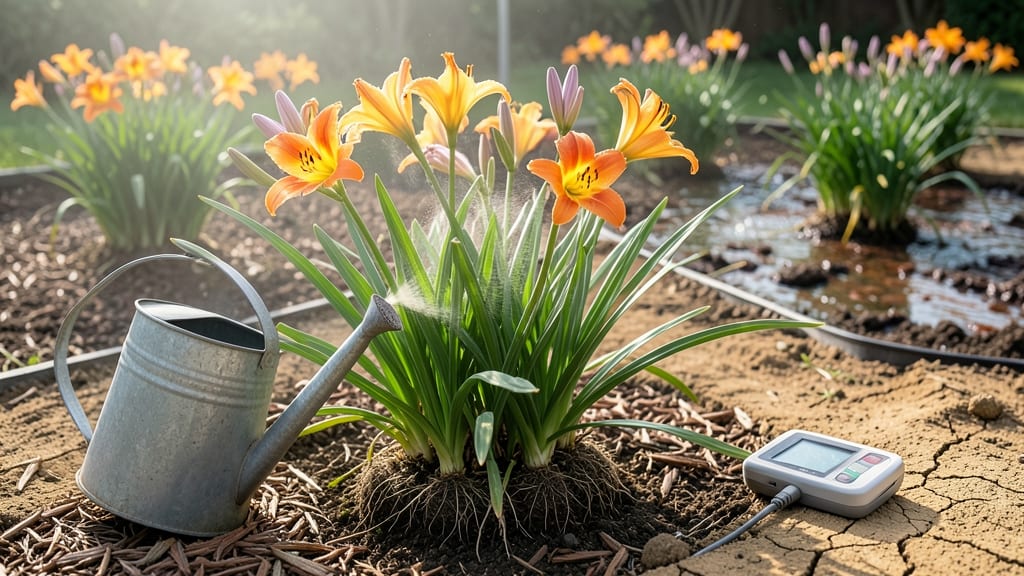
Do daylilies need a lot of water? The short answer is no—these drought-tolerant beauties thrive with just deep, infrequent soakings, making them perfect for busy gardeners.
Picture this: You’ve spent hours planting your dream garden, only to wonder if your 🌸 daylilies will wilt under the heat. The good news? These hardy perennials actually despise soggy soil more than they crave constant hydration. Overwatering is the real enemy, not thirst.
In Zone 6a, where spring planting kicks off in March, daylilies establish roots quickly—once settled, they can go weeks without a drink. The key is mimicking their natural resilience: water deeply when the top inch of soil feels dry, then let them be.
Summer’s the exception, where heat demands weekly checks.
Below, I’ll break down the exact watering schedule by season, how to spot over- or underwatering, and the one mulching trick that cuts water needs by half. Your daylilies will reward you with bold blooms and zero guilt.
How much water daylilies actually need (and when to adjust)
Daylilies are often called the perfect low-maintenance perennial, but their water needs still deserve attention. Unlike thirsty annuals, these plants store moisture in their thick rhizomes, allowing them to survive dry spells with ease.
The key is understanding their natural drought tolerance—overwatering is far riskier than letting them go slightly dry.
In my Zone 6a garden, I’ve watched daylilies bounce back from weeks without rain, especially after their first growing season. Their secret? Deep roots that tap into moisture reserves. But this resilience doesn’t mean neglect—consistent deep watering during establishment (first year) sets the foundation for their drought-proof adulthood.
Soil type plays a huge role. Sandy soil drains quickly, requiring more frequent but shallow watering, while clay soil holds moisture longer, reducing your watering frequency. The goal is always 1 inch of water per week, delivered in one deep session rather than daily sprinkles.
| Season | Watering Frequency | Depth | Soil Check |
|---|---|---|---|
| Spring (March-May) | Weekly | 6-8 inches | Top 2" dry |
| Summer (June-August) | Every 3-5 days | 8-10 inches | Top 3" dry |
| Fall (September-October) | Bi-weekly | 4-6 inches | Top 1" dry |
| Winter (November-February) | Monthly (light) | 2-3 inches | Frozen ground only |
Newly planted daylilies need the most attention—water every 5-7 days for the first month to encourage root establishment. After that, you can ease up.
My 3-year-old daylilies in full sun only get watered when I notice the leaves starting to droop slightly, which is usually every 10-14 days in normal weather.
Heatwaves change everything. When temperatures hit 90°F+, I increase watering to every 3-4 days and always in the early morning to prevent fungal issues. The goal is to keep the soil moist but never soggy—daylilies hate wet feet just as much as they love drought tolerance.
Mulching is your secret weapon. A 3-inch layer of organic mulch (like shredded bark) reduces evaporation by 30-50%, meaning you’ll water half as often. I apply mulch annually in early spring, keeping it 6 inches away from the crown to prevent rot.
One common mistake is assuming all daylilies have the same needs. Dwarf varieties (like 'Little Star') dry out faster than standard types ('Stella de Oro'), while tall varieties ('Happy Returns') can handle longer dry periods. Always check the cultivar’s care tag for specific guidance.
Rainfall complicates things. If you get 1 inch of rain, skip your scheduled watering. Use a rain gauge to track accumulation—my garden gets 40% more rain in summer than spring, so I adjust my schedule accordingly.
By summer’s end, daylilies naturally slow their growth as they prepare for dormancy. This is when you can reduce watering to bi-weekly, then taper off completely in fall. The only exception is if we have an unusually dry autumn—then I give them a light drink every 3-4 weeks.
Remember: daylilies are not desert plants—they need some moisture to thrive, but they’re far more forgiving than most gardeners realize. The goldilocks zone is consistently moist but never waterlogged soil. Master this, and you’ll have vibrant blooms with minimal effort. 🌸
Signs your daylilies are overwatered or underwatered (and how to fix it)
Your daylilies might look lush, but yellowing leaves or floppy stems often signal watering gone wrong. The tricky part? Both overwatering and underwatering cause similar symptoms, but the fixes couldn’t be more different. Let’s decode the clues your plants are sending—and how to bring them back to vibrant health.
First, check the soil moisture. Stick your finger 1-2 inches deep: if it’s damp, you’re likely overwatering; if dry, your daylilies are thirsty. Wilted foliage in the morning (not evening) usually means underwatering, while mushy roots or fungal spots on leaves scream overwatering.
Don’t panic—both issues are reversible with the right approach.
Overwatering vs. Underwatering: Quick Fixes
Overwatering
- Signs: Yellow leaves, soggy soil, fungal spots
- Fix: Stop watering immediately, improve drainage
- Prevent: Water only when topsoil is dry
Underwatering
- Signs: Wilted leaves, crispy edges, dry soil
- Fix: Deep watering (1-2 inches), mulch heavily
- Prevent: Water deeply every 7-10 days
💡 Pro Tip: Daylilies hate soggy roots—amend clay soil with compost to prevent waterlogging.
For overwatered daylilies, focus on drainage first. If your garden soil is heavy clay, mix in 2-3 inches of organic matter like compost or perlite. Raise beds slightly to help excess water drain away.
Avoid watering until the top 2 inches of soil feel dry—this might take a week or more, depending on your climate.
Underwatered daylilies need a deep drink, not frequent sips. Water slowly until moisture reaches 6 inches deep, then let the soil dry out slightly before watering again. Mulch with straw or wood chips to lock in moisture and keep roots cool.
In summer, check soil moisture daily—daylilies in full sun may need water every 3-5 days during heatwaves.
Watch for stunted blooms or smaller flowers—this is another red flag. Both over- and underwatering stress plants, leading to fewer blooms. If you’ve corrected the watering issue, fertilize lightly with a balanced 10-10-10 mix in early spring to encourage robust growth.
Your daylilies will bounce back faster than you think!
Remember: Daylilies are survivors. With the right watering balance, they’ll reward you with bold, long-lasting blooms all season—with minimal effort. Next time you see wilting leaves, pause and check the soil before reaching for the hose. 🌸