
Watering
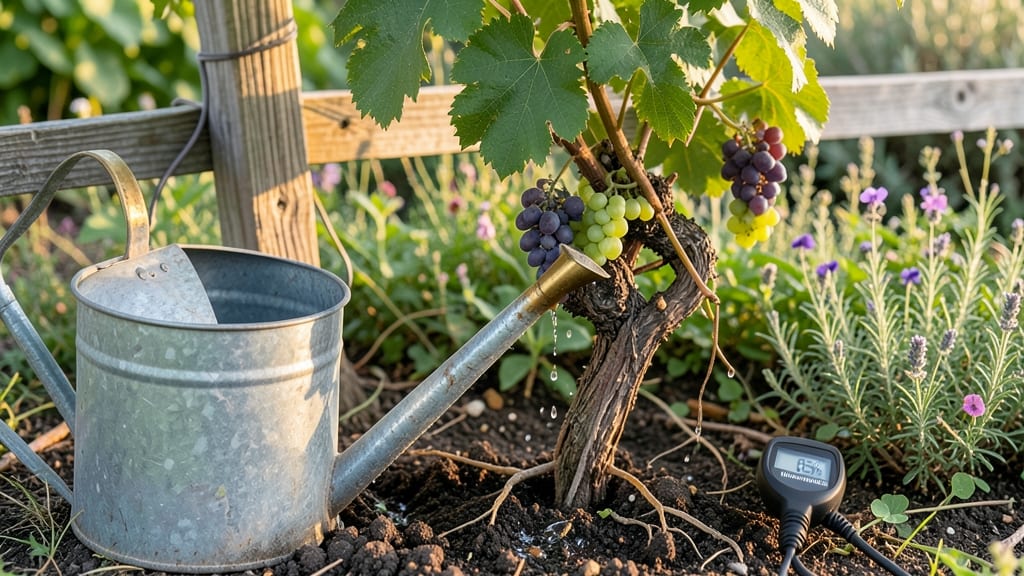
Grape vines need a lot of water to thrive, but the key is delivering it the right way—not drowning their roots or letting them dry out.
Picture this: You’ve spent months nurturing your 🍇 vines, only to watch them wilt under the wrong watering routine. Too much, and you risk root rot; too little, and your harvest shrinks. The solution? A precise schedule that matches your vine’s growth stage and climate.
From deep morning soaks in summer to light checks in winter, I’ll show you how to water grape vines efficiently—whether you’re growing them in containers or a full garden bed.
You’ll learn the exact signs of overwatering vs. underwatering, how to adjust for drought-prone areas, and why timing matters more than just volume.
How much water do grape vines really need (and when to adjust)
Grape vines are deep-rooted plants that need consistent moisture to thrive, but their water needs change dramatically across growth stages. Unlike drought-tolerant succulents, grape vines cannot store water in their stems or leaves, making them vulnerable to both underwatering and overwatering.
The key is understanding how much water they need at each life stage—from dormancy to fruit development—and adjusting based on your climate zone.
In hot, dry climates (like USDA Zones 8-10), grape vines may need daily watering during peak summer months, while in cooler, wetter regions (Zones 4-6), they can survive on weekly deep soaks. The difference? Root zone saturation and evaporation rates.
For example, a young vine in a container might dry out in 2-3 days, while a mature vine in well-drained soil can go 5-7 days between waterings. Let’s break it down by stage so you never guess again.
| Growth Stage | Water Needs | Frequency (Ground) | Frequency (Container) | Soil Moisture Check |
|---|---|---|---|---|
| Dormant (Winter) | Minimal (1-2 inches/month) | Bi-weekly (light) | Every 3-4 weeks | Top 2" dry |
| Bud Break (Early Spring) | Moderate (2-3 inches/week) | Every 4-5 days | Every 2-3 days | Top 4" moist |
| Flowering (Late Spring) | High (3-4 inches/week) | Every 3-4 days | Daily (small pots) | Top 6" damp |
| Fruiting (Summer) | Critical (4-6 inches/week) | Every 2-3 days | Every 1-2 days | Top 8" moist |
| Post-Harvest (Fall) | Reduced (1-2 inches/week) | Weekly | Every 5-7 days | Top 4" dry |
💧 Pro Tip: Always water deeply to encourage roots to grow downward. Shallow watering leads to weak, shallow roots.
During the dormant stage (winter), grape vines need almost no water—just enough to prevent the soil from drying out completely. This is when root damage is most likely to occur from overwatering, as cold, soggy soil can rot roots before they wake up in spring.
I once lost a 3-year-old vine because I watered it weekly in winter, thinking it needed moisture. The roots suffocated, and the vine died back to the ground. Lesson learned: Check soil moisture 2 inches deep with your finger—if it’s damp, wait.
The flowering stage is when grape vines demand the most attention. This is when water stress can cause flower drop, reducing your harvest by up to 50%. Aim for 1-2 gallons of water per vine every 3-4 days, delivered early in the morning to minimize evaporation.
If you’re in a hot, arid climate (like Arizona or California), you may need to hand-water or use drip irrigation to ensure the root zone stays consistently moist. Yellowing leaves during flowering? That’s a clear sign of underwatering—act fast by giving the vine a deep soak.
When grapes are fruiting, the stakes are even higher. Water stress now leads to small, tart berries and poor color development.
In my USDA Zone 7 garden, I’ve found that drip irrigation set to run for 20-30 minutes twice daily (morning and late afternoon) keeps the root zone saturated without wetting the foliage—critical for fungus prevention.
If you’re growing in containers, expect to water daily in summer, as 5-gallon pots dry out in hours under the sun. Pro move: Bury a moisture meter in the soil to track real-time needs.
One of the biggest mistakes I see is watering based on a schedule rather than soil conditions. Grape vines in sandy soil (like in Texas) need far more frequent watering than those in clay soil (common in the Pacific Northwest).
To test moisture, stick your finger 4-6 inches deep—if it feels dry, it’s time to water.
For a visual cue, watch the leaf edges: crispy, brown edges mean underwatering, while yellowing leaves (especially near the base) signal overwatering. Adjust your schedule every 2 weeks based on these signs.
Signs of overwatering vs. underwatering (and how to fix it fast)
Grape vines show clear distress signals when their water balance is off. Yellowing leaves, wilted canes, or moldy soil can mean you're either drowning your vines or starving them of moisture.
The key is learning to read their symptoms and adjust before permanent damage occurs. I've seen vines recover from both extremes with quick fixes—here's how to spot the difference.
Start by checking the soil moisture 2-3 inches below the surface. Stick your finger in—if it's soggy, you're overwatering. If it's bone-dry, your vine is thirsty. Leaf color is your next clue: yellowing between veins often signals overwatering, while crispy edges mean underwatering.
Both conditions stress the vine, but the fixes couldn't be more different.
Grape Vines & Water: The Danger Zone
Grape vines need consistent moisture but hate soggy roots. Overwatering causes root rot in just 3-5 days, while underwatering leads to fruit shriveling and poor yields. The fix? Deep, infrequent watering (1-2 gallons per vine) rather than light daily sprinkles.
For overwatered grape vines, focus on improving drainage first. Amend heavy clay soil with compost or perlite to break up compaction. If your vine is in a container, repot into a larger pot with well-draining mix (50% potting soil, 30% perlite, 20% compost).
Let the top 2 inches of soil dry out completely between waterings—this forces roots to seek deeper moisture where oxygen exists.
When your vine shows drought stress, act fast. Water deeply until the soil is moist 12 inches down, then mulch with 2-3 inches of straw to lock in moisture. For container vines, soak the pot for 20-30 minutes until water runs from the drainage holes.
In extreme heat, I've even wrapped containers in wet burlap to slow evaporation while keeping roots cool.
Don't ignore fungal signs like powdery mildew or black spots on leaves—these often appear when vines are overwatered. Prune affected leaves immediately and space vines for airflow (at least 6 feet apart).
For underwatered vines, a foliar spray with seaweed extract helps them recover faster by improving water uptake through leaves.
Remember: Grapes are drought-tolerant once established, but they won't produce quality fruit if stressed. The goal is consistent moisture, not soggy soil. Adjust your watering based on weather and vine age—young vines need more frequent watering than mature ones.
With these fixes, your vines will bounce back in weeks, not months.