
Watering
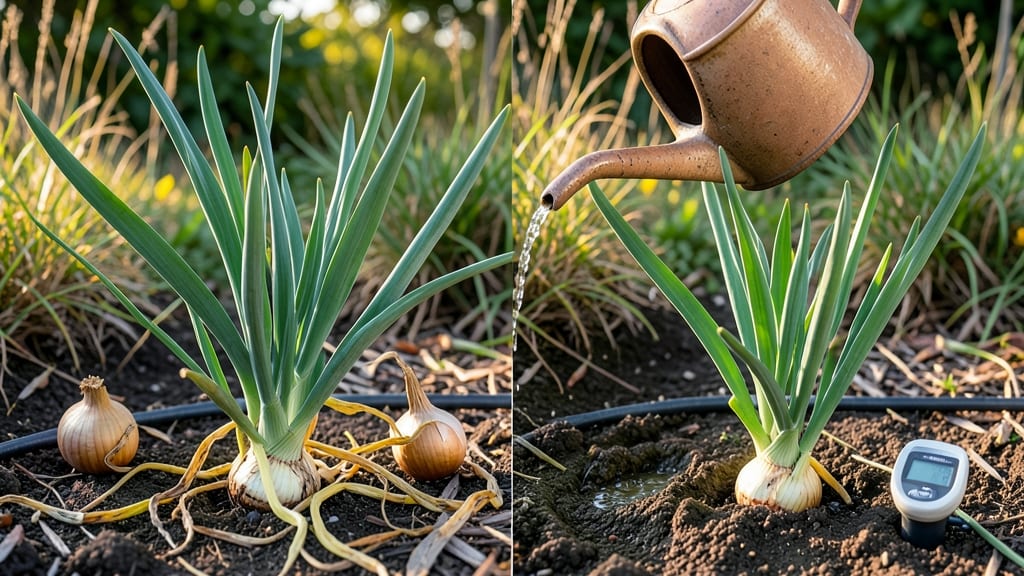
Onions need consistent moisture but not a lot of water — think 1 inch per week during active growth, adjusted for rain and soil type.
Picture this: you’ve spent weeks nurturing your 🧅 plants, only to watch them rot in the ground or bolt into flower because the watering was off. The key isn’t drowning them but keeping the soil evenly moist without letting it turn to mud.
Too much water leads to weak stems and disease, while too little stunts bulb development. The secret? A simple soil test and smart scheduling that changes as your onions mature from seedlings to harvest-ready bulbs.
Below, I’ll show you the exact watering schedule by season, how to spot over- or underwatering, and the one trick that saves storage onions from spoiling.
Onion water requirements: how much is too much?
Onions might seem like low-maintenance plants, but getting their water requirements wrong can turn your harvest into a soggy mess or tiny, bitter bulbs. The truth? Onions need consistent moisture, but not too much—think of it like Goldilocks: not too wet, not too dry, but just right.
Understanding the water needs by growth stage is key to avoiding common problems like bolting (premature flowering) or rot.
Most gardeners assume onions need a lot of water, but the reality is more nuanced. Seedlings require gentle, frequent watering to establish roots, while bulbing onions (the mature stage) need deep but less frequent watering to encourage strong bulb development.
Overwatering at this stage can lead to splitting bulbs or fungal diseases, while underwatering stunts growth and weakens stems. Let’s break down the science-backed moisture thresholds for each stage.
Environmental factors like climate and soil type play a huge role in how much water onions need. In hot, dry climates, onions may need watering every 3-5 days, while in cooler, humid regions, you might only need to water once a week.
Sandy soil drains quickly, requiring more frequent watering, whereas clay soil holds moisture longer and needs less. Always prioritize well-draining soil to prevent waterlogged roots, which can cause rot.
Here’s the ideal moisture threshold for onions at different stages, along with environmental adjustments:
| Growth Stage | Watering Frequency | Moisture Depth | Soil Moisture Test | Environmental Adjustments |
|---|---|---|---|---|
| Seedlings (0-4 weeks) | Every 2-3 days | Top 1 inch | Keep soil damp (not soggy) | Increase frequency in heat; reduce in rain |
| Bulbing (4-10 weeks) | Every 5-7 days | Top 2-3 inches | Let topsoil dry slightly between waterings | Reduce water in humid climates; increase in drought |
| Mature (10+ weeks) | Every 7-10 days | Top 3-4 inches | Allow soil to dry more between waterings | Stop watering 2 weeks before harvest |
| Green Onions (Harvested Young) | Every 3-4 days | Top 1 inch | Keep soil consistently moist | No adjustments needed for young harvests |
During the seedling stage, onions need frequent but shallow watering to encourage root development. Aim to keep the top 1 inch of soil consistently moist—think of a damp sponge, not a dripping one.
Overwatering here can lead to damping-off disease, a fungal issue that kills young seedlings. Use a fine mist or drip irrigation to avoid disturbing the soil around delicate sprouts.
Once onions enter the bulbing stage (around 4-6 weeks after planting), their water needs shift dramatically. This is when you want to encourage the onion to form a large, firm bulb rather than just leafy greens.
Reduce watering frequency to every 5-7 days and let the top 2-3 inches of soil dry out slightly between waterings. This signals the plant to redirect energy from leaf growth to bulb development.
Too much water here can cause split bulbs or encourage bolting, where onions flower prematurely and become bitter.
For mature onions (10+ weeks), cut back on watering even further. Let the top 3-4 inches of soil dry out between waterings to harden the skins and prepare them for storage. Stop watering entirely 2 weeks before harvest to allow the bulbs to cure properly.
This step is critical for long-term storage—onions that are harvested while still damp won’t last as long and are more prone to rot.
Green onions, which are harvested young, have slightly different water needs. Since you’re cutting them back repeatedly, they benefit from consistent moisture to keep growing. Water every 3-4 days and maintain the top 1 inch of soil as damp.
Avoid letting the soil dry out completely, or you’ll stunt their growth. Green onions are more forgiving than storage onions, but they still need steady water to produce tender, flavorful greens.
One of the biggest mistakes gardeners make is ignoring soil drainage. Onions hate soggy roots
The finger test: how to check soil moisture for onions
Onions might seem low-maintenance, but their water needs change dramatically from seedling to bulb formation. The finger test is my go-to method for checking soil moisture—it's free, precise, and tells you exactly when to water without guessing.
This simple technique helps prevent two common mistakes: overwatering (which causes rot) or underwatering (which stunts bulbs).
For onions, the finger test isn't just about sticking your finger in the dirt—it's about depth and timing. Young seedlings need barely moist soil, while mature bulbs prefer slightly drier conditions.
Let me show you how to do it right for each stage of growth, plus how to spot trouble signs in your soil.
Step-by-Step Finger Test for Onion Soil
- Step 1: Choose the right time—test soil in the morning after watering has settled (avoid evening tests to prevent fungal risks).
- Step 2: For seedlings (first 4 weeks), insert your finger 1 inch deep. Soil should feel lightly moist like a wrung-out sponge.
- Step 3: At bulb formation (4-8 weeks), test 2 inches deep. Ideal soil should feel slightly dry at the edges but moist in the center.
- Step 4: For mature bulbs (8+ weeks), test 3 inches deep. Soil should feel dry at the bottom but retain moisture near the surface.
- Step 5: Water when:
- Seedlings: Top 1 inch feels dry
- Bulbs: 2-3 inches feel dry
- Step 6: If soil clumps together when squeezed, it's too wet. If it powders, it's too dry.
One of the biggest mistakes I see is overwatering during bulb formation. When onions get too much water, their tops grow lush but the bulbs split or rot. Look for yellowing leaves with mushy bases—this is your plant's SOS signal.
On the flip side, if your onion tops wilt in the afternoon but perk up at night, your soil is likely too dry.
Compacted soil throws off the finger test completely. If your soil feels hard as a rock when dry or sticky when wet, it's time to improve drainage.
Mix in 1-2 inches of compost or sand to loosen it up. I've found that adding perlite to container-grown onions makes a world of difference for moisture control.
Remember, onions are drought-tolerant once established, but they won't form plump bulbs without consistent moisture. The finger test gives you that perfect balance—moist but not soggy. Master this technique, and you'll grow onions that store beautifully all winter long.
🧅