
Watering
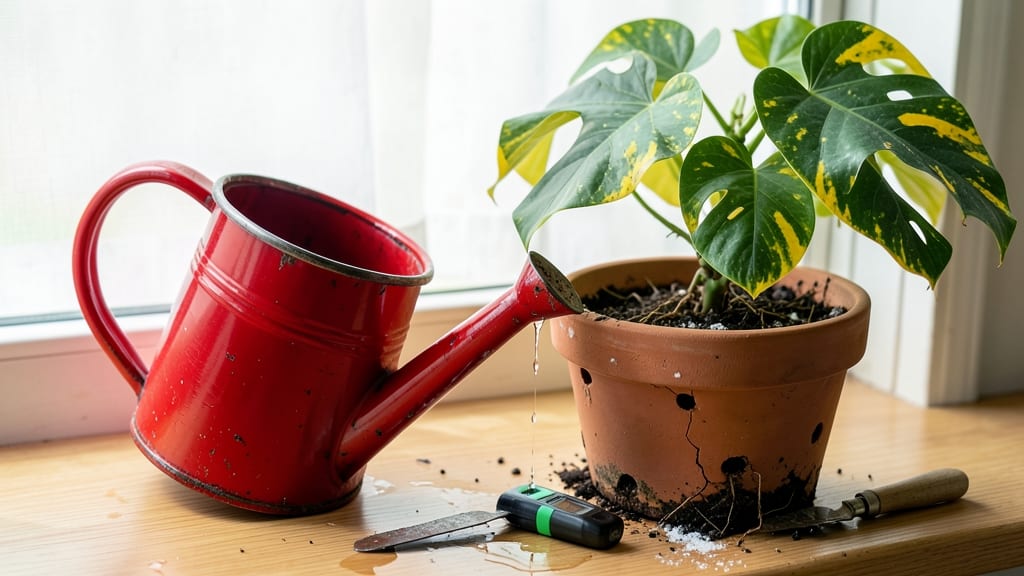
Plants turn yellow when overwatered because excess moisture suffocates roots, cutting off oxygen and starving them of nutrients, which causes leaves to yellow—especially the older ones first. Test soil moisture before watering to avoid this common mistake.
Overwatering creates a double problem: roots drown in soggy soil, and beneficial microbes can't break down nutrients properly. 🌱 This oxygen starvation forces plants to prioritize survival over growth, often showing up first as yellowing lower leaves.
I’ve seen this happen with houseplants left in saucers without drainage—within days, the roots start rotting, and the plant can’t recover without immediate intervention.
What’s tricky is that different plants handle moisture differently. Succulents like cacti or snake plants will yellow almost immediately, while tropical plants like ferns might take weeks to show signs.
The key is always checking soil moisture with your finger—if it’s damp more than an inch down, hold off on watering. Adjusting your routine based on your plant’s needs (and your local climate) makes all the difference.
💡 In This Article
- How Overwatering Triggers Yellow Leaves in Plants
- Fixing Overwatered Plants: Step-by-Step Recovery Guide
How overwatering triggers yellow leaves in plants
When roots sit in waterlogged soil for too long, they suffocate because oxygen can't reach them. This creates anaerobic conditions—essentially, the roots are drowning. Without oxygen, cells in the roots can't produce energy efficiently, and they start breaking down.
This process releases toxins that travel up the plant, disrupting nutrient transport and causing chlorosis (yellowing) in leaves, especially the older ones first. 🌱 Think of it like a human holding their breath too long—the body can't function properly.
The damage begins when soil moisture stays above 60% capacity for more than 24 hours. At this point, beneficial soil microbes that help roots absorb nutrients (like nitrogen and iron) become less active.
The plant's vascular system struggles to move these essential nutrients from roots to leaves, leading to yellow patches. In severe cases, roots may rot, releasing foul-smelling compounds and accelerating leaf drop. This is why you often see yellowing paired with mushy stems or blackened roots.
Different plants react at different rates based on their natural habitats. Tropical plants like ferns or calatheas might take 2-3 weeks to show yellowing because they're adapted to consistently moist soil. On the other hand, desert-adapted plants like jade or aloe will yellow within 3-5 days of overwatering.
The key difference? Succulents store water in their leaves, while tropical plants rely on constant moisture—both struggle when the balance tips too far.
What most gardeners miss is how quickly the problem escalates. Within 48 hours of overwatering, roots may start producing ethylene gas—a stress hormone that triggers leaf yellowing as a survival mechanism. This is your plant's way of shedding unnecessary biomass to focus energy on root recovery.
The yellowing often begins at the leaf margins and moves inward, creating a V-shaped pattern that's a classic sign of overwatering stress.
Consider this comparison: healthy roots in well-drained soil have a light tan color and firm texture, while overwatered roots turn dark brown or black and feel mushy to the touch. The transition happens silently—until you see those first yellow leaves.
That's why checking soil moisture with your finger (not just the surface) is critical. If the top 2 inches of soil are damp, wait before watering again.
One surprising factor is temperature. Cooler soils (below 60°F) hold moisture longer, slowing oxygen diffusion to roots. This means plants in winter or shaded areas are more vulnerable to overwatering damage.
Conversely, in hot climates, soil dries faster, but frequent watering can still lead to yellowing if drainage is poor. Always adjust your watering schedule based on both season and plant type.