
Plants
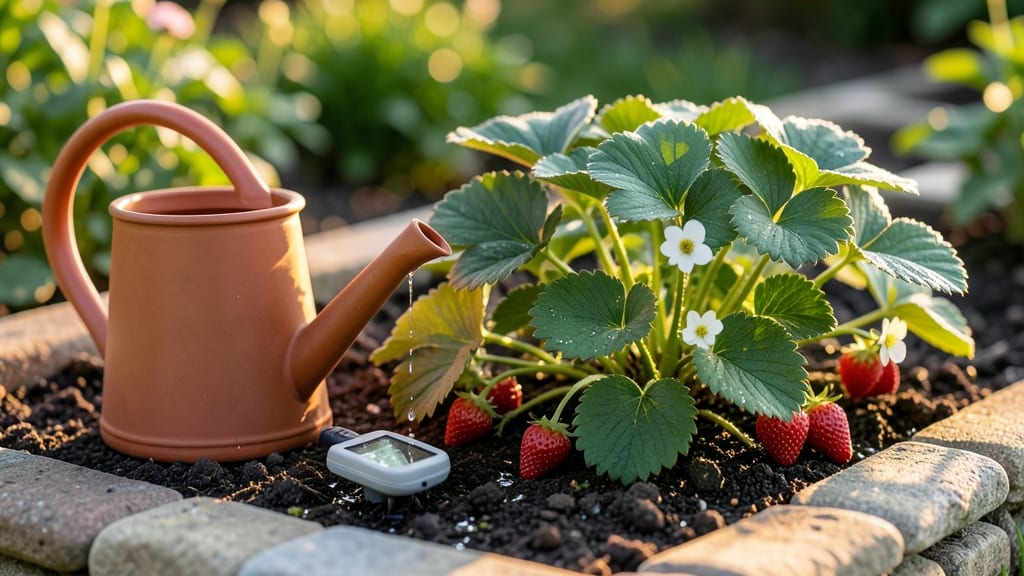
Do strawberry plants need a lot of water? The answer is a careful balance—they thrive with about 1 inch per week to keep roots happy without drowning them.
Here’s the catch: too little, and your berries shrivel; too much, and you’re fighting root rot. The key is consistency, not just volume, and knowing when to adjust for heatwaves or rainy spells.
This guide breaks down the 1-inch rule, seasonal tweaks, and smart watering tricks—like mulching—to keep your strawberries juicy and productive all season.
You’ll learn how to spot overwatering vs. underwatering, the best times to water, and why drip systems save you time (and your plants from stress).
The 1-Inch watering rule: how much water strawberries really need
Strawberries might seem like low-maintenance plants, but watering them correctly is the secret to sweet, abundant harvests. Unlike drought-tolerant succulents, strawberries need consistent moisture—but not soggy soil. The 1-inch watering rule is your golden guideline: aim to deliver 1 inch of water per week to the root zone.
This keeps roots hydrated without inviting rot or fungal diseases. Think of it as a balance between a thirsty athlete and a soggy sponge.
Why does this rule work? Strawberries have shallow roots that spread just 4-6 inches deep. When you water deeply, you encourage roots to grow wider rather than shallow, which makes plants more resilient. Surface watering (like a quick sprinkle) only wets the top layer, leaving roots thirsty.
Instead, focus on slow, deep watering to reach those roots where they live. This mimics natural rainfall, which soaks into the soil gradually.
Here’s the catch: the 1-inch rule isn’t set in stone. In summer heat, you might need to water every 2-3 days to maintain that inch, while spring and fall may only require weekly watering.
Always check the soil first—stick your finger 1-2 inches deep. If it feels dry, it’s time to water. If it’s damp, wait a day or two. This simple test saves you from over- or under-watering.
Seasonal adjustments are key. During fruiting season (late spring to summer), strawberries need more water—up to 1.5 inches per week—because they’re diverting energy to ripening berries. In winter, cut back to bi-weekly watering unless you’re in a frost-free zone. Mulching with straw or wood chips helps retain moisture, so you’ll water less often. It’s like giving your plants a cozy blanket to hold onto every precious drop.
Now, let’s talk measurement tools. You don’t need a fancy rain gauge—just a tuna can or straight-sided container. Place it near your plants and water until it fills to 1 inch. This gives you a visual cue for consistency.
For larger beds, a drip irrigation system with a timer is a game-changer. It delivers water slowly and evenly, so you’re not guessing whether your plants got enough. Plus, it reduces waste by targeting the roots directly.
| Season | Water Needs | Frequency | Soil Depth Check |
|---|---|---|---|
| Spring | 1 inch/week | Every 5-7 days | 1-2 inches deep |
| Summer | 1.5 inches/week | Every 2-3 days | 1-2 inches deep |
| Fall | 1 inch/week | Every 7-10 days | 1-2 inches deep |
| Winter | 0.5 inch/month | Bi-weekly | 1 inch deep |
Watch for early warning signs of water stress. Wilting leaves usually mean underwatering, but yellowing leaves can signal overwatering—especially if the soil smells sour or feels mushy. Another red flag? Blossoms dropping off before fruiting.
This often happens when plants are thirsty during flowering, so prioritize watering in late spring when buds form. A quick fix is to water deeply at the base, avoiding the leaves to prevent fungal spores from splashing up.
Container-grown strawberries need even more attention because their roots have limited space to access moisture. In pots, water every 2-3 days in summer and check soil moisture daily—containers dry out faster. Use a well-draining mix with perlite or coconut coir to prevent soggy roots.
If you notice roots circling the pot, it’s time to upgrade to a larger container. Roots need room to breathe, just like you do in a cramped space!
Morning is the best time to water strawberries. Watering in the early hours (before 10 AM) gives leaves time to dry, reducing the risk of fungal diseases like gray mold. Avoid evening watering, which can leave moisture on leaves overnight, creating a damp environment where pathogens thrive.
Think of it like putting on sunscreen in the morning—you’re protecting your plants from hidden threats before the day heats up.
Mulching is your secret weapon for efficient watering. A 2-3 inch layer of straw or shredded leaves locks in moisture, keeping soil cool and reducing evaporation. It also suppresses weeds, so you spend less time pulling them and more time enjoying your harvest.
Plus, mulch breaks down slowly, adding organic matter to the soil—like a slow-release fertilizer for your strawberries. Just avoid piling mulch right against the stems to prevent rot.
Remember, consistency is key. Strawberries hate moisture swings—one day drenched, the next bone-dry. Stick to your watering schedule, adjust for weather, and always prioritize deep, infrequent watering over shallow, frequent sprinkles.
With the 1-inch rule as your guide, you’ll grow lush, productive strawberry plants that reward you with juicy, sweet berries all season long. 🍓
Signs your strawberry plants are overwatered or underwatered (with fixes)
Strawberries thrive on consistent moisture, but too much or too little water throws them into distress. I’ve seen mushy stems from overwatering and crispy leaves from drought—both signal your plants are crying for help. The key is spotting these 5 warning signs early before damage sets in.
First, check your soil moisture by sticking your finger 1-2 inches deep. If it feels soggy, you’re overdoing it; if it’s dry, it’s time to water. Strawberries hate waterlogged roots but also suffer when their soil dries out completely. Balance is everything!
✅ DO: Water Deeply
- Water 1 inch per week (adjust for rain)
- Use drip irrigation for even moisture
- Water early morning to reduce fungal risk
- Check soil moisture before watering
❌ DON'T: Overwater
- Avoid standing water around plants
- Don’t water at night (promotes mold)
- Skip watering if soil is damp
- Avoid heavy clay soil without amendments
✅ DO: Improve Drainage
- Add compost to heavy soils
- Use raised beds for better drainage
- Mulch with straw to retain moisture
- Test soil pH (ideal: 5.5-6.8)
❌ DON'T: Underwater
- Avoid letting soil dry completely
- Don’t rely on rain alone in droughts
- Skip watering during fruit development
- Avoid shallow watering (roots need depth)
Overwatered strawberries show yellowing leaves starting at the bottom, followed by mushy stems and a foul smell. If you see gray mold (Botrytis), it’s a red flag—this fungus thrives in damp conditions. My fix? Remove affected leaves immediately and improve airflow by spacing plants 12-18 inches apart.
Underwatered plants, on the other hand, develop crispy leaf edges and drooping foliage by midday. The soil around them cracks when dry, and the berries may split or stay hard. To revive them, water deeply until moisture reaches 6 inches down and mulch to lock in hydration.
For stubborn drainage issues, amend your soil with perlite or sand to help water drain faster. If your garden sits in a low spot where water pools, consider raising beds or creating slight slopes.
A simple soil test kit ($10 at garden centers) reveals if your soil holds too much moisture or drains too quickly.
Remember, strawberries need 1 inch of water weekly, but adjust for rain and heat. During summer, you might water every 2-3 days, while winter’s chill reduces needs to bi-weekly. Pay attention, and your plants will reward you with juicy, sweet berries all season! 🍓