
Companion Plants
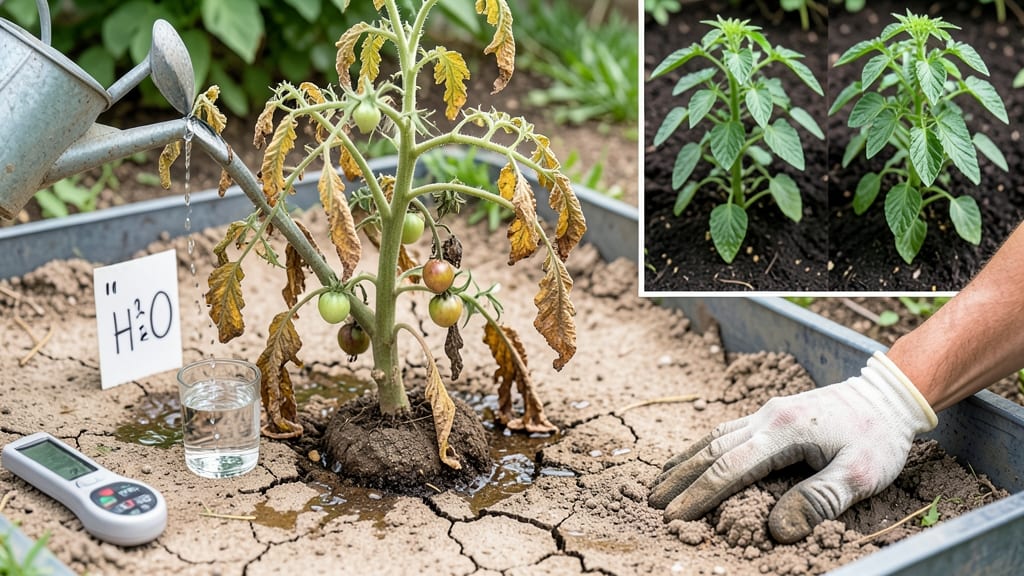
What happens if plants don't get water? Their leaves first droop and wilt as cells lose turgor pressure, then turn crispy brown at the edges within days. Without adequate moisture, roots begin to die back, photosynthesis stops, and the plant eventually collapses from severe dehydration. Quick rewatering can often revive early wilting, but prolonged drought leads to permanent damage.
What happens if plants don't get water? When plants stop receiving water, their first visible sign of distress is wilting—a clear indicator that their cells are losing the internal pressure needed to stay upright. 🌱 This happens because water-filled vacuoles shrink, causing leaves to droop and stems to weaken.
If dehydration continues, the plant's roots shrink and stop absorbing nutrients, while chlorophyll breaks down, leading to those telltale brown, crispy edges. The longer the drought, the more irreversible the damage becomes, as cells die and the plant's ability to recover diminishes.
Interestingly, different plant species react at varying speeds—succulents can survive weeks without water, while tropical plants may wilt in just a day or two. Understanding your plant's specific needs can make all the difference in preventing permanent damage.
For example, checking soil moisture with your finger (up to 2 inches deep) is often more reliable than relying on a watering schedule, as environmental factors like humidity and temperature play huge roles.
💡 In This Article
- The Science Behind Plant Dehydration Stages
- How to Revive Thirsty Plants: Step-by-Step Recovery Guide
The science behind plant dehydration stages
When plants stop receiving water, their first physiological response is the closure of stomata—tiny pores on leaf surfaces that regulate gas exchange. These stomata close to conserve moisture, but this also halts photosynthesis and carbon dioxide uptake.
Inside the cells, vacuoles (water-filled compartments) shrink as water is lost, causing turgor pressure to drop below 0.5 MPa (megapascal), the critical threshold for structural support. This pressure loss makes leaves wilt and stems sag within 12-24 hours for most species.
The next stage involves cellular dehydration, where proteins and enzymes begin to denature as their water-dependent structures break down. Roots shrink and pull away from soil particles, reducing their surface area for water absorption by up to 40% within 3-5 days.
Meanwhile, chlorophyll molecules degrade, turning leaves yellow (chlorosis) before progressing to brown, crispy edges—a sign of necrosis. In extreme cases, the plant's vascular system collapses, preventing nutrient transport entirely.
What makes this process irreversible is the death of root tips, which are responsible for absorbing water and nutrients. Once these tips die, new growth can't replace them quickly enough, and the plant's ability to recover diminishes.
For example, a tomato plant may wilt dramatically after 48 hours without water, but if roots haven't died back completely, it can bounce back with proper rewatering. However, if left for 7+ days, the damage becomes permanent.
Different plant types react at varying rates due to their adaptations. Succulents like aloe vera store water in their leaves, allowing them to survive weeks without moisture, while tropical plants such as ferns may show wilting within 12 hours in dry conditions.
Even soil type plays a role—sandy soils drain quickly, accelerating dehydration, while clay holds moisture longer but can suffocate roots if overwatered.
One often-overlooked detail is how temperature affects dehydration speed. In 90°F+ conditions, plants lose water 3x faster than in cooler weather due to increased transpiration rates. This is why desert plants have thick, waxy cuticles to reduce moisture loss.
Understanding these mechanisms helps explain why some plants revive easily while others never recover—it's not just about "how much" water they get, but when and how they receive it.
Here's what's happening at the cellular level: As water leaves plant cells, cytoplasm (the gel-like substance inside cells) shrinks away from cell walls, a process called plasmolysis. This damages membranes and disrupts metabolic functions. Without intervention, the plant's internal systems grind to a halt, leading to irreversible cellular death. 💧