
Companion Plants
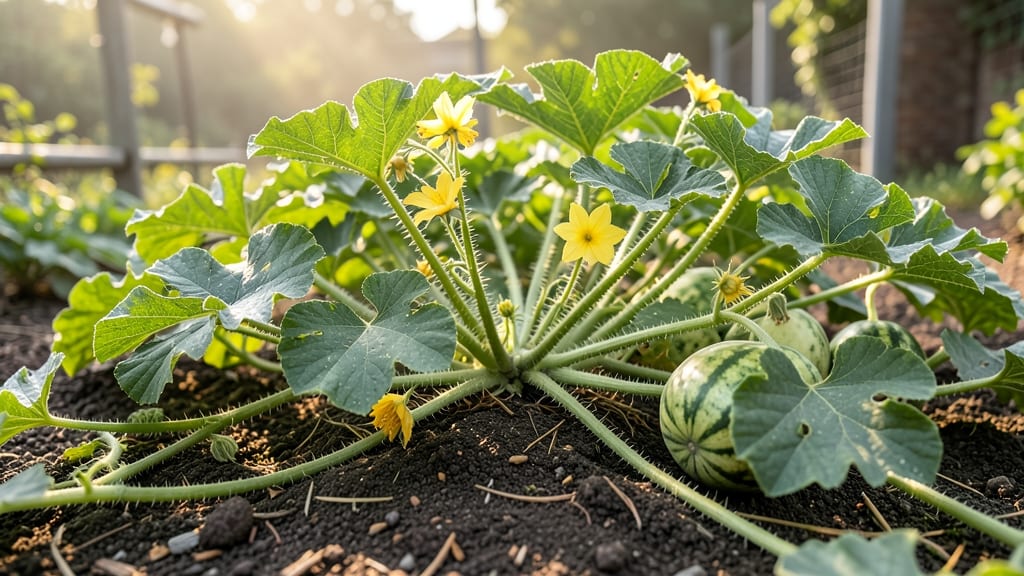
Yes, watermelon plants have thorns that grow along their vines and stems as a natural defense against pests and animals. These sharp, curved spines make harvesting and garden maintenance more challenging but won’t affect the fruit itself.
Watermelon thorns are actually a clever survival strategy—these prickly growths help deter hungry critters like deer, rabbits, and even some insects from munching on the leaves or vines. 🌱 Unlike the thorns on roses, which are modified stems, watermelon thorns are actually specialized leaf structures that grow in clusters along the main stems and tendrils.
This makes them particularly effective at protecting the plant while requiring minimal energy to produce.
If you're growing watermelons, you'll want to wear thick gloves when handling the vines, especially during harvest season. The thorns are most concentrated near the base of the plant and along the main runners, so focusing your pruning efforts there can make maintenance easier.
Some gardeners even use pruning shears with longer handles to avoid accidental pokes—just be careful not to damage the plant's vascular system while removing thorns.
💡 In This Article
- The Purpose and Science Behind Watermelon Plant Thorns
- Managing Watermelon Thorns for Easier Harvesting and Care
The purpose and science behind watermelon plant thorns
Watermelon thorns aren't just random spikes—they're a sophisticated evolutionary adaptation designed to protect the plant with minimal energy investment. These modified leaf structures, called trichomes, grow in clusters along the main stems and runners, creating a physical barrier that deters herbivores like deer, rabbits, and even some insects.
Unlike woody thorns (like those on roses), watermelon thorns are soft but sharp, made primarily of cellulose and lignin, which makes them effective without requiring the plant to allocate excessive resources to their growth. 🌱
The thorns' curved shape and placement along the plant's main structural points create what botanists call a "defense gradient"—more concentrated near the base and along primary runners where damage would be most critical.
This strategic distribution means the plant can protect its most vulnerable areas without over-investing in defense mechanisms.
For comparison, cucumber plants (also part of the cucurbit family) have similar but less pronounced thorns, while pumpkins develop thicker, more rigid spines that can reach up to 1 inch long, showing how different species adapt their defenses based on their specific threats.
What makes these thorns particularly fascinating is their dual role in plant ecology. Beyond physical protection, they also serve as a chemical deterrent—when damaged, they release compounds that can repel insects or even attract predatory wasps that feed on plant-eating pests.
This two-pronged defense system is why watermelon plants thrive even in areas with high herbivore pressure. The thorns' effectiveness is so well-proven that some commercial watermelon growers intentionally cultivate varieties with denser thorn coverage to reduce pesticide use. 🔍
From a gardener's perspective, understanding this defense mechanism explains why thorns are most concentrated during the plant's early growth stages, when it's most vulnerable. As the watermelon plant matures and develops thicker stems, the thorns become less dense but remain sharp enough to discourage casual browsing.
This natural defense system is one reason why watermelons can flourge in warm climates where they face constant pressure from wildlife—without requiring human intervention to protect them.
Interestingly, the thorns' structure varies slightly between watermelon varieties. Some heirloom types develop particularly aggressive thorn clusters, while modern hybrid varieties often have softer, less dense growth patterns. This variation occurs because plant breeders sometimes prioritize harvest ease over pest resistance.
For example, varieties like 'Sugar Baby' tend to have fewer thorns compared to wild or traditional types like 'Moon and Stars,' which can develop thorn clusters up to 3/4 inch long. 🌟
What most gardeners don't realize is that these thorns play a subtle role in the plant's overall health. By deterring pests, they reduce the need for the plant to allocate energy to repairing damage or producing defensive chemicals.
This energy redirection allows the plant to focus more resources on fruit development, which is why healthy watermelon plants with well-developed thorn defenses often produce larger, sweeter melons. The thorns aren't just a nuisance—they're a crucial part of the plant's survival strategy that directly impacts your harvest.