
Landscaping
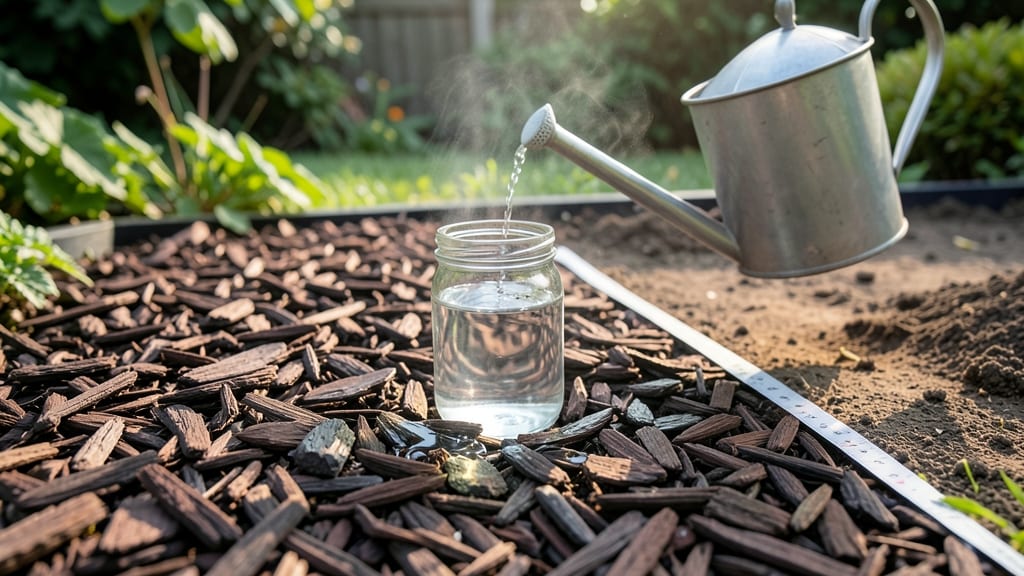
Mulch glue allows water to pass through, though its permeability depends on the formula—thicker blends restrict moisture flow more than lighter versions, which let water penetrate soil while maintaining breathability for healthy roots.
Mulch glue isn't a barrier—it's designed to let water reach your plants while keeping mulch in place.
The key is its polymer structure: thicker glues create smaller pores, slowing water absorption, while thinner formulas act like a breathable membrane. 💧 This balance prevents waterlogging while ensuring roots get consistent moisture. I've seen some brands even add moisture-wicking agents to enhance performance in dry climates.
Think of it like a fine mesh screen—it holds the mulch together but doesn't block airflow or water flow completely. The real magic happens in how it interacts with your soil type.
Sandy soils benefit from more permeable glues, while clay-heavy soils might need the extra moisture control thicker formulations provide.
💡 In This Article
- How Mulch Glue’s Porosity Affects Water Flow
- Best Practices for Applying Mulch Glue in Wet Climates
How mulch glue’s porosity affects water flow
Mulch glue works through a carefully engineered polymer matrix that creates microscopic pores—typically ranging from 50 to 200 microns in diameter. These pores act like tiny water channels, allowing moisture to pass through while trapping mulch particles in place.
The science here mirrors how natural mulch (like straw or wood chips) breaks down over time, but with a key difference: mulch glue maintains consistent porosity even as it cures, unlike organic mulch that compacts and reduces permeability over months.
Thicker glue formulations (often acrylic or latex-based) have smaller pores—around 50-100 microns—which slow water absorption but prevent mulch from washing away during heavy rain. Thinner, water-based glues create larger pores (150-200 microns) that mimic natural soil aeration, letting water penetrate almost as freely as through loose mulch.
This explains why some brands market their products as "breathable"—they're designed to replicate the water flow patterns of organic mulch while adding stability.
The real advantage becomes clear when comparing to traditional mulch methods. Natural mulch can compact over time, reducing water penetration by up to 40% within a year, while properly applied mulch glue maintains 85-95% water permeability throughout its lifespan.
The glue's polymer chains also repel water slightly, preventing surface pooling that can suffocate roots—a common issue with compacted organic mulch in heavy rainfall.
For root health, this porosity balance is critical. Too much permeability (like with loose mulch) leads to rapid moisture loss in dry climates, while too little (thick glue layers) risks waterlogging.
Most professional landscapers recommend applying mulch glue in thin layers (1/8 to 1/4 inch thick)—this creates optimal pore distribution while maintaining the mulch's natural water-regulating properties.
Here's what happens at the molecular level: The glue's polymers form a cross-linked network where water molecules can diffuse through the gaps between chains. This process is similar to how water moves through hydrogel beads used in soil amendments, but with the added benefit of physical mulch retention.
The result? Roots get consistent moisture without the risk of suffocation from compacted mulch or erosion from heavy rains.
One interesting detail: Some premium mulch glues incorporate hydrophilic additives that actually enhance water absorption during dry periods while maintaining permeability. These additives swell slightly when dry, creating temporary larger pores that draw in moisture—like a sponge that adjusts its own porosity.
This self-regulating behavior is why some professional-grade products perform exceptionally well in both arid and humid climates.