
Landscaping
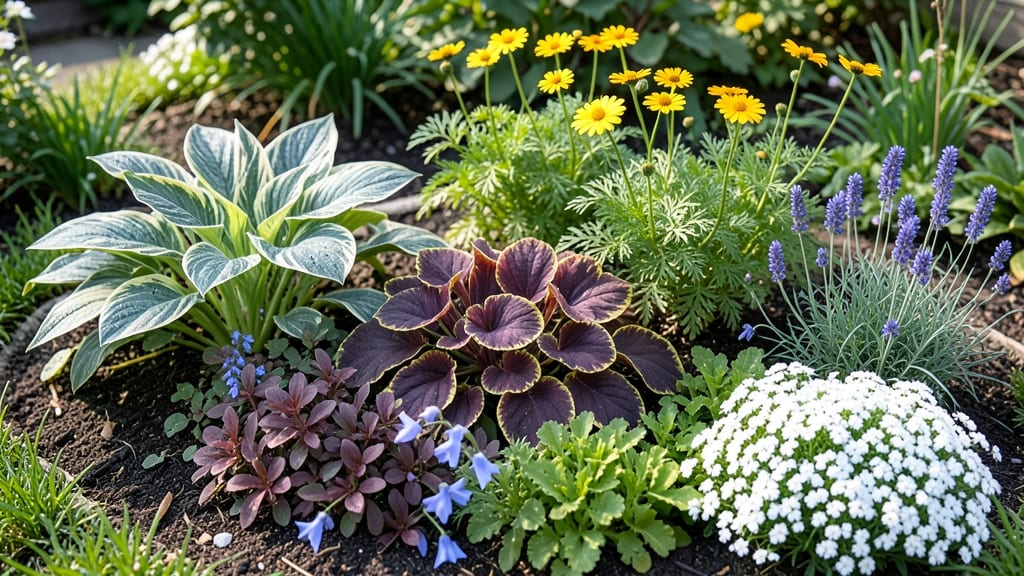
Front of border perennials are the unsung heroes of any garden—creating a lush, year-round carpet that frames your beds without demanding constant attention. 🌿 I’ve learned the hard way that choosing the wrong plants leads to leggy, floppy messes, but the right selection transforms that bare soil into a vibrant, low-maintenance edge.
The secret lies in matching growth habits, sunlight needs, and textures to create a cohesive look that thrives with minimal effort.
Think ajuga’s deep purple foliage spilling over edges, creeping thyme’s fragrant mats that deter weeds, or heuchera’s velvety leaves in jewel tones—these are the workhorses that stay compact, spread just enough to fill gaps, and handle foot traffic better than anything else.
Most do fine in 3-6 hours of sun, though some like saxifraga or sedum tolerate full shade, making them versatile for almost any border. The key is layering heights (6-12 inches tall) to create depth while keeping the front tidy and intentional.
By mid-spring, you’ll see these perennials knit together into a dense, weed-blocking groundcover that stays lush through summer’s heat and winter’s chill. Pair heuchera’s bold foliage with lamium’s trailing flowers for contrast, or let carex grasses add movement at the very front.
The best part? Once established, they require no staking, no deadheading, and far less watering than annuals—just occasional trimming to keep them shaped.
Whether you’re framing a wildflower meadow or a formal herb garden, these perennials adapt to almost any soil as long as it drains well. Start with three to five varieties for a balanced look, and watch how quickly your borders go from bare to showstopping with almost no effort.
The payoff is a garden that looks polished year-round, even when you’re not actively tending it.
📚 In This Guide
- What you need
- Instructions
- Tips and common mistakes
- Wrapping up and next steps
What you need
- ● 10–15 plants (mix of heights: 6–12" for foreground, 12–18" for mid-ground, 18–24" for depth). Choose front-of-border perennials like heuchera, ajuga, coral bells (heuchera), creeping thyme, or lamium for texture and color.
- ● Native or drought-tolerant varieties (e.g., sedum, semaphore or catmint) for resilience.
- ● 1–2 cubic yards of high-quality garden soil (or a mix of native soil + compost).
- ● Organic compost (1–2 bags, 40–60 lbs each) for nutrient boost.
- ○ Perlite or sand (optional, for drainage in heavy clay soils).
- ● Garden trowel or hand shovel.
- ● Garden gloves (1 pair).
- ● Measuring tape (10–25 ft).
- ● Watering can or hose with spray nozzle.
- ● Pruners (for cleanup).
- ● Mulch (2–3 bags of shredded bark or pine straw) to retain moisture and suppress weeds.
- ● Slow-release fertilizer (e.g., 10-10-10 or organic options like fish emulsion).
- ● Edging tool for clean borders (if desired).
- ● Drip irrigation kit (for automated watering).
Step-by-Step guide to selecting and planting front-of-border perennials
Here's how to create a low-maintenance, vibrant edge that thrives all season long.
🌱 Step 1: Choose Plants for Height, Texture, and Seasonal Interest
Select perennials that stay under 12 inches tall at maturity, with varied foliage textures and bloom times. I always include three types: early spring bloomers like heuchera or pulmonaria, mid-season stars like ajuga or lamium, and late-season performers like sedum or helichrysum. This ensures continuous color from March through October.
Look for plants labeled as "mounding" or "spreading"—these naturally fill space without needing staking. Avoid anything that flops or grows too aggressively, like ligularia or giant fleece flower, which can overwhelm the front edge. I also prioritize drought-tolerant varieties to reduce watering once established.
✂️ Step 2: Prepare the Planting Area for Optimal Drainage
Mark your planting area with spray paint or string, keeping plants 6-12 inches apart depending on their mature spread. Dig out a hole twice as wide as the root ball but only as deep as the container—planting too deep suffocates roots. Amend the native soil with 1 part compost to 3 parts existing soil to improve drainage and fertility.
If your soil is heavy clay, mix in sand or perlite to prevent waterlogging. I always test drainage by digging a 6-inch deep hole and filling it with water—if it drains in under 30 minutes, the soil is ready. If not, add more organic matter or consider raised beds for the front edge.
☀️ Step 3: Plant for Layered Visual Impact and Seasonal Flow
Arrange plants in odd-numbered groupings (3, 5, or 7) for natural balance. Place taller varieties toward the back of the front edge (closest to the walkway) and shorter, spreading types toward the front. For example, heuchera (12 inches) goes behind ajuga (6 inches) to create depth without blocking views.
Gently loosen the root ball before placing it in the hole, then backfill with the amended soil, pressing lightly to eliminate air pockets. Water deeply until the soil settles, then add a 1-inch layer of mulch (like pine fines or shredded bark) to retain moisture and suppress weeds. Avoid piling mulch against stems—keep it 2 inches away to prevent rot.
💧 Step 4: Establish a Watering Routine for the First Growing Season
Water newly planted perennials every other day for the first 2 weeks, then taper to once a week once they show new growth. The goal is to keep the soil evenly moist but not soggy—stick your finger 1 inch deep into the soil; if it feels dry, water again. Overwatering is the #1 killer of young perennials.
After the first season, most front-of-border perennials need only supplemental watering during extended dry spells (no rain for 10+ days). I set a rain gauge nearby to track precipitation—if it’s under 1 inch per week, I water deeply in the early morning to reduce evaporation.
🌿 Step 5: Maintain with Minimal Effort Through the Seasons
Deadhead spent blooms every 2-3 weeks to encourage repeat flowering, but only if the plant isn’t providing winter interest (like ornamental grasses or seed heads). In early spring, remove any dead foliage from the previous year, but leave a few seed heads for texture and wildlife value.
Fertilize lightly once in early spring with a balanced, slow-release fertilizer (like 10-10-10) if your soil is poor. I skip fertilizer entirely if the plants are thriving—overfeeding leads to leafy growth at the expense of flowers. Divide clumps every 3-4 years in early spring to keep them vigorous and prevent overcrowding.
Tips & tricks for perfect front-of-border perennial designs
Real talk: The difference between a front border that looks intentional and one that feels thrown together comes down to these small but strategic choices.
Plant Selection Strategy: In Step 1, when choosing your three seasonal types, prioritize plants with foliage interest beyond flowers. For example, pair heuchera with its striking purple leaves with ajuga, which has bold purple stems and spreads beautifully. This creates year-round visual appeal even when some plants aren't blooming. I've found that adding one ornamental grass (like carex) to the mix adds movement and texture that other perennials can't match.
Drainage Test Hack: The 30-minute drainage test in Step 2 is non-negotiable for front borders. I've learned the hard way that soggy soil leads to root rot in just weeks. Pro tip: If your clay soil fails this test, mix in coarse sand or perlite—I use a ratio of 1 part sand to 3 parts existing soil—but test drainage again after amending. For truly problematic areas, consider raised beds or containers—they're worth the investment for plants that will thrive for years.
Layering Secret: When arranging your odd-numbered groupings in Step 3, think vertically as much as horizontally. Place upright growers (like sedum) behind mounding types (like lamium) to create natural layers. I always sketch a rough layout first—this prevents that "all plants look the same height" mistake. Another trick: Add a low-growing ground cover (like creeping thyme) in front to tie everything together and suppress weeds.
Watering Wisdom: The every-other-day watering routine in Step 4 works, but here's what nobody tells you: Water in the early morning to reduce evaporation and fungal risks. I use a soaker hose on a timer for the first two weeks—it delivers consistent moisture without the overhead spray that can damage tender new growth. After establishment, most front border perennials only need water when rainfall drops below 1 inch per week, which is why I keep that rain gauge handy.
Pro Tips for Front Of Border Perennials
- Real talk: The difference between a front border that looks intentional and one that feels thrown together comes down to these small but strategic choices.
- Plant Selection Strategy: In Step 1, when choosing your three seasonal types, prioritize plants with foliage interest beyond flowers.
- Drainage Test Hack: The 30-minute drainage test in Step 2 is non-negotiable for front borders.
Frequently asked questions
Got questions about front-of-border perennials? You’re not alone! Here are answers to the most common queries to help you create a stunning, low-maintenance landscape.
What are the best front-of-border perennials for full sun?
For full sun, try Sedum (stonecrop), Lamium (dead nettle), or Heuchera (coral bells). These thrive with 6+ hours of sunlight daily and offer vibrant colors year-round. Pair them with Ajuga (bugleweed) for ground cover and texture.
Can I plant front-of-border perennials in fall?
Fall planting gives roots time to establish before winter. Aim for 4–6 weeks before your first frost. Water deeply after planting and mulch to protect from cold. Just avoid planting too late—bare-root perennials need time to settle.
How do I keep weeds from taking over my front-of-border garden?
Weeds thrive in thin plantings. Use mulch (2–3 inches of shredded bark or gravel) to suppress growth. Choose dense, spreading perennials like Creeping Thyme or Ajuga to outcompete weeds naturally. A quick hand-pulling session monthly keeps things tidy.
Are there drought-tolerant front-of-border perennials?
Yes! Opt for Sedum, Sempervivum (hens-and-chicks), or Dianthus. These store water in their leaves and need minimal irrigation once established. Group them with gravel mulch to retain moisture and reduce evaporation.
Why are my front-of-border perennials dying back early?
Early dieback often signals overwatering, poor drainage, or fungal issues. Check soil moisture—most perennials prefer dry feet. If leaves yellow or wilt, improve airflow by spacing plants 12–18 inches apart. Fungicides (like neem oil) can help if mildew is the culprit.
Wrapping up and next steps
Front-of-border perennials are the secret weapon for effortless, year-round beauty in your garden—no fuss, no stress, just stunning results! 🌸 From drought-tolerant lavender to vibrant coneflowers, these plants thrive with minimal care while delivering bold color and texture.
Whether you're a seasoned gardener or just starting, they’re the perfect way to elevate your landscape without the high-maintenance commitment.
Ready to transform your space? Start small: Pick 2-3 perennials that match your climate and style, then expand as you gain confidence. Your garden will thank you—and so will your weekends! 🌿✨