
Tools
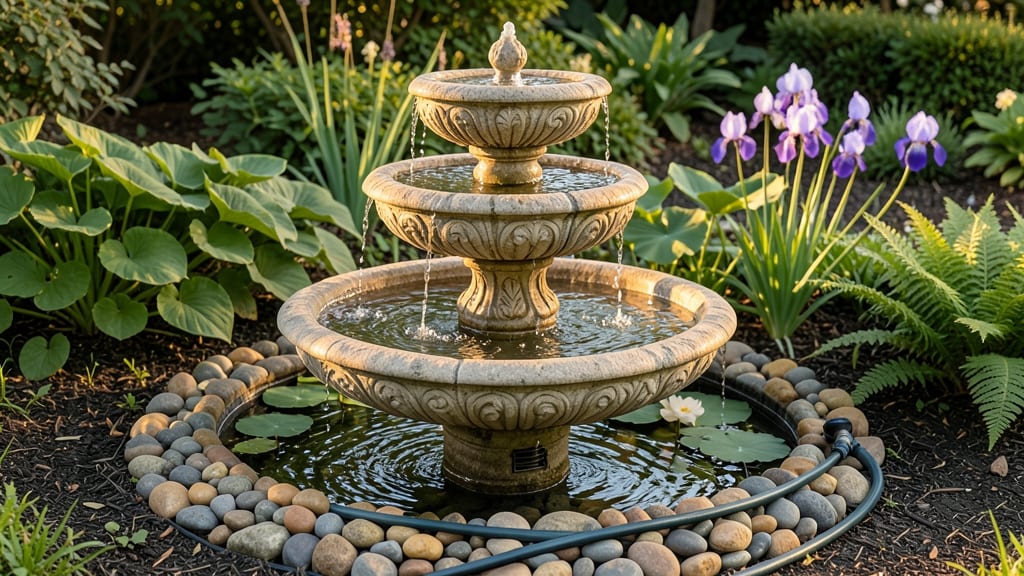
Maintaining clean garden fountain water involves daily skimming of debris, weekly partial water replacements (20-30%), and using specialized treatments like clarifiers or beneficial bacteria to combat algae and mineral deposits. Installing a quality pump filter and spacing out decorative elements will also help preserve crystal-clear water.
Clear fountain water isn't just about looks—it's about creating a healthy ecosystem for your pump and preventing costly damage. 💧 The key is breaking algae's life cycle by combining mechanical removal (skimming) with chemical prevention (treatments).
I've seen fountains turn cloudy in just days without proper maintenance, so consistency is everything. Even with treatments, testing water quality monthly helps catch pH imbalances before they cause scaling or equipment strain.
Most people overlook how fountain design affects water quality. Overcrowding plants or statuary creates stagnant pockets where debris collects, while proper pump placement ensures even circulation.
A filter rated for your fountain's flow rate will handle 90% of daily maintenance—just remember to clean or replace it every 4-6 weeks during peak use seasons.
💡 In This Article
- Science Behind Garden Fountain Water Clarity
- Step-by-Step Fountain Water Maintenance Routine
Science behind garden fountain water clarity
Fountain water clarity depends on a delicate balance between physical circulation and biological processes. When water stagnates, even for short periods, microscopic algae spores (like Chlorella or Spirulina) germinate in as little as 12-24 hours—especially in warm conditions.
These single-celled plants thrive on sunlight, organic debris, and dissolved nutrients like nitrates from decaying leaves. The green tint you see isn't just surface algae; it's a dense mat forming on submerged surfaces where light penetrates.
Mineral deposits form through a different process called precipitation. Hard water contains dissolved calcium and magnesium ions that bond with carbonates when exposed to air and heat from the pump.
At 70-80°F (typical fountain temperatures), these minerals crystallize on surfaces at a rate of about 0.05mm per month—enough to dull stone and clog filters over time. The pH level also matters: water with a pH below 7.0 accelerates corrosion of metal components while pH above 8.0 promotes scaling. 💧
Beneficial bacteria play a crucial role in maintaining equilibrium. Products like nitrifying bacteria (e.g., Nitrosomonas) break down ammonia from decaying matter into nitrites, then into nitrates—harmless nutrients that plants can absorb. Without these microbes, organic waste accumulates, creating a food source for algae.
The circulation from your pump doesn't just move water; it oxygenates it, which these bacteria need to function efficiently. A properly sized pump (typically 1-2 GPM per square foot of basin surface) ensures even distribution.
Light penetration is another critical factor. Fountains with deep basins often develop green water because sunlight reaches only the top 6-12 inches, creating ideal conditions for algae.
Adding floating plants like water hyacinths or installing a UV clarifier (which emits 254nm UV-C light) can reduce algae by 80-90% by destroying their DNA. The trade-off? UV systems require regular lamp replacements (every 9-12 months) and work best in clear water—not murky, debris-filled basins.
Temperature fluctuations also impact clarity. During summer, water temperatures can rise above 85°F, doubling algae growth rates while reducing oxygen solubility by 25%. This creates a vicious cycle: less oxygen means slower bacterial action, leading to more organic buildup.
In winter, colder water (40-50°F) slows bacterial activity but also reduces evaporation, which can concentrate minerals. That's why seasonal adjustments—like increasing water changes in summer or adding a dechlorinator in winter—are essential for maintaining balance. ✨
Here's what most people miss: even with perfect maintenance, your fountain's ecosystem will eventually reach a steady state where inputs (new water, debris) equal outputs (evaporation, treatment).
That's why testing water parameters monthly—especially chlorine levels, total dissolved solids (TDS), and alkalinity—lets you adjust treatments before problems become visible. For example, if your TDS exceeds 500 ppm, it's time for a 50% water change to prevent scaling.