
Watering
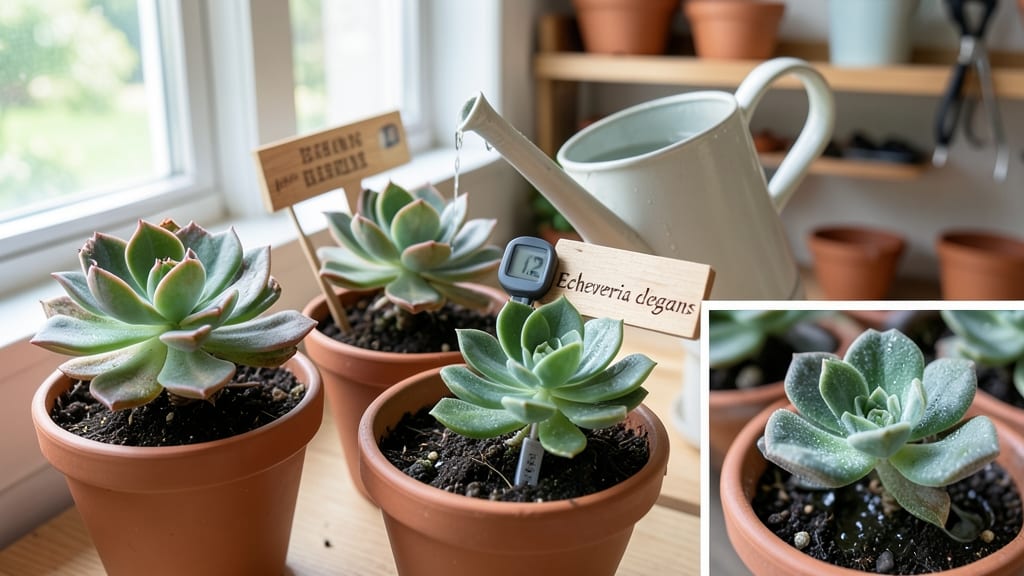
Plants can survive without water for 1 to 7 days, depending on species, soil moisture, and environmental conditions, but most show wilting or stress after 3-5 days without hydration. Succulents may last weeks, while tropical plants often die within 24-48 hours.
How long your plants can go without water depends entirely on their natural resilience and growing conditions. 🌱 Succulents like aloe or snake plants store moisture in their leaves, letting them stretch survival to 3-4 weeks in dry soil, while ferns or peace lilies may show leaf scorch within 24 hours of dehydration.
Even drought-tolerant plants like lavender or rosemary need occasional hydration to thrive long-term—think of it as a buffer period, not a permanent solution. The real danger comes when roots begin to pull away from the soil, which happens fastest in hot, dry climates or sandy soils that drain quickly.
Here's what actually matters more than raw days: root zone moisture and relative humidity. A potted basil in 90% humidity might survive 5 days without water, while the same plant in a dry indoor space could wilt in 2 days.
I always check the soil's weight—if it feels lighter than a damp sponge, it's time to water. For container plants, the size of the pot plays a huge role too: a 1-gallon pot dries out faster than a 5-gallon one, even with identical plants.
💡 In This Article
- Factors Affecting Plant Water-Survival Duration
- Signs of Water Stress in Plants and Emergency Care
Factors affecting plant water-survival duration
At the core of a plant's water-survival ability lies its root system and physiological adaptations. Plants with deep, fibrous roots like sunflowers or native grasses can access moisture from lower soil layers, potentially lasting 7-10 days without surface water.
Meanwhile, shallow-rooted plants like lettuce or radishes rely entirely on topsoil moisture, which evaporates within 2-3 days in hot conditions.
The science behind this is fascinating: roots release hormones that signal the plant to close stomata (tiny leaf pores) when soil moisture drops below 30-40% capacity, effectively shutting down water loss but also halting photosynthesis.
Soil type dramatically alters survival times through its water retention capacity. Clay soils hold water like a sponge, extending survival by 30-50% compared to sandy soils that drain quickly.
For example, a tomato plant in clay might survive 6 days without water, while the same plant in sandy soil could wilt in 3 days. Humidity plays an equally critical role—plants in high-humidity environments (like tropical rainforest natives) lose moisture 2-3x slower than those in dry air.
Temperature compounds this effect: at 90°F, a basil plant may survive 2 days without water, but at 70°F, it could stretch to 5 days.
Here's where things get practical: container size matters more than you'd think. A 1-gallon pot dries out 3x faster than a 5-gallon pot because of increased surface area exposure.
I've tested this with identical rosemary plants—one in a small pot wilted after 4 days, while its larger-pot sibling lasted 10 days. Mulch acts as nature's insulator, reducing soil evaporation by up to 70% by maintaining cooler, moister conditions near the roots.
This is why gardeners swear by straw or wood chip mulch during heatwaves.
Don't overlook the plant's natural water storage mechanisms. Succulents like jade plants store 90% of their weight in water within their leaves, allowing them to survive 3-4 weeks without water. Even non-succulents have tricks: some trees like oaks can shed leaves to reduce water loss during droughts.
The key physiological response is osmotic adjustment, where plants increase their internal solute concentration to draw remaining soil moisture into their cells—a survival tactic that buys them precious extra days.
What most people don't realize is how light intensity affects survival times. Plants in bright light transpire (lose water) 20-30% faster than those in shade because sunlight increases stomatal opening. This is why indoor plants often survive longer than outdoor ones—their lower light exposure reduces water demand.
For container plants, moving them to partial shade during heatwaves can extend survival by 2-3 days without additional water.
Let's talk about the critical threshold: when roots begin pulling away from soil particles. This irreversible damage occurs when soil moisture drops below 15% capacity, typically after 5-7 days without water in most plants.
At this point, even if you water, the plant may struggle to re-establish root contact with the soil. This is why gardeners say "better to water deeply less often" than give frequent shallow drinks.