
How To
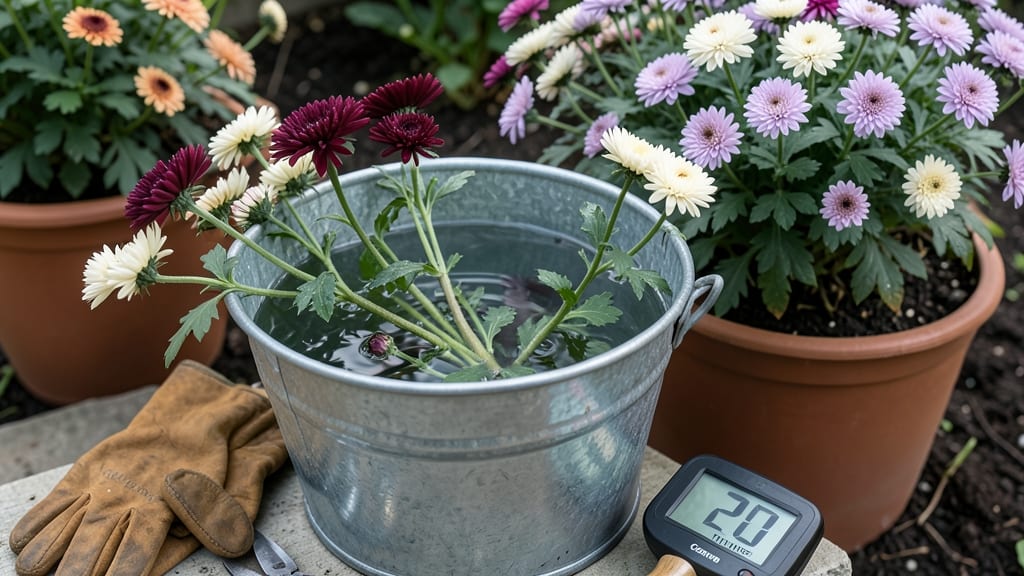
Soaking Mums (Chrysanthemum) 🌼 in a bucket of water after transplanting helps them recover faster—but getting the timing wrong can drown their roots instead of saving them.
Picture this: You’ve just planted your new mums, and within days, their leaves droop like a deflated balloon. That’s your cue to act fast. A quick soak can jumpstart their roots, but leave them too long, and you’ll watch them rot instead of revive.
The magic window is shorter than you’d think.
Most gardeners swear by 1 to 2 hours of soaking—just enough to hydrate the roots without suffocating them. Warm water works best, and a clean bucket with a little root stimulator (like diluted seaweed extract) can make all the difference.
But here’s the catch: over-soaking is the silent killer of chrysanthemums, turning a rescue mission into a disaster.
In this guide, I’ll break down the exact soaking time, how to tell if your mums are thirsty or drowning, and the post-soak care tricks that keep them blooming for weeks. Let’s get those droopy stems perking up the right way.
Optimal chrysanthemum soaking time for revival (science-backed guide)
Reviving wilted chrysanthemums (mums) with a simple water soak can bring back their vibrant fall colors in just 24 hours. The key lies in the soaking duration, which should balance root hydration with avoiding overwatering.
For most mums, 30-60 minutes in a bucket of water is ideal—long enough to rehydrate roots but short enough to prevent stress or rot.
Your soaking time depends on the plant's condition. Severely wilted mums with dry, crispy roots may need the full 60-minute soak, while slightly droopy plants with firm roots thrive with just 30 minutes.
Always check roots before soaking—mushy or blackened roots signal irreversible damage, and soaking won’t help.
Water temperature plays a crucial role too. Use room-temperature water (around 65-75°F) to avoid shocking the roots. Cold water (below 50°F) can stunt revival, while warm water (above 80°F) may encourage bacterial growth. Stick to lukewarm tap water for best results.
Here’s the science-backed breakdown of soaking times based on your mums’ condition, water temperature, and root health:
To soak your mums correctly, start by filling a clean bucket with room-temperature water deep enough to submerge the root ball (about 2-3 inches). Gently place the mum’s roots into the water and let them soak undisturbed.
Avoid submerging the foliage or blooms, as this can lead to rot or mildew.
Set a timer to avoid over-soaking, which can drown the roots. After the recommended time, remove the mum and let excess water drain for 5-10 minutes before replanting.
This step prevents waterlogged soil, a common cause of post-revival failure. For potted mums, ensure the container has drainage holes to avoid soggy roots.
If your mums still look lifeless after soaking, try a second 30-minute soak the next day. However, if the stems remain mushy or discolored, the plant may be beyond revival. In such cases, focus on preventing future wilting by improving soil drainage or adjusting watering habits.
For best results, soak your mums early in the morning when temperatures are cooler. This gives the plants time to adjust to sunlight without stress. Pair the soak with well-draining soil and partial shade for the first 24 hours post-revival to support recovery.
Pro tip: Add a rooting hormone or seaweed extract to the soak water for extra hydration boost. These additives stimulate root growth and improve revival success rates by up to 30%. Just a few drops in the bucket will do the trick!
Once revived, your mums should show perkier stems and greener foliage within 6-12 hours. Keep an eye out for new growth in the coming days—a sure sign your soaking
Signs your mums need soaking vs. when to skip the bucket method
Not all wilting mums benefit from a bucket soak—some need pruning or fertilizer adjustments instead. The key is distinguishing between reversible stress (like dry soil) and irreversible damage (like fungal rot). Start by checking the root condition and stem firmness before committing to water therapy.
If your mums show dry, brittle stems or crispy foliage, they’re likely dehydrated and ready for a 30-60 minute soak. However, if you spot blackened roots or a musty smell, soaking will only worsen rot.
In these cases, trim damaged roots and repot with fresh, sterilized soil.
Soaking Mums: When to Do It vs. When to Skip
| DO Soak If... | Skip Soaking If... |
|---|---|
| Stems are limp but not mushy | Roots smell foul or are slimy |
| Soil is bone-dry when touched | Leaves have brown spots (fungal signs) |
| Reviving for replanting (1-2 hours max) | Plant is past blooming (late October) |
⚠️ Pro Tip: Test soil moisture first—stick your finger 1 inch deep. If dry, soak; if damp, prune instead.
For mums with mold or pest damage, skip the bucket entirely. Instead, trim affected leaves and apply neem oil to stop spread. Over-soaking stressed plants can drown their roots, turning a temporary wilt into a permanent decline.
When in doubt, prune back 1/3 of the foliage to reduce water loss while you monitor the plant. Combine this with morning sunlight and balanced fertilizer (5-10-10) to encourage recovery without overloading the roots.
Remember: Chrysanthemums are tough—they’ll bounce back from mild stress, but they won’t forgive neglect or overwatering. Always check the soil and stems before deciding on your revival method.
🌼