
How To
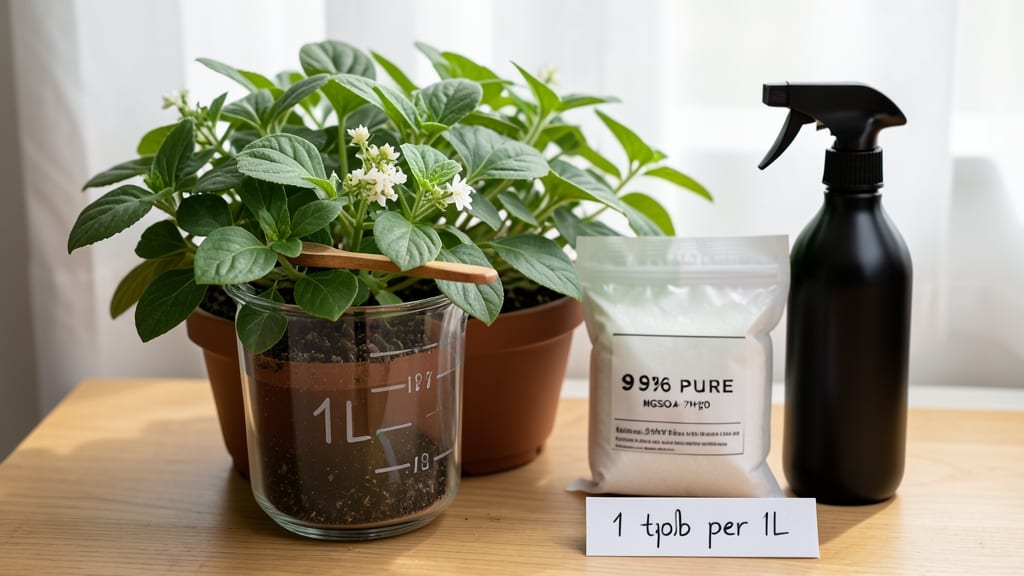
Mixing 1 tablespoon of Epsom salt in 1 litre of water gives your 🌱 General Plant a magnesium boost without overdoing it—just enough to turn yellowing leaves green again.
Struggling with yellowing leaves or stunted growth? Epsom salt might be your plant’s secret weapon—but using the wrong dose can burn roots instead of saving them. The key is precision: too little does nothing, while too much turns soil toxic.
This simple ratio works for most plants, but tomatoes and citrus need a stronger dose. Below, I’ll break down how to adjust for different needs, when to apply it (foliar spray vs. soil drench), and how often to repeat it for best results.
You’ll also learn the warning signs of overuse—like crispy leaf edges—and which plants to avoid treating entirely. Let’s get your 🌱 General Plant thriving the right way.
Epsom salt dosage by plant type: exact measurements for 1 litre of water
Epsom salt—magnesium sulfate—isn’t just for soaking sore feet. When mixed correctly, it delivers essential magnesium and sulfur to plants struggling with yellowing leaves or poor growth. But the wrong dose can burn roots or disrupt soil chemistry.
Here’s how to measure it precisely for 1 litre of water based on your plant’s needs.
Always use pure Epsom salt (no additives) and room-temperature water. Stir until fully dissolved—undissolved crystals can harm roots. For most plants, I start with 1 tablespoon per litre, but sensitive species need half that. Let’s break it down by plant type to avoid guesswork.
⚠️ Critical Note: Never exceed 2 tablespoons per litre unless your plant is a heavy feeder like tomatoes or citrus. Overuse leads to salt toxicity, causing leaf scorch and root damage. Always test soil first—if it’s already high in magnesium, skip this step.
| Plant Type | Dosage (per 1L water) | Frequency | Notes |
|---|---|---|---|
| Leafy Greens (Lettuce, Spinach, Kale) | 1 tsp (5g) | Every 4 weeks | Use for foliar spray only; avoid soil for tender greens. |
| Flowering Plants (Roses, Petunias, Lavender) | 1 tbsp (15g) | Every 6 weeks | Boosts bloom production; apply to soil at base. |
| Tomatoes & Peppers | 2 tbsp (30g) | Every 2 weeks (soil only) | Heavy feeders—mix into irrigation water during fruiting. |
| Citrus Trees (Lemons, Oranges, Limes) | 1 tbsp (15g) | Monthly (spring-fall) | Prevents yellowing leaves; dilute further for potted citrus. |
| Houseplants (Ferns, Calatheas, Snake Plants) | ½ tsp (2.5g) | Every 3 months | Use foliar spray; avoid succulents and cacti. |
| Succulents & Cacti | Avoid | N/A | Salt-sensitive—can cause root rot. Use only if soil tests confirm deficiency. |
For foliar sprays, use a fine mist sprayer and apply in the early morning to avoid leaf burn from sunlight. Shake the mixture well before each use—settled crystals can clog the nozzle.
I’ve seen calatheas perk up within days after just one light spray, but always monitor for brown leaf edges, a sign of overuse.
When applying to soil, water the plant first to prevent salt buildup near roots. Pour the Epsom salt solution directly into the soil at the plant’s base, not on the leaves.
For container gardens, halve the dosage—potted plants have less soil to dilute the salt. Always flush the soil with plain water after 2–3 applications to prevent salt accumulation.
Signs your plant needs more magnesium include yellowing between leaf veins (interveinal chlorosis) or stunted growth. But if leaves curl or develop brown crispy edges, you’ve overdone it.
In that case, flush the soil with 3–4 litres of plain water per plant to dilute excess salt. Patience is key—reapply only after 4–6 weeks if symptoms return.
Pro tip: Store your Epsom salt solution in a glass spray bottle (plastic can degrade over time) and label it with the date. Most mixtures last 3–5 days before losing potency.
I keep a small bottle in my gardening shed for quick foliar treatments, and it’s saved my roses from magnesium deficiency every spring.
🌱 Remember: Epsom salt is a supplement, not a replacement for balanced fertilizer. Use it as a targeted boost—not a daily routine. Your plants will thrive
When and how to use Epsom salt: frequency, application methods, and signs of overuse
Epsom salt—magnesium sulfate—is a gardener’s go-to for fixing yellowing leaves and boosting plant health, but timing and method matter. Too much or the wrong approach can burn roots or disrupt soil balance.
The key is knowing when to apply it as a foliar spray versus a soil drench, and recognizing the difference between magnesium deficiency and salt toxicity.
For most plants, the ideal frequency is every 4–6 weeks during the growing season (spring to early fall). However, heavy feeders like tomatoes or citrus trees may need monthly treatments, while sensitive plants like succulents should avoid it entirely.
Always test soil first—if your plants show yellowing between veins, it’s likely a magnesium deficiency.
- 1 General Use (Foliar Spray): 1–2 tbsp per litre for leafy greens and flowering plants
- 2 Heavy Feeders (Tomatoes, Peppers): 2 tbsp per litre for soil drench every 2 weeks
- 3 Citrus Trees & Roses: 1 tbsp per litre for foliar spray monthly
- 4 Seedlings & Sensitive Plants: ½ tbsp per litre max—dilute further if needed
Spring is the best time for soil applications, while summer calls for foliar sprays to prevent leaf scorch. Always apply in the early morning or late afternoon to avoid sunburn on treated leaves.
For foliar sprays, mist until leaves are lightly damp but not dripping. For soil drenches, water thoroughly to distribute the solution evenly.
Watch for signs of overuse: crispy leaf edges, brown spots, or stunted growth. These symptoms mimic magnesium deficiency but occur when the soil’s salt concentration becomes toxic.
If you see these, flush the soil with plain water and reduce future doses by half. Succulents and cacti are especially vulnerable—avoid Epsom salt entirely for these drought-loving plants.
For houseplants, dilute even further: ½ tsp per litre for foliar sprays once every 3 months. Overwatering with Epsom salt can raise soil pH too quickly, locking out other nutrients.
Always pair treatments with a balanced fertilizer to maintain nutrient diversity. If your plants thrive without it, skip it—Epsom salt is a supplement, not a replacement for proper soil care.
Remember, the goal is to supplement, not overwhelm. Start with the lowest dose, monitor your plants closely, and adjust as needed. With the right approach, Epsom salt can revitalize struggling plants without the risks of overuse. 🌿