
Light Requirements
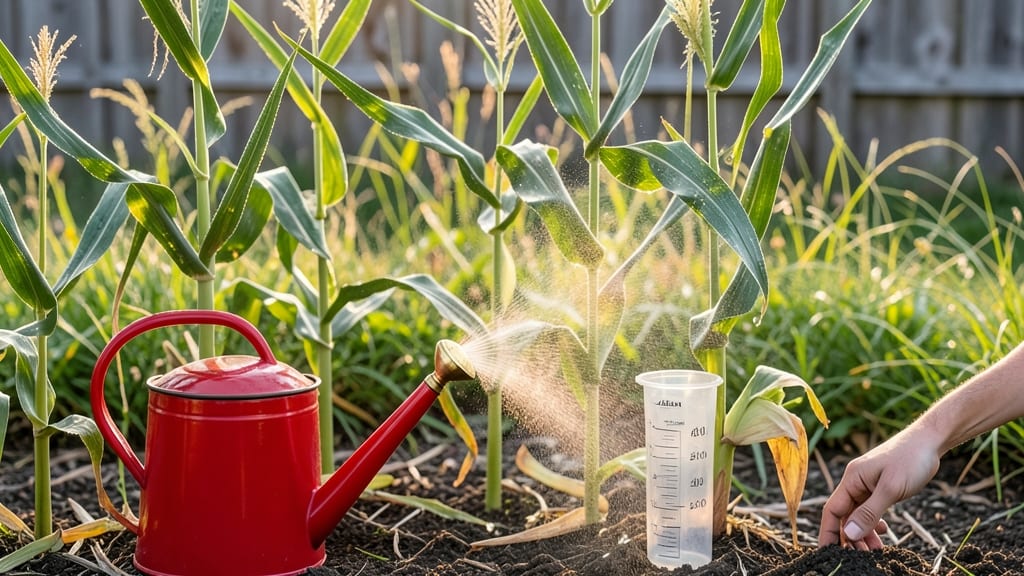
To water corn properly, aim for 1 inch of moisture per week—a rule that keeps stalks strong and kernels sweet 🌽. Too little, and your plants wilt; too much, and you risk rot. The trick is consistency, not just volume, and knowing when to adjust for rain or drought.
Picture this: your corn is reaching for the sky at 1 inch per week, but a dry spell hits. Without the right watering rhythm, those tall stalks can’t support the ears you’ve worked so hard to grow.
Or worse, soggy soil invites pests and disease. I’ve seen both mistakes firsthand—and the difference in yield is night and day.
Here’s the game-changer: morning watering beats evening every time. It gives roots time to drink up before the heat evaporates the moisture, and it keeps fungal spores at bay. Plus, you’ll spot thirsty plants before they wilt by checking soil 2 inches down—dry? Water deeply. Muddy? Hold off.
In this guide, I’ll break down the exact watering schedule by stage—seedling, tasseling, and silking—plus the tools and techniques to nail that 1-inch-per-week goal. No guesswork, just plump ears and happy plants.
How much water corn needs per week: the 1-Inch rule explained
Corn thrives on consistent moisture, but too much or too little water can ruin your harvest. The 1-inch-per-week rule is your golden standard—this means delivering about 1 inch of water to the root zone every 7 days, whether from rain or irrigation.
This ensures your corn plants grow tall, strong stalks and develop plump, sweet kernels instead of shriveled ears.
Why does corn need 1 inch of water weekly? During its growing season, corn requires steady hydration to support rapid growth, especially during critical stages like tasseling and silking.
Skipping water can lead to poor pollination and underdeveloped ears, while overwatering causes root rot and fungal diseases. Balancing this is key to a bountiful harvest.
| Stage | Water Needs | Frequency | Notes |
|---|---|---|---|
| Seedling | ½ inch per week | Every 2-3 days | Keep soil moist but not soggy |
| Vegetative | 1 inch per week | Daily or every other day | Critical for stalk growth |
| Tasseling/Silking | 1.5 inches per week | Daily | Pollination success depends on moisture |
| Kernel Development | 1 inch per week | Every 2-3 days | Maintain steady moisture for plump ears |
| Maturity | Reduce to ½ inch per week | Bi-weekly | Prevents ear rot before harvest |
To measure 1 inch of water, use a simple rain gauge or a straight-sided container like a tuna can. Place it near your corn plants and fill it with water until it reaches the 1-inch mark.
This ensures you’re delivering the right amount without guesswork. Morning watering is best—it reduces evaporation and prevents fungal diseases that thrive in damp evening conditions.
If you’re in a drought-prone area, increase your watering to 1.5 inches per week during hot spells, especially when corn is tasseling or silking. Conversely, if your region gets heavy rainfall, reduce irrigation to avoid waterlogged soil.
Always check the top 2-3 inches of soil before watering—if it’s dry, it’s time to hydrate.
For accurate soil moisture checks, use a soil moisture meter or the finger test. Stick your finger 1-2 inches deep into the soil. If it feels dry, water thoroughly.
If it’s damp, wait another day. Mulching with straw or grass clippings helps retain moisture and keeps roots cool, which is especially helpful in hot climates.
Adjust your watering based on weather conditions. If temperatures soar above 90°F (32°C), corn may need daily watering to prevent stress. Conversely, during cool, cloudy periods, you can stretch watering to every 3-4 days. Always prioritize deep watering over light sprinkles—this encourages strong root development.
Overwatering is just as harmful as underwatering. Soggy soil cuts off oxygen to roots, leading to root rot and stunted growth. If your corn plants show signs of yellowing leaves or mold at the base, you’re likely overwatering.
Let the soil dry slightly between waterings, especially in clay-heavy soils that retain too much moisture.
For container-grown corn, water more frequently—small pots dry out faster. Check the soil daily and water when the top 1 inch feels dry. Use a well-draining potting mix to prevent root rot.
In large garden beds, water deeply but less often, aiming for 1 inch per week while allowing the soil to breathe between sessions.
Remember, consistency is key. Corn plants thrive on predictable moisture, so stick to your schedule unless weather conditions change dramatically. By following the 1-inch rule and adjusting for your local climate, you’ll grow corn that’s tall, healthy, and packed with sweet kernels. 🌽
Signs of overwatering vs. underwatering corn: what to watch for
Corn plants are surprisingly sensitive to water—too little and they wilt, too much and they rot. The key is recognizing the visual and tactile signs early. Yellowing leaves or drooping stalks often signal trouble, but the root cause (thirst or soggy soil) changes how you fix it.
Start by checking the soil moisture 1-2 inches down. If it’s dry, your corn is thirsty. If it’s muddy, you’ve overwatered. Root rot from excess water is just as deadly as drought stress for corn’s delicate system.
Overwatering Corn
- Mushy, yellow leaves
- White mold on soil
- Stunted growth
- Stop watering immediately
- Improve drainage
- Pull affected plants
Underwatering Corn
- Wilted leaves (even at night)
- Brown leaf edges
- Dry, crumbly soil
- Water deeply at soil level
- Mulch to retain moisture
- Water in early morning
For overwatered corn, focus on drainage fixes like raised beds or sand amendments. Remove mulch temporarily to let soil dry. Underwatered corn needs consistent moisture—aim for 1-2 inches of water per week, delivered slowly at the base.
Check the ear development too. Underwatered corn may have small, shriveled ears, while overwatered plants might drop pollen before pollination. Both issues stem from poor root health, so adjust your watering routine immediately.
Pro tip: Use a moisture meter to avoid guesswork. Insert it 2 inches deep—if it reads dry, water; if it’s saturated, wait. This simple tool prevents both extremes.
Remember, corn’s root system is shallow and spreads wide. Surface watering won’t help—always water at the soil level to encourage deep roots that support those towering stalks.