
Watering
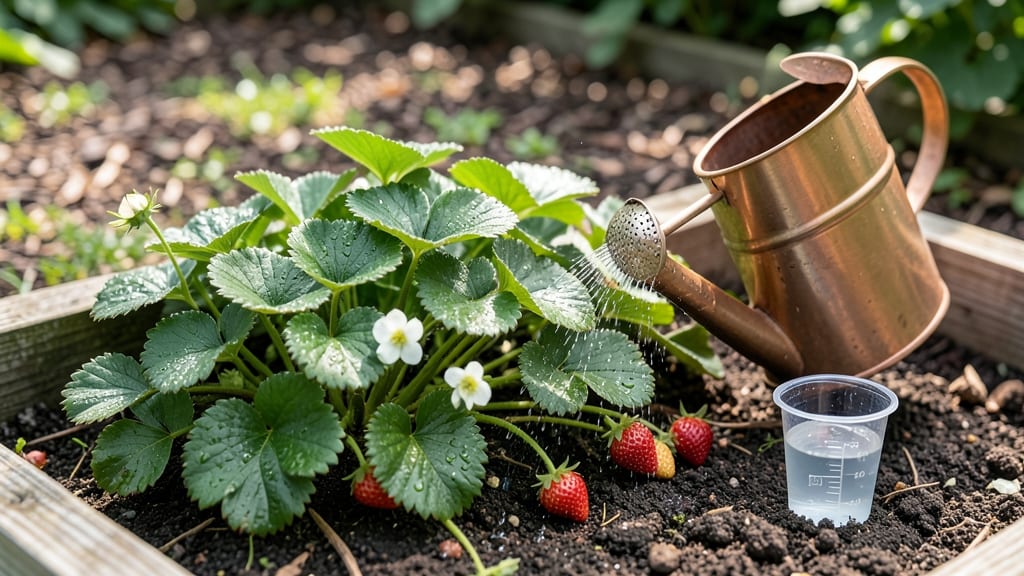
Watering strawberry plants the right amount keeps your 🍓 harvest juicy and abundant—too little or too much can ruin everything.
Struggling to keep your strawberry plants thriving? Overwatering or underwatering can turn your lush berries into a sad, wilted mess. The key is knowing exactly how much water your plants need at each stage of growth, from tiny seedlings to heavy fruit production.
Most gardeners water strawberries 1 inch per week, but that changes with the season. In spring, when roots are establishing, you’ll need to water every 2-3 days to keep soil moist 2 inches deep.
Once fruiting begins, morning watering is critical—it prevents fungal diseases and keeps berries sweet.
In this guide, I’ll break down the exact watering schedule by growth stage, plus how to spot overwatering or underwatering before it’s too late. You’ll learn when to adjust for heatwaves, drought, or rainy spells—so you can enjoy a bountiful harvest without guesswork.
Strawberry watering schedule by growth stage: daily vs weekly needs
Strawberries are delicate plants that need consistent moisture to thrive, but overwatering can be just as damaging as underwatering. The key is adjusting your watering schedule based on their growth stage—from planting to fruiting.
I’ll break down exactly how much and when to water for optimal berry production and plant health.
Newly planted strawberries need gentle but frequent watering to establish roots, while mature plants with fruit require deep, even moisture. Seasonal changes also play a role—summer heat demands more water, while winter slows everything down. Let’s dive into the stage-by-stage watering guide you’ve been waiting for.
Pro Tip: Always water at the base of the plant (not the leaves) to prevent fungal diseases like gray mold. Early morning is the best time to water, as it allows foliage to dry quickly during the day.
| Growth Stage | Watering Frequency | Water Amount | Notes |
|---|---|---|---|
| Planting (First 2 Weeks) | Daily (light misting) | ½ inch per session | Keep soil consistently moist but not soggy |
| Establishment (Weeks 3-6) | Every 2-3 days | 1 inch per week | Encourage root growth with deep watering |
| Vegetative Growth (Weeks 7-10) | Every 3-4 days | 1.5 inches per week | Focus on leaf production, not fruit yet |
| Fruiting (Weeks 11-20) | Daily (deep watering) | 1.5-2 inches per week | Critical stage—consistent moisture prevents cracking |
| Post-Harvest (Fall) | Every 5-7 days | 1 inch per week | Reduce watering to prep for dormancy |
| Winter Dormancy | Bi-weekly (light watering) | ¼ inch per session | Prevent soil drying but avoid soggy conditions |
During summer months, strawberries may need watering every day if temperatures exceed 85°F (29°C). Check soil moisture by sticking your finger 1-2 inches deep—if it feels dry, it’s time to water. Mulching with straw or wood chips helps retain moisture and keeps roots cool.
In container gardens, strawberries dry out faster. Water containers daily during hot weather, as potted soil loses moisture 3x faster than in-ground soil. Always use pots with drainage holes to prevent root rot.
Watch for yellowing leaves or wilted foliage, which signal underwatering. Conversely, mushy berries or gray mold on leaves mean you’re overwatering. Adjust your schedule based on these visual cues and your local climate.
For everbearing varieties, which produce fruit in two seasons, maintain consistent moisture throughout both fruiting periods. June-bearing types need the most water during their single harvest window—usually late spring to early summer.
Remember, rain counts toward your weekly water total. If you’ve had 1 inch of rain, skip scheduled watering that day. Use a rain gauge or tuna can to measure rainfall accurately.
By following this stage-specific watering schedule, your strawberry plants will reward you with juicy, sweet berries all season long. Happy gardening! 🍓
Signs of overwatering vs underwatering strawberry plants (with fixes)
Strawberries are delicate plants that need just the right amount of water to thrive. Too much or too little can cause serious problems like yellow leaves, mold growth, or stunted berries. The key is learning to read your plants' signals before damage becomes permanent.
Overwatering is the most common mistake, especially for beginners who think "more water = better berries." But soggy soil suffocates roots and invites fungal diseases like gray mold. Underwatering, on the other hand, causes wilting leaves and small, hard berries that never ripen properly.
How Much to Water Strawberry Plants
- 💧 Consistent moisture for berry plumpness
- 🌱 Prevents fruit cracking in heat
- ✂️ Encourages vigorous growth
- 🍄 Root rot from soggy soil
- ☁️ Fungal diseases like gray mold
- 🌿 Leaf yellowing from overfeeding
Best Practice: Water 1 inch per week (morning only) and check soil 2 inches deep before watering again.
Start by testing your soil moisture with a simple finger check. Stick your finger about 2 inches deep—if it feels dry, it's time to water. If it's still damp, wait another day. Strawberries need consistent moisture but hate soggy conditions.
Yellow leaves are the most obvious sign of overwatering. They'll appear soft and mushy to the touch, often with a dark green or brown tint. For underwatering, leaves will curl inward and feel crispy at the edges. Both issues require immediate action.
To fix overwatered plants, reduce watering frequency and improve drainage by adding organic matter like compost. For underwatered plants, give them a deep soak in the morning and apply mulch to retain moisture. A soil moisture meter (just $10 at garden centers) takes the guesswork out of it.
Remember, strawberries need about 1 inch of water per week, but adjust based on your climate. In hot summers, they may need daily watering, while cooler months can stretch that to every 3-4 days. Always water at the base to avoid wetting leaves and spreading disease.