
How To
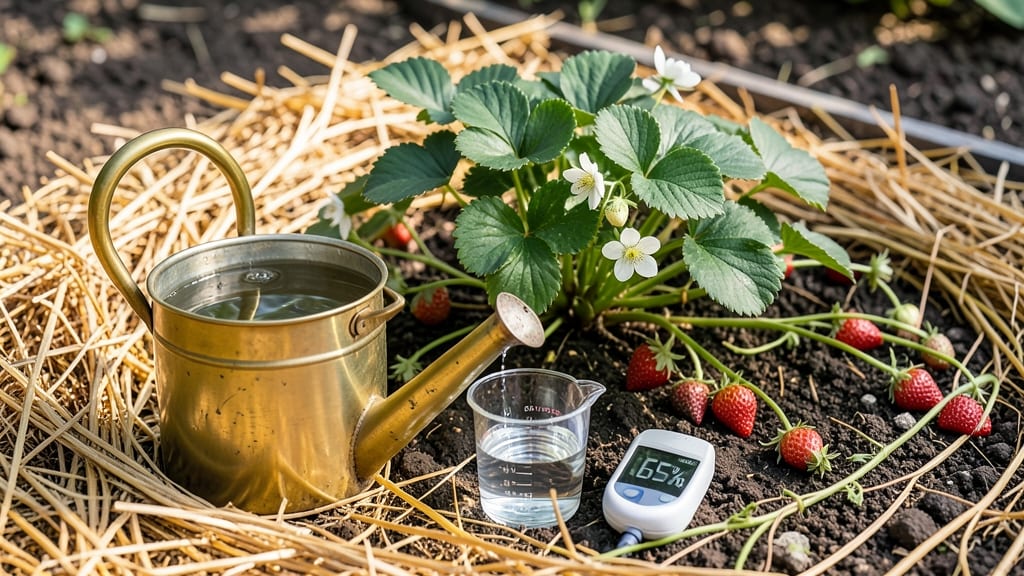
Watering strawberries the right way means giving them 1-2 inches of moisture per week—not too much, not too little—to keep those berries juicy and your plants healthy.
Struggling to balance strawberry plant hydration? Overwatering can drown roots while underwatering turns berries sour—here’s the science-backed method to keep your plants thriving with minimal guesswork.
Most gardeners make the mistake of watering on a strict schedule, but soil type, weather, and plant stage all change what your strawberries need. Sandy soil drains fast, while clay holds moisture longer, and summer heat demands deeper watering than spring showers.
In this guide, I’ll show you the finger test to check soil moisture, how to adjust for seasonal changes, and the signs of over- or under-watering so you can grow sweet, plump strawberries every harvest.
The perfect strawberry watering schedule by season and soil type
Strawberries thrive on consistent moisture but hate soggy roots—getting the balance right means juicy berries instead of moldy plants. Your watering schedule should shift with the seasons and adapt to whether your soil drains like sand or holds water like clay. Let’s break it down so you never guess again.
First, understand that sandy soil drains quickly and needs more frequent watering, while clay soil retains moisture longer. Rainfall also changes the game—after a downpour, skip your usual watering to avoid overdoing it. Below is your customizable guide to keep strawberries happy year-round.
🌱 Pro Tip: Always water at the base of plants in the morning to prevent fungal diseases like gray mold. Avoid wetting leaves, especially in humid weather.
| Season | Soil Type | Frequency | Depth | Notes |
|---|---|---|---|---|
| Spring | Sandy | Every 2 days | 1-2 inches | Increase if no rain |
| Spring | Clay | Every 4-5 days | 1-2 inches | Reduce if soil stays wet |
| Summer | Sandy | Daily (morning) | 2-3 inches | Critical for fruiting |
| Summer | Clay | Every other day | 1.5-2 inches | Watch for puddles |
| Fall | Sandy | Weekly | 1 inch | Reduce as temps drop |
| Fall | Clay | Every 10 days | 0.5-1 inch | Minimal watering needed |
In spring, strawberries ramp up growth and fruiting, so focus on deep, consistent watering. Sandy soil may need water every 2-3 days, while clay soil can wait 4-5 days between waterings. Always check the top 1-2 inches of soil—if it’s dry, it’s time to water.
When summer heat arrives, strawberries demand more attention. Water sandy soil daily in the morning to prevent stress, while clay soil can handle every other day. Aim for 2-3 inches deep to encourage strong root growth. Mulch with straw to lock in moisture and keep roots cool.
As fall temperatures drop, reduce watering frequency. Sandy soil still needs weekly watering, but clay soil can go 10 days between sessions. Stop fertilizing by late summer to avoid late-season
The finger test method: how to check strawberry soil moisture like a pro
Mastering the finger test method is the easiest way to avoid overwatering or underwatering your strawberry plants. Instead of guessing, stick your finger 1 inch deep into the soil to check moisture levels—this is where strawberry roots actively absorb water.
The key is consistency: new transplants need more frequent checks than established plants with deeper root systems.
Here’s why this method works: strawberries thrive in consistently moist (not soggy) soil, especially during fruit development. When soil feels dry at 1 inch deep, it’s time to water.
For potted strawberries, the soil may dry faster—check daily in hot weather. The finger test helps you adjust watering based on your local climate and soil type.
Step-by-Step Finger Test for Strawberry Soil
- Step 1: Wait until morning—soil is driest at this time after overnight evaporation.
- Step 2: Gently push your index finger 1 inch deep near the plant’s base (avoid disturbing roots).
- Step 3: Check moisture:
- Dry: Pull finger out clean—water immediately (1-2 cups per plant).
- Moist: Slight resistance—wait 1-2 days before testing again.
- Wet: Soil clings to finger—reduce watering to prevent root rot.
- Step 4: Adjust for plant age:
- New plants (first 2 weeks): Test soil daily—they need frequent watering.
- Established plants: Test every 2-3 days in summer; reduce to weekly in fall.
- Step 5: Water deeply at soil level (not leaves) using a soaker hose or drip system to encourage deep root growth.
For new strawberry plants, focus on keeping the top 2 inches of soil moist until roots establish (about 2-3 weeks).
Once established, shift to the 1-inch test—this mimics natural rainfall patterns and prevents shallow root systems. Clay soil holds moisture longer, so you may only need to water every 3-4 days, while sandy soil drains quickly and requires daily checks in summer.
Pro tip: Pair the finger test with mulching (2-3 inches of straw or wood chips) to retain moisture and reduce evaporation. This lets you water less frequently while keeping roots cool. Mulch also suppresses weeds, which compete for water—win-win for your strawberry patch!
Watch for yellowing leaves or wilted foliage as red flags. Yellow leaves often signal overwatering, while wilting (especially in hot afternoons) means underwatering. Adjust your finger test schedule accordingly—your strawberries will reward you with sweeter, juicier fruit when you nail the moisture balance.
Remember, the finger test is your secret weapon against guesswork. Spend 2 minutes daily checking soil moisture, and you’ll avoid the heartbreak of mushy berries or struggling plants. Happy testing—and happy harvesting! 🍓