
Light Requirements
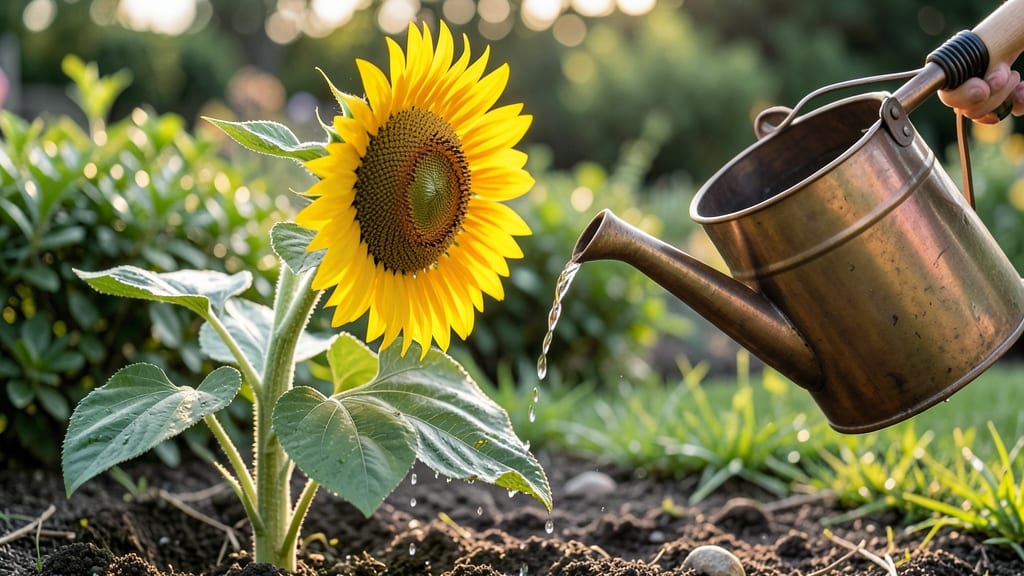
To water sunflowers properly, aim for about 1 inch of water per week—deep enough to encourage strong stems and vibrant blooms 🌻.
You’ve probably seen those towering sunflowers in fields, their faces turned to the sun, but behind every healthy bloom is a careful balance of moisture. Too little water, and their roots struggle; too much, and their stems weaken, leaving them prone to flopping over.
The key is consistency, and I’ll show you exactly how to measure it right.
This isn’t just about splashing water at the base—it’s about timing, soil type, and even the season. In hot summer months, you might need to water every 2-3 days, while cooler spring or fall days can stretch that to once a week.
The goal? Keeping the soil evenly moist without turning it into a soggy mess.
Below, I’ll break down the 1-inch rule, how to check soil moisture like a pro, and what to watch for when your sunflowers are thirsty or drowning. Ready to grow sunflowers that stand tall and proud?
The 1-Inch watering rule: how deep & often to hydrate sunflowers
Sunflowers thrive on consistency, and the 1-inch watering rule is your golden guideline. This means delivering 1 inch of water per week to the root zone—whether through rainfall or irrigation. For most gardeners, this translates to deep watering 2-3 times per week, depending on your climate and soil type.
The key? Moisture should reach 6-8 inches deep to encourage strong root development and prevent shallow roots that lead to floppy stems.
Measuring 1 inch of water might sound tricky, but it’s simpler than you think. Use a clear jar or rain gauge placed near your sunflowers. After watering, check how much water collected—aim for 1 inch total per week.
If you’re watering by hand, a soaker hose or drip irrigation ensures even distribution without wasting water. Remember, sunflowers hate soggy feet, so always water at the base of the plant, not the leaves.
Soil type plays a huge role in how often you water. Sandy soil drains quickly, so you may need to water daily in hot weather, while clay soil holds moisture longer, reducing frequency to every 4-5 days. Loamy soil—the gardener’s dream—strikes a balance, requiring watering every 2-3 days during peak growth. Always stick your finger 2 inches into the soil; if it’s dry, it’s time to water.
Now, let’s talk growth stages, because seedlings and mature sunflowers have different thirsts. Newly sprouted seeds need daily moisture to germinate, so keep the soil evenly damp (not soggy) until they’re 2 inches tall.
Once they’ve sprouted, shift to the 1-inch rule, but water more frequently in extreme heat—up to every other day. Mature plants, especially those over 3 feet tall, can handle slightly less water but still need deep soaks weekly to support their towering stature.
Here’s how to adjust for your climate zone:
Timing matters just as much as how much you water. Always water in the early morning (between 6-9 AM) to allow foliage to dry before evening. This reduces fungal diseases like powdery mildew, which thrives in damp leaves.
Avoid watering at night or late afternoon, as moisture lingering on plants can invite pests and disease. Pro tip: Use a watering can with a long spout or a soaker hose to target the soil directly, minimizing waste and splash.
One of the biggest mistakes gardeners make is overwatering young sunflowers. While they need moisture to sprout, excess water can drown seeds or cause root rot. To test soil moisture, gently squeeze a handful of soil—if it crumbles easily, it’s dry enough to water.
If it sticks together, hold off for another day. Mulching with straw or wood chips helps retain moisture while regulating soil temperature, reducing the frequency of watering by 20-30%.
As your sunflowers mature, their water needs shift. Once they reach 3 feet tall, focus on deep, infrequent watering to encourage strong root systems. A good rule of thumb: If the soil feels dry 2 inches down, it’s time to water.
During flowering and seed development (typically July-August), increase water
Signs your sunflowers are overwatered or underwatered (and how to fix it)
Sunflowers 🌻 thrive on consistency, but their leaves and stems tell a clear story when watering goes wrong. Yellowing leaves or mushy stems often mean you’re drowning them, while crispy edges or drooping blooms signal thirst. The key is learning their subtle cues—before irreversible damage sets in.
First, check the soil 1 inch below the surface. If it’s damp, you’re likely overdoing it. If it’s bone-dry, your sunflowers are crying out for hydration. Seedlings need frequent moisture, but mature plants prefer deep, infrequent watering to develop strong roots.
⚠️ callout-warning
1 inch per week is ideal, but adjust for:
- Clay soil: Reduce to ½ inch (retains moisture)
- Sandy soil: Increase to 1.5 inches (drains fast)
- Heatwaves: Double watering 2-3x/week
- Rainy days: Skip watering 3+ days after rain
Overwatered sunflowers often develop blackened stems or white mold on leaves. This happens when roots suffocate in soggy soil. Pull back immediately—let the top 2 inches of soil dry out between waterings. Improve drainage by mixing compost or perlite into heavy soil.
Underwatered sunflowers show brittle leaves that curl inward or stunted growth. If the soil is cracked and dry, soak the base until water runs out the bottom. Morning watering is best—it prevents fungal issues and gives roots time to absorb moisture before evening heat.
For container-grown sunflowers, check soil moisture daily. Small pots dry out faster, so water when the top ½ inch feels dry. Use a pot with drainage holes to avoid root rot. Mulch with straw to retain moisture and keep roots cool.
Watch for pests like aphids, which thrive on stressed plants. Overwatered sunflowers attract slugs, while underwatered ones may fall prey to spider mites. Neem oil or a strong spray of water can deter them—just don’t drown the plants in the process!