
Watering
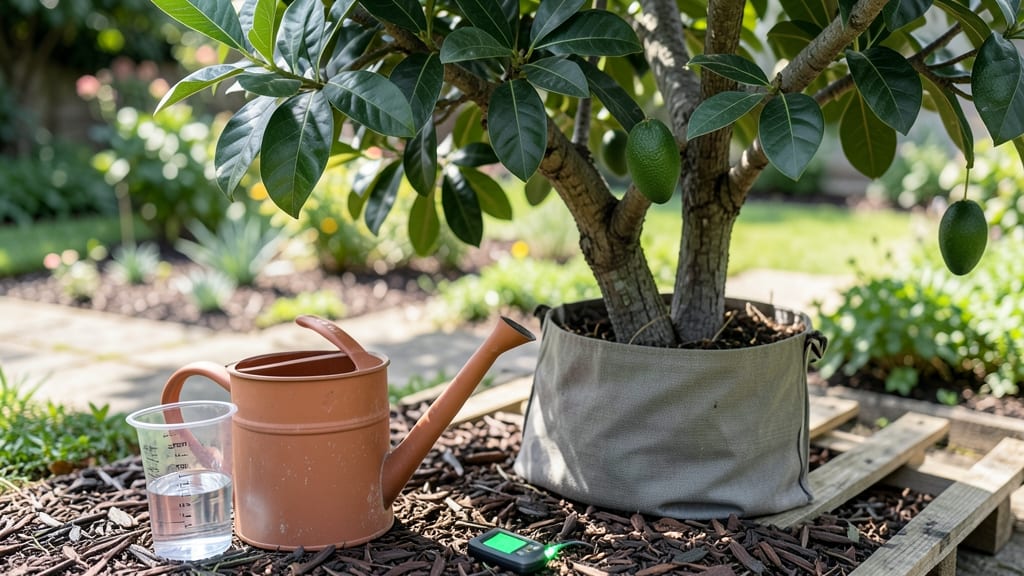
Avocado trees need deep, infrequent watering to encourage strong root growth and drought resistance—typically 10-20 gallons per session for young trees and 30-50 gallons for mature ones.
Here’s the catch: they hate soggy soil just as much as they hate thirst. Overwatering suffocates their roots, while underwatering stresses the tree and stunts fruit production. I’ve seen both mistakes firsthand—one tree drowned in a pot, another with leaves curling like a sad salad.
This guide breaks down how often to water based on your tree’s age, soil type, and climate. You’ll learn the tell-tale signs of over- or underwatering (yes, the leaves do talk) and how to adjust your schedule for summer heatwaves or winter slowdowns.
By the end, you’ll water with confidence—no guesswork, no wasted gallons, and a tree that rewards you with juicy, homegrown avocados year-round.
Avocado tree watering requirements by growth stage (seedling to mature)
Avocado trees need consistent moisture but hate soggy roots—this delicate balance changes as your tree grows. Seedlings demand frequent hydration, while mature trees develop drought tolerance.
The key? Deep watering that mimics natural rainfall patterns while preventing root rot. Let’s break down exactly how much water each stage needs to thrive.
For seedlings (first 2 years), I water every 3-5 days during hot months, ensuring the top 6 inches of soil stay moist. Young roots are shallow and can’t store much water, so I use a 5-gallon watering can to soak the soil thoroughly.
Overwatering here leads to root suffocation, while underwatering stunts growth. The goal? Keep soil evenly damp, not soggy.
Here’s a quick reference for watering needs at each stage—critical for avoiding common mistakes:
| Growth Stage | Water Frequency | Soil Moisture Target | Water Amount | Key Tips |
|---|---|---|---|---|
| Seedling (0-2 years) | Every 3-5 days (summer), 5-7 days (spring/fall) | Top 6 inches moist | 5-10 gallons per watering | Use drip irrigation to avoid wetting leaves |
| Young Tree (2-5 years) | Every 5-7 days (summer), 7-10 days (other seasons) | Top 12 inches moist | 10-20 gallons per watering | Reduce frequency as roots deepen |
| Mature Tree (5+ years) | Every 7-14 days (deep watering) | Top 18 inches moist | 30-50 gallons per watering | Prioritize root zone; mulch retains moisture |
| Drought Conditions | Every 10-21 days (deep soak) | Deep 24-inch moisture | 50+ gallons (slow release) | Monitor leaf curl—sign of stress |
When your avocado tree reaches maturity (5+ years), its deep roots can access water from 2-3 feet underground. At this stage, I switch to deep, infrequent watering—think of it like giving your tree a long drink instead of daily sips.
For example, a 30-gallon soak every 10-14 days in summer keeps roots hydrated without wasting water. I always check soil moisture by sticking my finger 6 inches deep; if it’s dry, it’s time to water.
Seasonal adjustments are critical. In summer heat, I increase frequency to every 3-5 days and water early in the morning to reduce evaporation. During winter dormancy, I cut back to every 2-3 weeks unless temperatures drop below 50°F.
The rule of thumb? Water less in cooler months—avocado trees store moisture efficiently when growth slows.
One of my biggest mistakes early on was watering based on a schedule rather than soil conditions. Now, I rely on the "finger test": Insert your finger 4-6 inches deep—if it feels dry, water deeply.
For potted avocados, I weigh the pot; if it’s light, it’s time to water. Containers dry out 3x faster than ground soil, so I water potted trees every 2-3 days in summer.
Mulching is a game-changer for water efficiency. I spread 3-4 inches of organic mulch (like wood chips) around the base to lock in moisture and regulate soil temperature.
Just keep mulch 6 inches away from the trunk to prevent rot. This simple step can reduce watering needs by 30% while protecting roots from temperature swings.
Watch for leaf color changes—a telltale sign of water stress. Yellowing leaves often mean overwatering, while brown, crispy edges signal underwatering. If leaves curl or drop, I immediately adjust my watering routine.
For mature trees, I also monitor fruit drop; excessive fruit loss can indicate either too much or too little water.
Pro tip: Use a moisture meter for accuracy, especially in sandy soil, which drains quickly. In clay soil, I water less frequently but more deeply to prevent waterlogging. The goal is to mimic natural rainfall—slow, deep soakings that encourage strong root development.
With the right approach, your avocado tree will reward you with lush foliage and bountiful fruit.
Signs of overwatering vs underwatering in avocado trees (with fixes)
Avocado trees are famously drought-tolerant once established, but both overwatering and underwatering can stunt growth or even kill your tree. The key is recognizing subtle symptoms early. Yellowing leaves or mushy roots often signal trouble—but what’s the difference?
Let’s break it down so you can rescue your tree before it’s too late.
Overwatering is the silent killer for avocado trees because soggy roots suffocate them. Look for yellow leaves with brown edges, mushy stems, or fungal growth at the base. These signs mean your tree is drowning in its own pot or soil.
Underwatering, on the other hand, causes crispy leaf edges, drooping foliage, and premature leaf drop—your tree’s SOS for hydration.
How Much Water Do Avocado Trees Need?
Pros of Proper Watering
- 🌱 Deep root growth for stability
- 🍃 Lush foliage and fruit production
- 🛡️ Disease resistance (no fungal risks)
- 💧 Consistent moisture without waste
Cons of Overwatering
- 💀 Root rot from soggy soil
- 🍄 Fungal infections (e.g., root fungus)
- 🌧️ Wasted water and nutrient leaching
- 🍂 Yellow leaves with brown edges
Cons of Underwatering
- 🧂 Crispy leaf edges from dehydration
- 🌵 Stunted growth and small fruit
- 🍃 Premature leaf drop (tree conserves water)
- ☀️ Heat stress in hot climates
If your avocado tree shows signs of overwatering, stop watering immediately and let the soil dry out. Improve drainage by amending the soil with perlite or sand, and consider repotting if roots are circling.
For underwatered trees, deep watering in the morning is essential—aim for 10-20 gallons per watering for young trees and 30-50 gallons for mature ones.
Pro tip: Stick your finger 2 inches into the soil. If it feels dry, water thoroughly. If it’s still damp, wait another day. Mulch around the base (but not touching the trunk) to retain moisture and regulate soil temperature.
This simple step can prevent both overwatering and underwatering by keeping roots in the ideal moisture range.
Avocado trees also respond well to drip irrigation on a timer, which delivers water slowly at the roots where it’s needed most. Avoid overhead sprinklers—they waste water and promote fungal diseases. With the right balance, your tree will reward you with shiny leaves and abundant fruit instead of stress signals.
Remember, avocado trees hate soggy feet but also can’t handle drought. The goal is consistent moisture without waterlogging. Adjust your watering schedule based on seasonal changes—more in summer, less in winter—and always prioritize morning watering to reduce evaporation.