
Watering
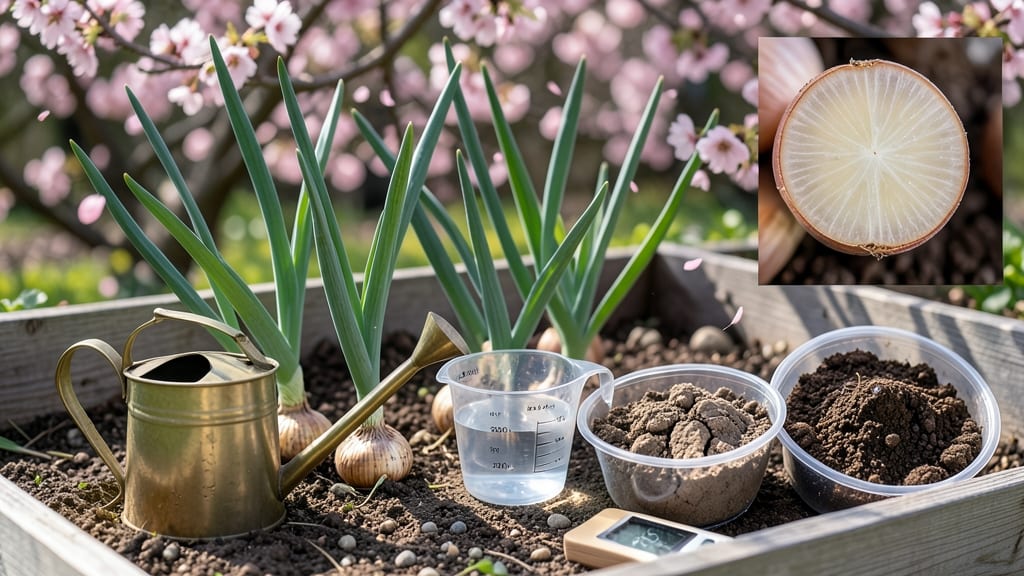
Onion plants need about 1 to 1.5 inches of water per week to thrive, but getting it right is the difference between a bountiful harvest and sad, rotting bulbs.
Picture this: you’ve spent weeks nurturing your 🧅 seedlings, only to watch them wilt or turn mushy because you either drowned them or left them high and dry. The key? A simple soil dry test that tells you exactly when to water—and when to hold back.
Watering onions isn’t just about sticking to a schedule; it’s about reading your soil and adjusting for your climate. Too much water, and you risk rot; too little, and your bulbs stay small and tough.
Below, I’ll walk you through the foolproof method to keep your onions happy at every growth stage.
You’ll learn how to check moisture levels without guessing, when to water in spring versus summer, and how to spot the early signs of over- or under-watering before it’s too late.
The perfect watering schedule for onion plants by growth stage
Onion plants thrive with consistent moisture but despise soggy soil. The key is deep, infrequent watering that keeps roots hydrated without causing rot. Your watering schedule should shift dramatically as onions transition from seedlings to mature bulbs, with adjustments for your local climate and soil type.
For young seedlings, shallow watering keeps the soil surface moist. Once bulbs begin forming, you’ll need 1-1.5 inches of water per week, delivered directly to the soil—not the leaves—to prevent fungal diseases like downy mildew. Let’s break down the exact schedule by growth stage.
During the seedling stage, focus on keeping the soil evenly moist but never waterlogged. Use a spray bottle or gentle watering can to avoid disturbing the delicate seedlings. If your soil drains poorly, mix in compost or perlite to improve aeration and prevent root rot.
When onions enter the bulb formation phase, increase water depth to encourage plump growth. Aim for 1 inch of water per week, delivered in the morning to allow foliage to dry quickly.
This reduces the risk of fungal diseases like onion smut or rust, which thrive in damp conditions.
As bulbs mature, reduce frequency but increase water volume per session. Deep watering—6-8 inches down—encourages roots to grow deeper, producing larger, firmer bulbs. In sandy soils, water more frequently but less deeply, while clay soils may require less frequent but deeper watering.
In hot, dry climates, mulch around plants with straw or grass clippings to retain moisture and cool the soil. For cool, wet climates, space watering sessions further apart and avoid overhead irrigation. Always water at the base of the plant to keep leaves dry and prevent disease.
Watch for yellowing leaves, a sign of overwatering, or stunted growth, indicating underwatering. Adjust your schedule based on these visual cues. For container-grown onions, check soil moisture daily—potted plants dry out faster than in-ground varieties.
One week before harvest, reduce watering significantly to toughen the bulbs’ skins and prevent rot during storage. Cure harvested onions in a dry, shady spot for 2-3 weeks to extend shelf life. Proper watering throughout the season sets the stage for a successful harvest and storage.
Remember, consistency is key. Onions hate moisture fluctuations, so stick to your schedule once established. With this stage-by-stage approach, you’ll grow plump, disease-free bulbs every season. Happy gardening! 🧅
Soil dry test: how to check moisture levels for healthy onion bulbs
Testing soil moisture is the simplest way to avoid over- or under-watering your onions. The finger test gives you instant feedback on whether your plants need water. Stick your finger about 1 inch deep into the soil near your onion plants.
If it feels dry, it's time to water. This method works best for bulb formation stage onions, where consistent moisture is critical.
For a more precise check, use a soil moisture meter or a simple screwdriver. Push it into the soil until you hit resistance—usually around 2-3 inches deep for mature plants. If the tool comes out clean, your soil is too dry.
If it's damp, wait a few more days before watering. This prevents the common mistake of watering on a fixed schedule without checking actual soil conditions.
Onions need 1-1.5 inches of water weekly, but too much causes root rot and fungal diseases. Watch for:
- Yellowing leaves (early sign of overwatering)
- Mushy bulbs (severe rot)
- Slow growth (compacted, waterlogged soil)
Visual clues also help determine water needs. Healthy onion leaves should be firm and upright. If they appear wilted or limp, your plants are thirsty. For container-grown onions, check soil moisture daily since pots dry out faster than garden beds.
In hot climates, you may need to water every 2-3 days, while cool, damp regions might only require watering every 7-10 days.
Underwatering shows up as stunted growth or small, tough bulbs. If your onions stop growing and leaves turn grayish-green, increase watering immediately. Remember, onions store water in their bulbs, so they prefer even moisture over frequent light watering.
Aim for deep watering that reaches 6-8 inches deep during the bulb formation phase.
Adjust your watering based on seasonal changes. In spring, when soil is naturally moist, water less frequently. By summer, increase frequency but reduce water volume to prevent evaporation.
Always water in the early morning to allow foliage to dry, reducing disease risk. Mulching with straw or grass clippings helps maintain even moisture levels throughout the growing season.
Mastering the soil dry test ensures your onions get the perfect amount of water—just enough to keep roots happy without drowning them. With this simple method, you'll grow plump, disease-free bulbs every season. Happy testing! 🌱