
Watering
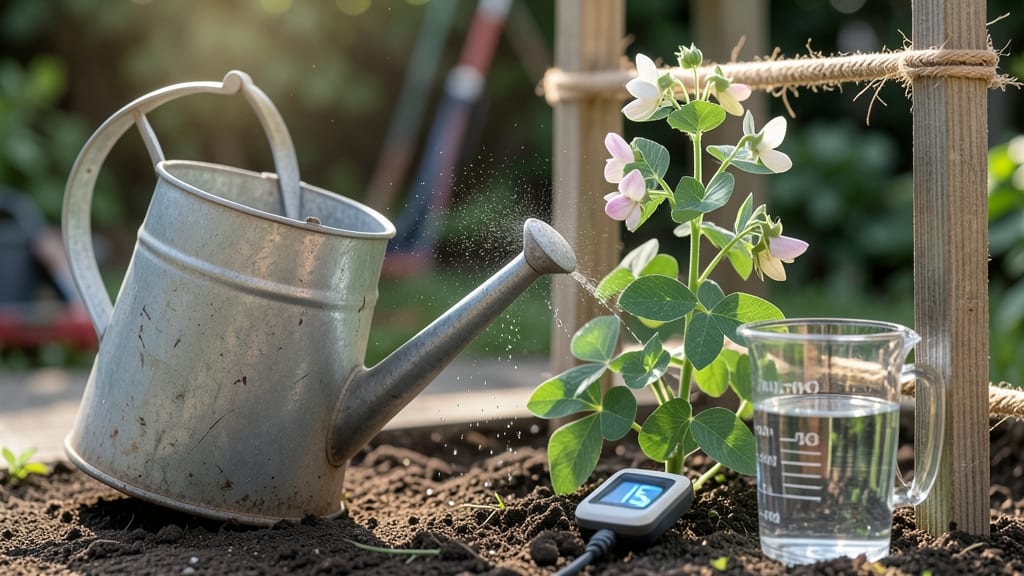
Pea plants need about 1 inch of water per week to grow strong and sweet 🌱 — but getting that right means more than just eyeballing your watering can.
Pea plants may seem low-maintenance, but overwatering or underwatering can turn your lush vines into sad, stunted failures. Too little water, and they wilt; too much, and their roots suffocate. The trick is consistency, not just quantity.
Whether you’re growing peas in containers or in-ground beds, the key is checking soil moisture before watering. Stick your finger an inch deep—if it’s dry, it’s time to water. In hot summer months, you may need to water every 2-3 days, while spring and fall often require less.
Below, I’ll break down the exact watering schedule for each growth stage—from seedlings to flowering to podding—plus how to spot when your peas are thirsty (or drowning) and fix it fast.
The 1-Inch weekly watering rule for pea plants: what it means and how to measure
Pea plants thrive on a simple but critical watering guideline: 1 inch of water per week. This rule ensures your peas get just the right amount of moisture without drowning their delicate roots.
Unlike drought-tolerant plants, peas need consistent moisture to develop sweet pods and strong vines. But what does "1 inch" really mean, and how do you measure it accurately?
The 1-inch rule refers to the depth of water your soil should receive each week. Think of it like a slow, deep drink for your plants—enough to wet the soil 6 inches deep, where most pea roots explore.
Skimping on water leads to stunted growth and small pods, while overdoing it causes root rot and yellowing leaves. Finding that balance is key to a bountiful harvest.
To measure 1 inch of water, use a simple rain gauge or even a straight-sided container like a tuna can. Place it near your pea plants and water until the container collects 1 inch of water.
Alternatively, check soil moisture by sticking your finger 1-2 inches deep—if it feels dry, it's time to water. For container-grown peas, water until you see moisture dripping from the drainage holes.
| Growth Stage | Water Depth | Frequency | Notes |
|---|---|---|---|
| Seedlings | ½ inch | Every 2-3 days | Keep soil moist but not soggy |
| Flowering | 1 inch | 3-4 times/week | Critical for pod development |
| Podding | 1 inch | 3-4 times/week | Avoid wetting foliage |
| Containers | 1 inch | Daily (light watering) | Dries out faster than ground soil |
| Hot/Dry Climates | 1.5 inches | Daily (morning) | Mulch to retain moisture |
Your local climate plays a huge role in adjusting the 1-inch rule. In hot, dry summers, you may need to water daily in the early morning to prevent soil from drying out.
Conversely, during cool, rainy springs, reduce watering to every 5-7 days to avoid waterlogged soil. Always check the top 1-2 inches of soil—if it’s dry, water deeply. For container-grown peas, water more frequently since pots dry out faster.
Signs of underwatering include wilting leaves, yellowing foliage, and stunted vines. If you see these, increase watering immediately and mulch around the base to lock in moisture. On the flip side, overwatering causes mushy stems, gray mold, and root rot.
If your pea plants look sad and soggy, let the soil dry out slightly between waterings and ensure containers have drainage holes.
Morning watering is ideal because it allows foliage to dry quickly, reducing the risk of fungal diseases like powdery mildew. Avoid watering at night, as damp leaves can invite pests and mold.
For drip irrigation or soaker hoses, aim the water at the base of the plant rather than the leaves. This targeted approach keeps your peas happy without wasting water.
Mulching is a game-changer for pea plants. Apply a 2-3 inch layer of straw or shredded leaves around your peas to slow evaporation and keep roots cool. This simple trick can cut your watering needs by 30-50% while also suppressing weeds.
Just be sure to keep mulch 1-2 inches away from plant stems to prevent rot.
If you’re growing peas in containers, choose pots with drainage holes and use a well-draining potting mix. Water thoroughly until water runs out the bottom, then wait until the top 1 inch of soil feels dry before watering again.
Container peas often need daily watering in summer, so monitor them closely. For in-ground peas, work compost into the soil before planting to improve moisture retention.
Remember, the 1-inch rule is a guideline, not a strict law. Adjust based on your soil type—sandy soil drains fast and may need more frequent watering, while clay soil holds moisture longer.
Always prioritize deep, infrequent watering over shallow, daily sprinkles. Your peas will reward you with sweet, plump pods and vigorous vines when you get the balance right.
Adjusting water needs for pea plant growth stages: seedlings vs. flowering vs. podding
Pea plants don’t have a one-size-fits-all watering approach—what works for seedlings can harm flowering plants or pod development. Each growth stage demands a different strategy to avoid stunted growth or disease.
Let’s break down the exact watering needs for each phase, so you can keep your vines thriving from sprout to harvest.
During the seedling stage (first 2-3 weeks), pea plants need shallow, frequent watering to keep the top inch of soil moist. Overwatering here can lead to rot-prone soil, while underwatering causes weak roots.
Aim for light watering every 2-3 days, ensuring the soil stays damp but not soggy. A gentle spray from a watering can works best to avoid disturbing delicate sprouts.
When pea plants transition to flowering (weeks 4-6), their water needs shift dramatically. This is when they require deeper watering—about 1-2 inches per week—to support energy-intensive blooms.
Water at the base of the plant in the morning to reduce fungal risks and encourage strong root growth. Avoid wetting foliage, which can attract pests like powdery mildew.
Pea Plant Watering by Growth Stage
- ✅ Light, shallow watering
- ✅ Every 2-3 days
- ✅ Keep soil damp (not soggy)
- ✅ Deep watering (1-2 inches/week)
- ✅ Base of plant only
- ✅ Morning watering
- ✅ Consistent moisture (1 inch/week)
- ✅ Avoid waterlogging
- ✅ Mulch to retain moisture
- Too much water → Rot
- Too little → Weak roots
- Shallow watering → Dropped blooms
- Night watering → Fungal growth
- Inconsistent water → Splitting pods
- Overwatering → Blossom end rot
The podding stage (weeks 6-10) requires a balanced approach: consistent moisture without overdoing it. Aim for 1 inch of water per week, delivered evenly to prevent pods from splitting or developing blossom end rot.
Use a drip irrigation system or soaker hose to deliver water directly to the roots, minimizing waste and disease risk. Mulching with straw or grass clippings helps retain moisture and keeps soil temperatures stable.
One common mistake gardeners make is watering on a fixed schedule without checking soil moisture. Instead, use your finger to test the top 1-2 inches of soil—if it feels dry, it’s time to water.
Another pitfall is ignoring weather conditions: adjust your watering frequency during hot, dry spells or heavy rainfall. For example, in summer, you may need to water daily, while in spring, every 4-5 days might suffice.
Container-grown peas need even more attention. Since pots dry out faster, check soil moisture daily and water when the top inch feels dry. Avoid letting containers sit in standing water, which can suffocate roots.
If you notice yellowing leaves or wilting, it’s often a sign of inconsistent watering—adjust your routine immediately to save your plants.
By tailoring your watering to each growth stage, you’ll ensure your pea plants grow strong, produce abundant flowers, and yield plump, sweet pods ready for harvest. Pay attention to the soil, the plant’s appearance, and the weather, and your peas will reward you with a bountiful crop.