
Watering
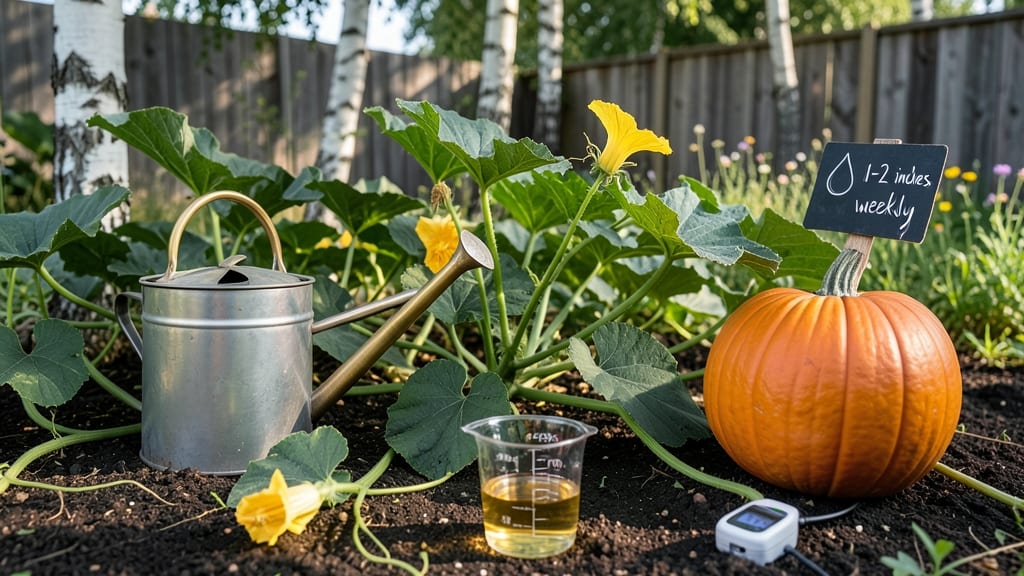
Pumpkin plants need about 1–2 inches of water per week to thrive, but the real trick is delivering it the right way—deep soaks that encourage strong roots rather than shallow puddles that invite disease.
Picture this: your 🎃 vines sprawling across the garden, but the moment you step away, the soil dries out faster than you can say "harvest season." Too little water, and your pumpkins shrivel up like overcooked pasta.
Too much, and the roots suffocate, leaving you with sad, mushy fruit. The balance is everything.
Here’s the good news: with the right watering routine—plus a few simple tricks like mulching and timing—you can keep your pumpkins happy even in the hottest summer.
We’ll break down exactly how much to water, when to adjust for heatwaves, and how to spot the warning signs before it’s too late.
By the end, you’ll know the exact schedule to follow, from seedlings to harvest, so your pumpkins grow big, healthy, and ready to carve (or bake into pie). Let’s get started.
Pumpkin watering schedule by growth stage: from seedlings to harvest
Pumpkins thrive when their watering routine matches their growth stages—skimp too early, and seedlings struggle; overdo it later, and your fruit rots. The key is adapting your watering schedule as your pumpkin vines grow from delicate sprouts to sprawling powerhouses.
Each phase demands a different approach to keep roots healthy and fruits plump. Let’s break it down by stage so you can avoid the most common pitfalls.
First, germination and seedling stages (weeks 1-3) require the gentlest touch. Keep soil consistently moist but never soggy—think of a wrung-out sponge. Overwatering here leads to damping-off disease, while underwatering stunts root development.
A light misting every 2-3 days works best, or use a spray bottle to avoid disturbing tender sprouts.
Here’s a quick reference for how much water pumpkin plants need at each stage, including signs to watch for:
| Growth Stage | Watering Frequency | Depth | Signs of Stress |
|---|---|---|---|
| Germination (Weeks 1-2) | Every 2-3 days (mist) | Top 1 inch | Wilting, black stems (damping-off) |
| Seedlings (Weeks 3-4) | Every 3-4 days | 2 inches deep | Yellowing leaves, stunted growth |
| Vine Spread (Weeks 5-8) | 1-2 inches per week | 3-4 inches deep | Drooping vines, crispy edges |
| Flowering (Weeks 6-10) | Daily (deep soak) | 4-6 inches deep | Wilted flowers, poor pollination |
| Fruit Development (Weeks 10-14) | Every 5-7 days (deep) | 6+ inches deep | Blossom-end rot, cracked fruit |
Once your pumpkin vines start spreading (weeks 5-8), increase water to 1-2 inches per week. This is when they need the most hydration to support rapid growth. Water deeply—aim for 3-4 inches into the soil—to encourage roots to grow downward.
Shallow watering leads to weak roots and vines that flop in heat. Use a trowel to check moisture; if the top 2 inches are dry, it’s time to water.
During flowering (weeks 6-10), consistency is critical. Pumpkin flowers need daily hydration to stay vibrant and attract pollinators. Skip a day, and you risk wilting blooms that won’t produce fruit. Water in the early morning to let foliage dry before evening, reducing fungal risks like powdery mildew.
A drip irrigation system works wonders here, delivering water directly to the roots without wetting leaves.
As fruit develops (weeks 10-14), shift to deep but infrequent watering. Overwatering now causes blossom-end rot, while underwatering leads to small, misshapen pumpkins. Aim for 5-7 days between waterings, soaking the soil to a depth of 6+ inches.
Mulch heavily with straw to retain moisture and keep soil temps steady. If your pumpkins start cracking, you’re either overwatering or dealing with uneven soil moisture.
Watch for these red flags: Yellowing leaves signal underwatering, while mushy stems or moldy soil mean you’re overdoing it. Wilting vines in the afternoon? Check soil moisture immediately—pumpkins hate thirsty roots.
Adjust your schedule based on weather: hot, dry days may require daily watering, while cool, cloudy spells can stretch intervals to a week. Always water at the base of the plant, not the leaves, to prevent diseases like powdery mildew.
Pro tip: Group your pumpkin hills together and water them as a block. This creates a microclimate that retains moisture longer, mimicking their natural habitat. And if your vines look sad midday, don’t panic—pumpkins often droop in heat but recover by evening.
The real test is soil moisture, not leaf appearance. Stick your finger 2 inches deep; if it’s dry, water thoroughly.
By tailoring your watering to each stage, you’ll avoid the most common mistakes and end up with healthy vines and beautiful pumpkins. Remember: pumpkins are thirsty but not drowning—balance is everything. Happy growing! 🎃💧
The soil dry test method: how to check pumpkin root moisture without guessing
Pumpkin plants thrive when their roots stay consistently moist, but overwatering can smother them just as quickly as underwatering causes wilting. The soil dry test is my go-to method to avoid guesswork.
By checking moisture at the right depth, you’ll know exactly when to water—whether your soil is sandy and drains fast or clay-heavy and holds moisture longer.
Start by inserting your finger 1-2 inches deep into the soil near the base of the plant. This depth matches where most pumpkin roots absorb water. If the soil feels dry at this level, it’s time to water.
For sandy soil, you may need to check daily, while clay soil might only need watering every 5-7 days.
Visual cues also help: dark brown or crumbly soil signals dryness, while moist, cool soil with a slight resistance means hold off. Pay attention to the soil’s texture—if it clumps when squeezed, it’s still damp enough. For container-grown pumpkins, the soil surface may dry faster, so monitor more frequently.
⚠️ WARNING: Overwatering vs. Underwatering Too much water can cause root rot and fungal diseases, while too little leads to blossom-end rot or stunted growth. Pumpkins need 1-2 inches of water per week, but adjust based on your soil type and weather.
In hot summers, you may need to water every 2-3 days, while cooler months can stretch that to once a week. Always water deeply in the morning to reduce evaporation and disease risk.
For a more precise approach, use a moisture meter—these handheld tools give instant readings and take the guesswork out of soil moisture. I recommend the Xiaomi Mi Flower Care meter for its affordability and accuracy.
If you’re without tools, the pinch test works too: grab a handful of soil and squeeze. If it holds its shape, it’s moist; if it crumbles, it’s dry.
Adjust your watering schedule based on your soil type: sandy soil drains quickly and may need daily checks, while clay soil retains moisture longer. Mulching with straw or wood chips helps regulate moisture by slowing evaporation.
This is especially helpful in hot climates where soil dries out faster. Always water at the base of the plant to encourage deep root growth.
Remember, pumpkin plants are heavy drinkers, especially during flowering and fruiting stages. If you notice yellowing leaves or drooping vines, it’s a sign they’re thirsty. But if the soil feels soggy or leaves turn brown, you’re overdoing it.
Balance is key—use the soil dry test to keep your pumpkins hydrated without drowning their roots. 💧🎃