
Watering
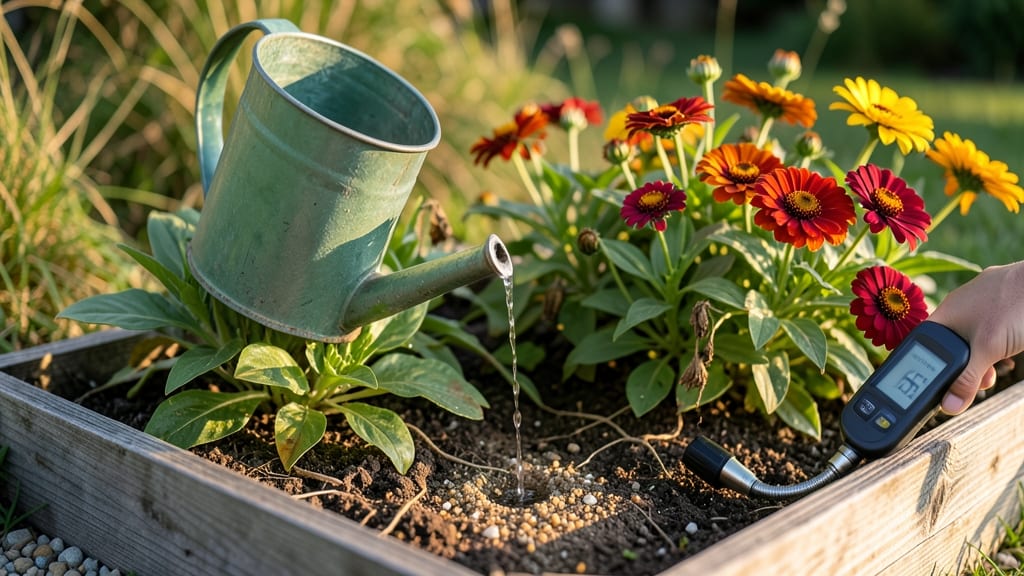
Zinnias need about 1 inch of water per week once established, but getting that right is the difference between a garden full of bright, blooming 🌼 and one full of wilted stems.
Picture this: you’ve spent weeks nurturing your zinnias, only to watch them droop by afternoon or develop sad, brown edges. That’s not just bad luck—it’s often a watering mistake. Too much, and you’ll suffocate the roots; too little, and the blooms will fade before they even open.
Here’s the secret: check the soil 1 inch down before watering. If it’s dry, it’s time; if it’s damp, wait. Heat and drought change the game, but this simple rule keeps your zinnias thriving from June through October with almost no guesswork.
In this guide, I’ll break down exactly how often to water—whether your zinnias are in pots or planted in the ground—and what to watch for so you never over- or underwater again.
The 1-Inch dry soil rule: how much water zinnias really need
Zinnias thrive on consistency, but their water needs are often misunderstood. Unlike drought-tolerant succulents, zinnias demand moderate moisture—too little causes wilting, while too much triggers root rot and blossom drop. The 1-inch dry soil rule is your golden ticket to perfect watering, balancing hydration without drowning their roots.
To apply this rule, stick your finger 1 inch deep into the soil near your zinnias. If it feels dry, it's time to water. For container-grown zinnias, check daily since pots dry out faster than in-ground beds.
This simple test prevents both overwatering and underwatering, keeping your plants vibrant and blooming.
Why this method works: Zinnia roots grow 6-12 inches deep, so surface moisture isn’t enough. The 1-inch rule ensures water reaches their root zone while preventing waterlogged soil. In sandy soil, you may need to water more frequently, while clay soil holds moisture longer, requiring less frequent watering.
| Factor | Watering Frequency | Key Considerations |
|---|---|---|
| Soil Type | Sandy: Every 2-3 days Loam: Every 3-4 days Clay: Every 5-7 days |
Test moisture 1" deep; adjust for drainage. |
| Season | Spring/Fall: Every 5-7 days Summer: Every 2-3 days |
Heat increases evaporation; mulch helps retain moisture. |
| Container vs. Ground | Containers: Every 2-3 days In-Ground: Every 4-5 days |
Containers dry out faster; use self-watering pots if needed. |
| Temperature | Below 75°F: Every 5-7 days Above 85°F: Every 2-3 days |
High heat stresses roots; water deeply in morning. |
| Humidity | Low Humidity: Every 3-4 days High Humidity: Every 5-7 days |
Humid air slows evaporation; reduce watering slightly. |
Environmental factors like temperature and humidity dramatically shift zinnia water needs. During peak summer heat (above 85°F), zinnias may need watering every 2-3 days to prevent wilting.
Conversely, in cooler spring or fall, stretching watering to every 5-7 days works perfectly. Always water in the early morning to reduce evaporation and fungal risks.
Mulching is a game-changer for zinnias. A 2-3 inch layer of mulch (like straw or shredded leaves) locks in moisture, reducing watering frequency by 30-50%. It also keeps soil temperatures stable, protecting roots from extreme heat or cold.
For container zinnias, use mulch around the pot’s base but avoid piling it against the stem to prevent rot.
Watch for blossom drop, a classic sign of water stress. If zinnias shed buds or flowers, it’s often due to inconsistent watering or root stress. Adjust your schedule immediately—zinnias are resilient but need steady moisture.
Overwatering is just as harmful; yellowing leaves or mushy stems signal root rot, which can kill plants quickly.
For container-grown zinnias, size matters. A 5-gallon pot holds moisture longer than a 1-gallon container, so adjust your watering accordingly. Use pots with drainage holes to prevent soggy roots, and consider self-watering containers if you travel frequently.
In-ground zinnias benefit from raised beds, which warm up faster in spring and drain better than heavy clay soil.
Seasonal adjustments are key. In early spring, zinnias need less water as they establish roots. By mid-summer, increase frequency to match the heat. As fall approaches, taper back to every 5-7 days unless temperatures stay high.
Always prioritize deep watering over light, frequent sprinkles—this encourages strong root growth and drought resistance.
Pro tip: Group zinnias together in your garden. This creates a microclimate that retains moisture longer, reducing your workload. Pair them with drought-tolerant companions like lavender or marigolds to further conserve water. With the 1-inch rule and these adjustments, your zinnias will reward you with continuous blooms all season long.
Signs of overwatering vs. underwatering zinnias (and how to fix them)
Zinnias may look tough, but they’re actually quite sensitive to watering mistakes. Overwatering and underwatering both cause stress, but the symptoms look different. Learning to spot these signs early can save your plants from irreversible damage. The key is observing leaf color, stem firmness, and overall plant structure.
Yellowing leaves that feel mushy or drooping stems are classic overwatering red flags. Meanwhile, crispy edges, wilting despite moist soil, and dry, brittle stems scream underwatering.
Both extremes can lead to blossom drop, but the root causes—and fixes—are completely different. Let’s break down what to watch for and how to correct it.
Overwatering vs. Underwatering: Quick Fixes
- Yellow leaves
- Mushy stems
- Fungal growth
- Crispy leaf edges
- Wilting despite moisture
- Dry, brittle stems
If your zinnias show yellowing leaves with a mushy texture, they’re likely drowning in excess moisture. This creates the perfect environment for root rot and fungal diseases. Pull the plant gently—if the roots smell foul or look dark and slimy, you’ve got overwatering.
The fix? Stop watering immediately and repot in well-draining soil if needed. For containers, ensure pots have drainage holes.
On the flip side, underwatered zinnias often have crispy, brown leaf edges and stems that feel dry and brittle. Unlike wilting from overwatering, these plants won’t perk up after a drink. Instead, they’ll keep drooping until the roots recover.
Water deeply at the soil level—avoid wetting the leaves—to encourage strong root growth. A 3-inch layer of mulch can also help retain moisture and regulate soil temperature.
For stubborn cases, adjust your watering schedule based on the season. In summer heat, zinnias may need watering every 2-3 days, while cooler months can stretch that to 5-7 days.
Always check the top 1-2 inches of soil—if it’s dry, it’s time to water. Use a moisture meter for accuracy, especially in containers where soil dries out faster.
Pro tip: Morning watering is best—it gives leaves time to dry before evening, reducing fungal risks. If you’re unsure whether your zinnias are thirsty or drowning, dig a finger 1 inch into the soil.
If it’s damp, wait; if it’s dry, water thoroughly. Consistency is key—zinnias hate soggy soil but also struggle with erratic watering patterns.
With these fixes, your zinnias will bounce back in no time. Keep an eye on their leaf color and stem firmness, and you’ll spot watering issues before they become serious. Happy gardening! 🌼