
Watering
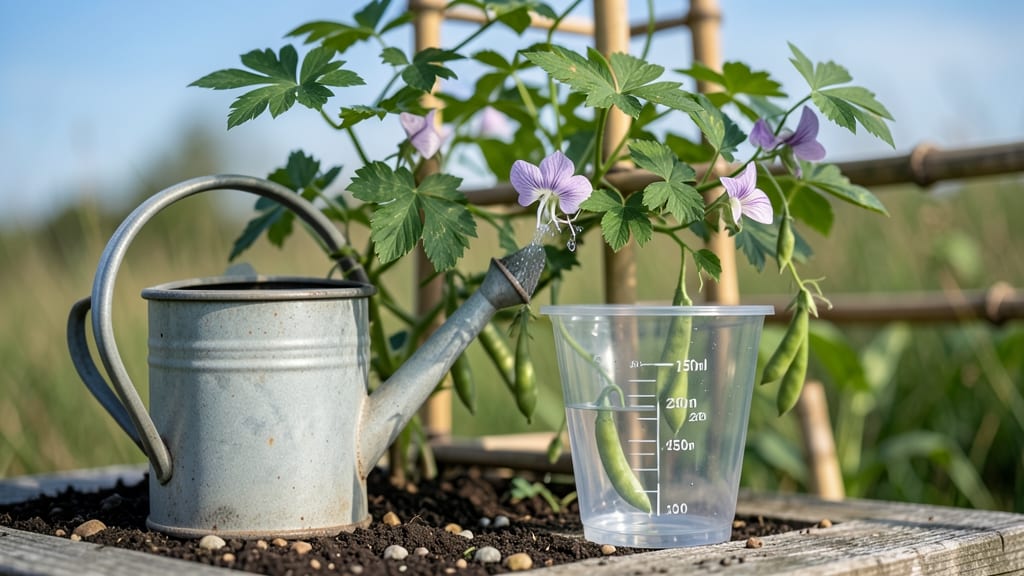
Pea plants need about 1 cup of water per day in their early stages, but that amount changes as they grow and the weather shifts.
You might think these easy-to-grow 🌱 plants don’t need much attention, but too little or too much water can turn your thriving vines into sad, wilted sticks. The key is keeping the soil consistently moist—never soggy—while adjusting for heat, rain, or drought.
In this guide, I’ll break down exactly how much water peas need at each growth stage, how to tell if you’re overdoing or underdoing it, and the best watering tricks to keep them happy without drowning the roots.
Whether you’re planting in Zone 6a or dealing with unpredictable spring showers, you’ll learn how to water like a pro and watch those pods swell with sweet, fresh peas.
Daily watering schedule for pea plants by growth stage
Pea plants thrive when their watering schedule matches their growth stage. Too little water stunts development, while too much causes root rot. The key is consistent moisture without waterlogging. Your pea plants' needs change dramatically from seedling to flowering to pod production, so let's break it down by phase.
First, young seedlings (first 2 weeks) need gentle care. Their roots are shallow, so light daily misting keeps them hydrated without disturbing the soil. Use a spray bottle or fine rose nozzle to deliver ¼ inch of water per week. Avoid overhead watering to prevent fungal diseases like powdery mildew.
Once your pea plants reach the vegetative stage (weeks 3-5), they'll develop climbing vines. This is when deep watering becomes essential. Water at the base, providing ½ to ¾ inch per week.
Check soil moisture by sticking your finger 1-2 inches deep—if it feels dry, it's time to water. Mulch helps retain moisture and regulates soil temperature.
During flowering and pod development (weeks 6-10), your pea plants demand the most water. This is their highest water need period. Aim for 1 to 1½ inches of water weekly, delivered consistently.
Uneven watering causes blossom end rot or poor pod formation. Early morning watering prevents fungal issues and ensures roots absorb moisture efficiently.
| Growth Stage | Water Needs | Frequency | Soil Test | Best Time |
|---|---|---|---|---|
| Seedling (0-2 weeks) | ¼ inch/week | Daily misting | Top ½ inch dry | Morning |
| Vegetative (3-5 weeks) | ½-¾ inch/week | Every 2-3 days | 1-2 inches dry | Morning |
| Flowering (6-8 weeks) | 1-1½ inch/week | Daily | Top 1 inch dry | Early morning |
| Pod Development (8-12 weeks) | 1-1½ inch/week | Daily | Top 1 inch dry | Morning |
Adjust your watering schedule based on your climate. In hot, dry conditions, pea plants may need water every 1-2 days. If you're in a cooler, humid region, reduce to every 3-4 days.
Always water deeply to encourage strong root growth. Shallow watering leads to weak stems and poor pod production.
Pay attention to soil drainage—pea plants hate soggy roots. If your garden retains too much moisture, consider adding sand or compost to improve aeration. A simple test: Dig a small hole near your plants. If water pools after 30 minutes, your soil drains poorly and needs amendment.
Container-grown pea plants dry out faster than in-ground varieties. Check soil moisture daily and water when the top ½ inch feels dry. Use pots with drainage holes and a well-balanced potting mix. Avoid letting containers sit in saucers of water, which can suffocate roots.
During extreme heatwaves, increase watering frequency but avoid wetting foliage to prevent disease. Instead, use drip irrigation or soaker hoses to deliver water directly to the roots. Mulching with straw or grass clippings helps retain moisture and keeps roots cool.
This is especially critical for sugar snap pea varieties, which are more sensitive to stress.
Finally, monitor your pea plants for signs of hydration stress. Yellowing leaves indicate underwatering, while drooping or mushy stems signal overwatering. Adjust your schedule accordingly. With the right balance, your pea plants will reward you with abundant, sweet pods all season long.
Remember, consistency is key. Pea plants prefer steady moisture over sporadic deep watering. Stick to this schedule, and you'll enjoy a thriving crop from seed to harvest. Happy gardening! 🌱💧
Signs of overwatering vs. underwatering in pea plants
Pea plants 🌱 thrive with consistent moisture, but too much or too little water can quickly turn your garden into a disaster zone. Yellowing leaves or wilted vines aren’t just random bad luck—they’re your plants’ way of screaming for help.
Learning to read these signs will save you from losing your entire crop to root rot or stunted growth.
First, let’s tackle the most common mistake: overwatering. When pea plants get soggy, their leaves develop a mushy texture and turn yellow-green or brownish. You might also notice blackened stems near the soil line, a clear sign of fungal infections like root rot.
The soil will feel clay-like and stay damp for days, even after watering stops.
How Much Water Does a Pea Plant Need Per Day?
- Water deeply 1-2x daily
- Check soil moisture before watering
- Use morning watering to reduce evaporation
- Mulch heavily to retain moisture
- Water at night (promotes fungus)
- Let soil stay soggy for more than 24 hours
- Use overhead sprinklers (wets foliage)
- Ignore yellowing leaves without checking roots
On the flip side, underwatered pea plants show crispy, curled leaves that feel dry and papery to the touch. The vines may wilt dramatically by midday, even if they perk up slightly at night. New growth will look stunted or brittle, and pods may fail to develop properly.
If you pull a plant gently and the soil clumps fall apart, that’s a red flag for severe drought stress.
To fix overwatered pea plants, stop watering immediately and let the soil dry out for 24-48 hours. If the roots smell rotten or look mushy, trim away the damaged sections and repot in fresh, well-draining soil.
For underwatered plants, give them a deep soak in the morning and mulch heavily to retain moisture. A 5-minute hand-watering at the base (not the leaves) works wonders for quick recovery.
Pay attention to the soil’s texture—it should feel like a wrung-out sponge, not a muddy puddle or dry brick. Adjust your watering based on weather conditions: hot days mean more frequent watering, while cool, cloudy days allow the soil to stay moist longer.
With practice, you’ll develop a sixth sense for your pea plants’ hydration needs! 🌿
Pro tip: Use a moisture meter or the finger test—stick your finger 1 inch deep into the soil. If it’s dry, water; if it’s damp, wait. This simple trick prevents 90% of watering mistakes in my garden! 💧