
Watering
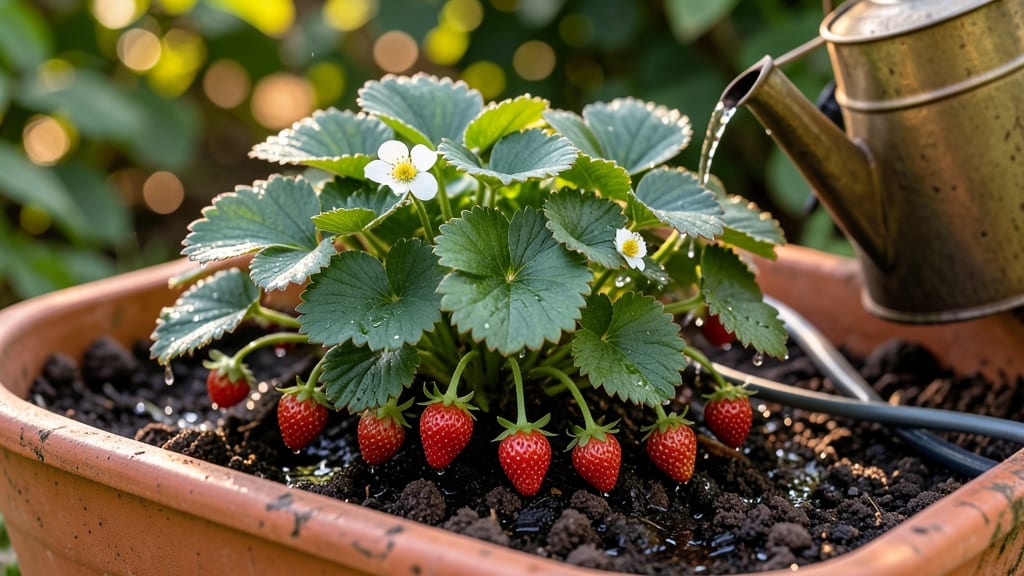
The 1-Inch rule explained: how much water strawberries need weekly
Strawberries thrive on consistency, and the 1-inch rule is your golden metric for perfect hydration. This means applying 1 inch of water per week—either all at once or split into smaller sessions—to keep roots moist without drowning them.
Think of it like a steady rain shower: just enough to quench thirst without causing puddles.
The rule isn’t just about quantity—it’s about soil moisture depth. Strawberry roots spread shallowly (usually within 4-6 inches of the surface), so water must penetrate that zone.
Test it by pushing a screwdriver into the soil: if it slides in easily, you’ve hit the mark. If it resists, water more.
Here’s the science: strawberries absorb 60-70% of their water through their first 2 inches of roots. During fruiting, this need spikes because berries are 90% water—so consistent moisture is non-negotiable. Skimp, and your harvest shrinks. Overdo it, and roots suffocate from oxygen deprivation.
| Stage | Water Needs | Frequency | Best Time |
|---|---|---|---|
| Establishment | 1 inch/week | Every 2-3 days | Morning |
| Fruiting | 1.25 inches/week | Daily (early AM) | Morning |
| Dormancy | 0.5 inch/week | Bi-weekly | Late morning |
| Heatwave | 1.5 inches/week | Every 1-2 days | Early morning |
Morning watering is critical—it gives foliage time to dry before nightfall, slashing fungal risks like gray mold. Aim to water between 6 AM and 10 AM, when evaporation rates are low. Avoid evening sessions: wet leaves + cool temps = perfect conditions for Botrytis to move in.
Your tools matter. A rain gauge or simple tuna can buried in the soil lets you track exactly how much water you’re delivering. For container growers, check soil moisture daily—containers dry out 3x faster than in-ground beds.
Stick your finger 1 inch deep; if it’s dry, water until it runs out the drainage holes.
Seasonal tweaks are key. In summer heat, strawberries may need 1.5 inches weekly, while winter’s 0.5 inch keeps roots from rotting. Watch for drought stress signs: curled leaves or berries that split open are SOS signals.
Adjust immediately—strawberries forgive brief dry spells but never recover from prolonged wilting.
Root systems evolve. Young plants prioritize leaf growth, so shallow watering suffices. Once fruiting begins, roots deepen, demanding deeper soaks. Use a soaker hose or drip irrigation to deliver water slowly and evenly, mimicking natural rainfall. Surface watering wastes resources and compacts soil, smothering those critical shallow roots.
Mulch is your secret weapon. A 2-inch layer of straw locks in moisture, reducing watering frequency by 30-40%. It also keeps soil temps stable—critical during heatwaves or cold snaps. Just avoid piling mulch against stems to prevent rot.
Overwatering is sneaky. Yellowing leaves or mushy crowns mean you’ve crossed the line. Underwatering? Berries turn hard and seedy, and leaves crisp at the edges. Both extremes stunt growth, but underwatering is the bigger villain—it stresses plants faster and invites pests like spider mites.
Pro tip: group strawberries with companion plants like borage or thyme. They shade the soil slightly, slowing evaporation and keeping roots cooler. Pair this with the 1-inch rule, and you’ll harvest juicier, sweeter berries all season long. 🌱
Adjusting water needs by strawberry plant type and season
Not all strawberry plants are created equal when it comes to hydration. June-bearing varieties, which produce one massive harvest, need consistent moisture to support their heavy fruit load. Meanwhile, everbearing and day-neutral types, which fruit multiple times, require more frequent watering throughout the season.
Understanding these differences is key to avoiding blossom end rot or stunted growth.
Seasonal shifts also dramatically impact your watering schedule. In spring, focus on establishing deep roots with 1-inch weekly waterings. During summer’s peak fruiting, increase to daily watering in the morning to prevent stress. As fall approaches, taper back to reduce fungal risks before dormancy sets in.
Strawberry Watering Guide by Type & Season
June-Bearing
Spring: 1 inch/week
Summer: 1.5 inches/day
Fall: Reduce to 0.5 inch/week
Everbearing
Spring: 1 inch/week
Summer: 1 inch every 2 days
Fall: 0.75 inch/week
Day-Neutral
Spring: 1.25 inches/week
Summer: 1 inch every 2 days
Fall: 1 inch/week
💧 Pro Tip: Use a moisture meter to check soil depth—strawberries hate soggy roots but also suffer from drought stress.
Container-grown strawberries dry out faster than in-ground plants. If your everbearing varieties are in pots, check soil moisture daily during summer. For June-bearing types, mulch heavily to retain moisture and prevent soil temperature spikes that stress roots.
Watch for overwatering signs like yellowing leaves or moldy crowns, especially during rainy seasons. Underwatering shows as crispy leaf edges or small, hard berries. Adjust your schedule based on weather—heatwaves demand more frequent watering, while cool, cloudy days let you reduce frequency by 30%.
For day-neutral strawberries, which produce fruit continuously, maintain even moisture throughout the season. Let the soil dry slightly between waterings in fall to encourage dormancy prep. Always water at the base of plants to avoid fungal diseases on leaves.
Remember: 1 inch of water equals about 30 minutes of gentle watering with a hose or 1-2 gallons per plant. Use a rain gauge or tuna can to measure accurately—your strawberries will thank you with sweeter, juicier berries! 🍓