
Succulent
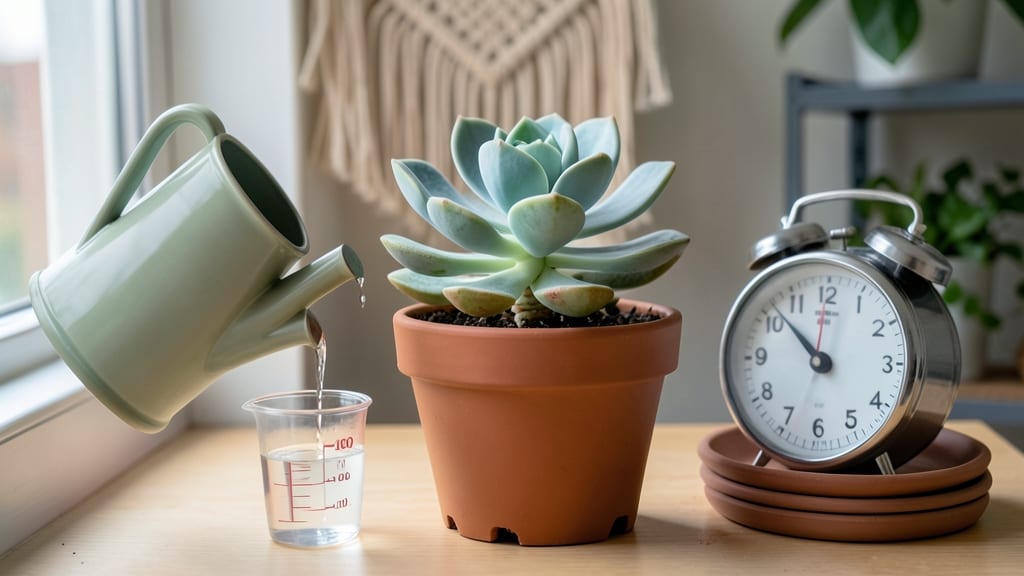
Succulent plants need watering only when the top 1 inch of soil feels completely dry to the touch — a rule that keeps these drought-lovers thriving without the risk of root rot.
Overwatering is the #1 killer of succulents 🌵, yet most gardeners still guess how much these plants truly need. The truth? A simple finger test in the soil is all you need to avoid the common mistakes that turn your green thumb into a black thumb.
This isn't about strict schedules or complicated tools — it's about understanding your succulent's thirst cycle. Whether you're growing them in pots or planting them outdoors in Zone 6a, the same principle applies: wait until the soil is bone-dry before watering again.
In this guide, I'll walk you through the exact method to test soil moisture, how to adjust for different seasons, and what to watch for when your succulents are telling you they've had enough (or too much) water.
The 1-Inch dry soil rule: exact watering schedule for succulents
Succulents store water in their leaves, making them naturally drought-resistant, but that doesn’t mean they’re completely waterproof. The 1-inch dry soil rule is the golden standard for watering—it keeps your plants hydrated without drowning their roots.
This method works for 90% of succulents, whether you’re growing them in pots, raised beds, or directly in the ground.
Here’s the secret: Succulents need water only when the top 1 inch of soil is completely dry. This simple test prevents overwatering, the #1 cause of succulent death. The trick is checking soil moisture before watering—not on a rigid schedule.
Your climate, pot size, and soil mix all affect how often you’ll need to water, but this rule keeps it foolproof.
How to Apply the 1-Inch Dry Soil Rule
- Step 1: Test Soil Depth
Use your finger or a wooden chopstick to check the top 1 inch of soil. If it feels dry and crumbly, it’s time to water. - Step 2: Water Deeply
Soak the soil until water runs out of the drainage holes at the bottom. This encourages roots to grow deeper, making your succulent more resilient. - Step 3: Wait to Recheck
After watering, wait until the top 1 inch is dry again before repeating. This could take 1-4 weeks, depending on conditions. - Step 4: Adjust for Season
In summer heat, soil dries faster—check every 5-7 days. In winter dormancy, stretch watering to every 4-6 weeks. - Step 5: Factor in Pot Size
Small pots (4-inch diameter) dry out faster than large ones. For 6+ inch pots, extend the wait time by 2-3 days.
Your soil mix plays a huge role in how often you’ll water. A well-draining blend (like 60% cactus soil + 30% perlite + 10% pumice) stays dry longer than regular potting mix.
If you’re using in-ground planting, amend the soil with sand or gravel to improve drainage. Without this, water pools around roots, leading to rot.
Don’t rely on a watering schedule—succulents thrive on flexibility. For example, my echeveria in a terracotta pot needs water every 7-10 days in summer, but the same plant in a shady spot might only need water every 3 weeks.
Always test the soil first—your finger is the best tool!
Seasonal changes demand major adjustments. In spring and fall, when temperatures are moderate, stick to the 1-inch rule but water every 10-14 days. During winter dormancy, reduce watering to once every 4-6 weeks—unless you’re in a heated home, where indoor conditions stay warmer.
Even then, underwatering is safer than overwatering.
If you’re new to succulents, visual cues help confirm when to water. Look for wrinkled or shriveled leaves—this means your plant is thirsty. On the flip side, soft, mushy leaves or yellowing at the base signal overwatering.
These signs often appear 2-3 days after the problem starts, so act fast to save your plant.
For container-grown succulents, pot material matters. Terracotta pots dry out faster than plastic because they’re porous. If you repot your succulents, choose containers with multiple drainage holes—no exceptions.
Without them, excess water sits at the bottom, causing root rot within days. Pro tip: Elevate pots on pebbles or a saucer to improve airflow.
Let’s talk humidity and climate. In arid regions (like Arizona or California), succulents may need water every 5-7 days in peak summer. But in humid climates (like Florida or the Pacific Northwest), soil stays moist longer, so stretch watering to every 2-3 weeks.
If you’re unsure, err on the side of less water—succulents bounce back from underwatering but rarely from overwatering.
One final tip: Group succulents by size and type in your garden. Larger varieties (like agave) have deeper roots and need less frequent watering than smaller ones (like haworthia).
Keep a watering journal for 2-3 months to track what works best for your setup. Over time, you’ll develop a custom schedule tailored to your plants’ needs.
Common watering mistakes that kill succulents (and how to fix them)
Even experienced gardeners struggle with succulent watering—because what feels like "just enough" often turns deadly. The biggest mistake? Assuming all succulents thrive on the same schedule. Desert varieties like echeveria need less water than tropical types like burro's tail, yet many treat them identically.
This confusion leads to two silent killers: overwatering and underwatering, both causing irreversible damage.
I've seen root rot spread through collections in just 48 hours from soggy soil, while others let their jade plants shrivel because they thought "less water" meant "no water."
The truth? Succulents store water in their leaves—but only if given the right balance. Let's fix these mistakes before your plants pay the price.
⚠️ The #1 Watering Mistake: Ignoring the 1-Inch Dry Soil Rule
How much water does a succulent plant need? Most gardeners guess—but the secret is simple: Wait until the top 1-2 inches of soil feel completely dry before watering again. Use your finger: if it comes out clean, it's time. No tools needed! Overwatering kills 80% of succulents because roots suffocate in wet soil, while underwatering causes wrinkled leaves that never recover.
Fix it: Stick to deep waterings every 2-4 weeks (less in winter). Drainage holes aren't optional—they're lifesavers.
First, let's tackle overwatering, the silent assassin of succulents. You might think your plant is happy because the soil looks moist, but root rot starts before you see wilting. Look for yellowing leaves, a mushy base, or blackened stems—these are emergency signs.
Even worse, fungal infections spread quickly in damp conditions, turning your collection into a science experiment gone wrong.
I learned this the hard way with my aloe vera—after a week of "just checking" if it needed water, I found its roots turning to mush. The fix? Repot immediately in fresh, gritty soil (like cactus mix) and hold off on watering for 2 weeks to let roots recover.
If the rot spreads, you may need to trim healthy leaves for propagation. Prevention is key: water only when soil is bone-dry, and never let plants sit in saucers of water.
On the flip side, underwatering causes shriveled leaves that feel like crumpled paper—a sign your succulent is begging for moisture. Unlike overwatering, this damage is often reversible if caught early. Desert species like sedum can handle longer dry spells, but tropical types (such as haworthia) need more frequent checks.
The fix? Water deeply when soil is dry, then return to your normal schedule. For severely dehydrated plants, soak the pot for 10 minutes and watch for plumpness returning within 24 hours.
Here's the game-changer: adjust your schedule by season. In summer heat, most succulents need water every 3-4 weeks, while winter dormancy often means no water for 6 weeks.
Even container size matters: small pots dry out faster than large ones. Pro tip: Group plants by type and water them together—this keeps your routine consistent and stress-free.
Remember, succulents don't need much, but they do need consistency. Whether you're battling root rot or wrinkled leaves, the solution always starts with dry soil and patience.
Next time you water, ask yourself: "Is the soil really dry?" If not, your succulents will thank you for years to come. 🌵