
Watering
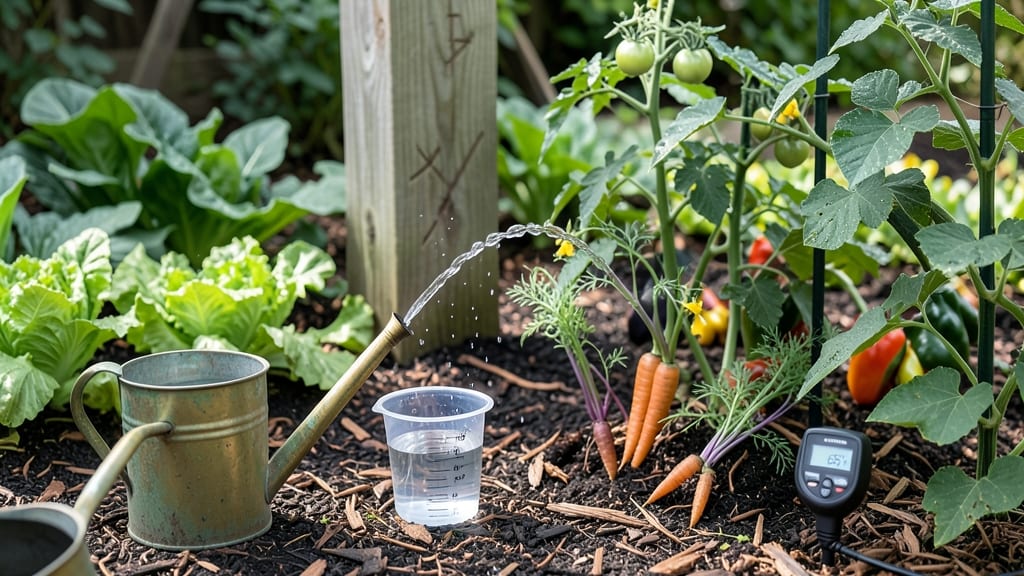
Vegetable gardens need 1 to 1.5 inches of water per week—whether from rain or your hose—to thrive, but guessing leads to wasted effort or stunted plants.
Most gardeners overwater or underwater without realizing it, and the results show up in wilted leaves, cracked soil, or fruit that never sets. The truth? Your plants’ needs change with the season, soil type, and even the type of vegetables you’re growing.
Leafy greens like lettuce and spinach prefer consistent moisture, while root crops such as carrots and potatoes need deeper, less frequent watering. And in clay soil? Water seeps slowly, while sandy soil drains fast—meaning your schedule must shift depending on what’s in the ground.
In this guide, I’ll break down the exact watering schedule for your garden, from daily checks to seasonal adjustments, so you can grow a harvest without the guesswork.
Daily watering requirements by vegetable type: a soil-tested guide
Watering your vegetable garden isn't a one-size-fits-all task—each plant has unique needs based on its type and your soil composition. Leafy greens like lettuce and spinach thrive with consistent moisture, while root vegetables such as carrots and potatoes prefer deep, infrequent watering to encourage root growth.
Even herbs like basil and parsley have specific hydration requirements to prevent bolting or wilting. Understanding these differences can save you time, water, and frustration while maximizing your harvest.
Soil type plays a critical role in how often and how deeply you need to water. Sandy soil drains quickly, requiring more frequent watering but less depth, while clay soil holds moisture longer but can suffocate roots if overwatered. Loamy soil, the gold standard, balances drainage and retention perfectly.
Below, you’ll find a breakdown of watering needs tailored to your garden’s soil type and the specific plants you’re growing, ensuring your vegetables get just the right amount of hydration.
Pro Tip: Always water in the early morning (before 9 AM) to reduce evaporation and fungal risks. Avoid evening watering, as damp foliage overnight invites diseases like powdery mildew. Use a soil moisture meter or the "squeeze test" (grab a handful of soil—if it crumbles easily, it’s dry; if it sticks together, it’s moist enough).
For leafy greens, shallow but frequent watering keeps them crisp and tender. Plants like lettuce and spinach need 1-2 inches of
How to adjust watering for extreme weather: heatwaves, droughts, and heavy rain
Extreme weather throws off even the most consistent watering routines. During heatwaves, vegetables like tomatoes and peppers can wilt within hours, while droughts stress roots, stunting growth.
Conversely, heavy rain can drown shallow-rooted plants like lettuce or radishes. The key is adapting your schedule based on real-time conditions—not just the calendar.
Start by monitoring soil moisture at the root zone (1-2 inches deep). Use your finger to check: if it feels dry, water immediately. If damp, hold off.
This simple test prevents both overwatering (which suffocates roots) and underwatering (which causes wilting). For container gardens, lift pots—if they’re light, they need water.
🚨
During heatwaves (>90°F/32°C), water deeply every morning (before 9 AM) to reduce evaporation. For droughts, increase frequency by 30-50% and mulch heavily (3-4 inches) to retain moisture. After heavy rain, pause watering for 24 hours—soggy soil chokes roots and invites fungal diseases like blight.
For heatwaves, focus on shallow but frequent watering to cool the soil surface. Use drip irrigation or soaker hoses to deliver water directly to roots, reducing waste. Mulch with straw or wood chips to lock in moisture—this can cut water needs by up to 30%.
Avoid overhead sprinklers, which evaporate quickly and promote fungal growth.
During droughts, prioritize deep watering (6-8 inches) every 2-3 days to encourage roots to grow downward. Group drought-tolerant plants like zucchini, beans, and swiss chard together—they’ll share moisture more efficiently.
If your garden shows signs of stress (yellowing leaves, wilting despite water), reduce fertilizer temporarily—roots need energy to seek water, not grow foliage.
After heavy rain, check for waterlogged soil—if it stays soggy for more than a day, amend with compost to improve drainage.
For plants struggling to recover, trim yellow or mushy leaves to redirect energy. Leafy greens like spinach bounce back fastest; root crops (carrots, beets) may need extra time to resume growth.
Pro tip: Keep a rain gauge near your garden to track precipitation. If you get 1 inch of rain, skip watering for 2-3 days for most vegetables.
For sandy soil, reduce this to 1 day—it drains faster. Adjust mulch thickness seasonally: thicker in summer, lighter in spring/fall to allow water penetration.