
How To
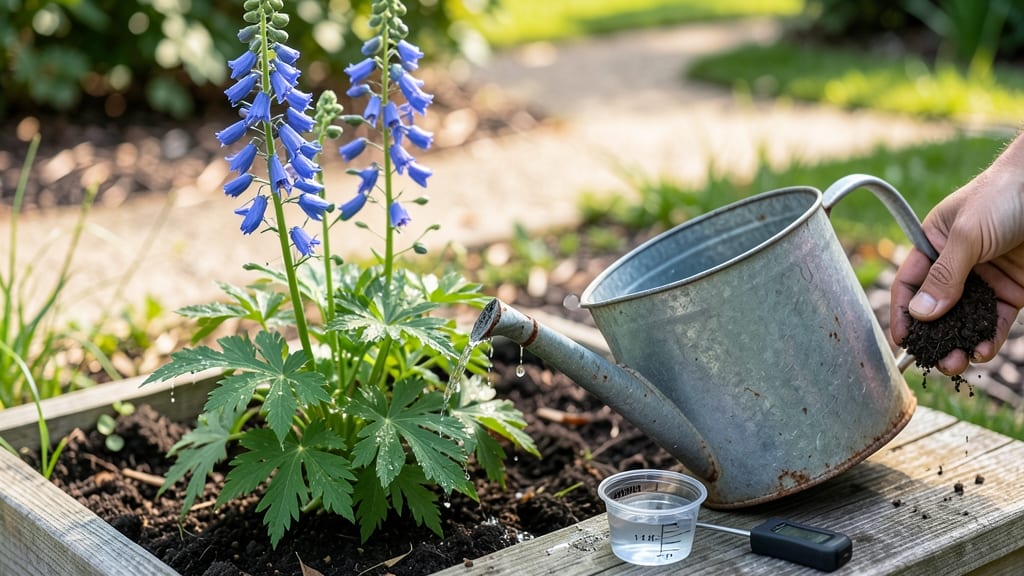
Delphiniums need about 1 to 1.5 inches of water per week to thrive—enough to keep the soil moist but not soggy, especially during their spring flowering season in zone 6a.
Picture this: your 🌸 delphinium stands tall, its spires heavy with vibrant blooms—until you notice the leaves wilting or turning yellow. That’s often a sign you’re watering too much or too little, and the difference between a showstopper and a sad, drooping plant.
Most gardeners overestimate how thirsty these tall beauties really are. Delphiniums actually prefer deep, infrequent watering over shallow daily sips, which helps their roots grow strong and prevents the dreaded root rot that can kill them faster than you’d think.
In this guide, I’ll break down exactly how often to water based on your soil type, whether you’re in a dry climate or a humid one, and how to adjust when those stunning blooms start to open in June.
You’ll learn the early signs of over- or under-watering and how to fix them before it’s too late.
Delphinium watering schedule by growth stage: prevent root rot while keeping blooms hydrated
Delphiniums thrive on consistent moisture but despise soggy roots. Their water needs change dramatically from seedlings to full bloom, requiring precise adjustments to avoid both drought stress and fungal diseases like root rot. The key is understanding their growth stages and matching water volume to their current needs.
For new seedlings, shallow but frequent watering keeps the soil moist—never soggy. As they mature into vegetative growth, deep watering encourages strong root development.
During flowering season, you'll need to increase frequency slightly to support those towering spikes. Finally, in dormancy, watering becomes minimal to prevent winter rot.
Here's the exact weekly watering schedule tailored to each stage, including how much to water and when to adjust based on your climate. This table serves as your visual guide to keeping your delphiniums happy without the guesswork.
During the seedling stage, delphiniums need gentle care—think of them like newborns. Use a spray bottle or small watering can to keep the top inch of soil moist, but never let it sit in water.
Overwatering at this stage is the #1 cause of seedling rot. I like to check moisture by sticking my finger in the soil; if it's dry up to my first knuckle, it's time to water.
As your delphiniums enter vegetative growth (typically 4-10 weeks after planting), they'll start putting on serious size. This is when you switch to deep watering—aim for 1 gallon per plant every 5-7 days.
The goal is to encourage roots to grow downward, not stay shallow. Water at the base and avoid wetting the leaves to prevent fungal diseases like powdery mildew.
When those stunning blue or purple spikes begin to form, your watering game changes again. During flowering season (usually June-August in most climates), delphiniums need more frequent hydration—about every 4-5 days with 1.5 gallons per plant.
This supports the heavy flower heads and keeps the stems sturdy. I always water in the early morning to give foliage time to dry before evening humidity sets in.
After flowering, as the plant prepares for dormancy, you'll want to taper off watering. Reduce frequency to every 7-10 days and cut back on volume. This helps prevent root rot during the cooler months.
In my garden, I also add a 2-inch layer of mulch around the base to insulate roots and retain any remaining moisture.
For container-grown delphiniums, adjust this schedule by watering more frequently—containers dry out faster. Check the soil daily in hot weather; if the top inch feels dry, it's time
5 Signs your delphinium is overwatered (and how to fix it fast)
Delphiniums thrive on balance—too little water wilt their blooms, but too much drowns their roots. Overwatering is sneaky; by the time you spot yellowing leaves, fungal diseases may already be spreading. I’ve seen delphiniums collapse within days from soggy soil, so recognizing these early signs can save your plants.
Your delphinium’s roots need oxygen to grow strong. When soil stays waterlogged, roots suffocate, leading to a cascade of problems. The key is consistent moisture, not saturation. Let’s break down the red flags and fast fixes to rescue your plants before permanent damage sets in.
⚠️ How Much Water Does Delphinium Need?
Delphiniums need 1-1.5 inches of water weekly, but adjust based on soil and climate. Morning watering prevents fungal growth, while deep soaks encourage root growth. Avoid watering at night—wet foliage invites disease. In containers, check soil moisture daily; in-ground plants need watering every 3-5 days in warm weather.
Signs of proper hydration: Soil feels moist but not soggy 2 inches down, and leaves stay firm and upright.
First, watch for yellowing leaves starting at the base. This classic sign of overwatering often begins with the older leaves turning yellowish-green before browning. Unlike nutrient deficiencies, these leaves won’t recover—they’re already dying from root stress.
If you see this, cut back on watering immediately and let the top 2 inches of soil dry out between waterings.
Mushy stems are another alarm bell. Gently press a stem—if it feels soft or squishy, your delphinium is drowning. This happens when roots can’t absorb water fast enough, causing the plant to rot from the inside out. To fix it, stop watering entirely for 3-5 days and improve drainage by adding perlite or sand to the soil. If the stem is already mushy, prune it back to healthy tissue to prevent spread.
Keep an eye out for black or brown spots on leaves or stems. These are often fungal infections like root rot or powdery mildew, thriving in wet conditions. Remove affected leaves immediately and space plants wider to improve airflow.
A fungicide spray (like neem oil) can help, but prevention is key—water at the base of the plant, not overhead.
If your delphinium’s leaves are drooping despite moist soil, it’s a sign of oxygen-starved roots. Unlike wilting from thirst, this droop won’t bounce back when watered. Dig gently around the roots—if they smell rotten or look dark, you’re dealing with severe overwatering.
Repot the plant in well-draining soil and hold off on watering until the roots firm up.
Finally, stunted growth or fewer blooms can signal chronic overwatering. When roots can’t access oxygen, the plant diverts energy to survival, not flowering. To revive your delphinium, reduce watering to every 5-7 days and add compost to improve soil structure.
With better drainage, your plant should rebound and produce vibrant blooms next season.