
Watering
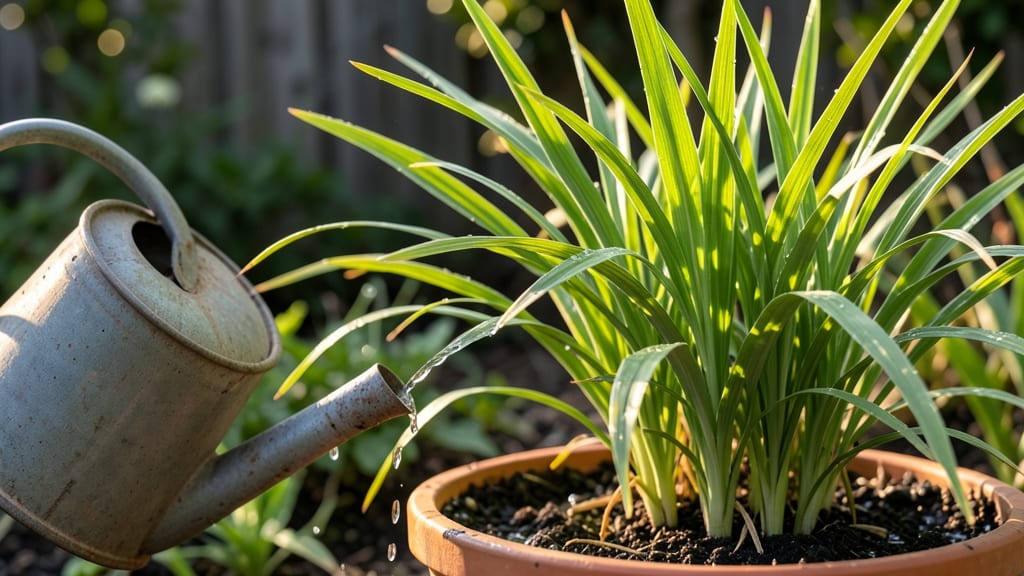
How much water does lemongrass need? The answer lies in keeping the soil damp but never soggy—about 1 to 1.5 inches per week in most climates, though your finger is the best tool to check.
Lemongrass thrives when its watering needs are met just right—too little and it wilts, too much and it rots—but the secret to perfect growth lies in a simple finger-dip test that even beginner gardeners can master.
In USDA Zone 6 or warmer, this herb drinks more in summer heat, while cooler months slow its thirst. Container-grown plants dry out faster than in-ground ones, so adjust your schedule accordingly.
Below, I’ll show you how to tell if your 🌿 lemongrass is thirsty or drowning, plus a season-by-season watering plan to keep it lush and ready for harvest in 60 to 90 days.
The finger-dip test: how to water lemongrass correctly
Mastering the art of watering lemongrass starts with understanding its soil moisture needs. Unlike drought-tolerant herbs, lemongrass demands consistent hydration but despises soggy roots. The finger-dip test is my foolproof method to gauge when your plant craves water—no guesswork required.
This simple technique works for both container-grown and in-ground plants, adapting to your local climate and seasonal shifts.
Why rely on a schedule when you can read your plant's thirst cues directly? The finger-dip test reveals the hidden moisture levels in the soil, preventing both underwatering stress (yellowing leaves) and overwatering disasters (mushy stems).
I've used this method for years in my USDA Zone 9 garden, and it's saved more than a few struggling lemongrass clumps from root rot. Let's dive into the step-by-step process that'll have your lemongrass thriving in no time.
- 1 Choose the right time: Test soil in the morning after sunrise, before you water. This gives you an accurate reading of overnight moisture loss.
- 2 Insert your finger: Gently push your index finger 1-2 inches deep into the soil, near the plant's base but not touching the stem. This mimics the plant's root zone.
-
3
Assess moisture level:
- Dry: Finger comes out clean—water immediately
- Slightly damp: Light film on finger—water in 2 days
- Moist: Slight resistance—wait 3-4 days
- 4 Water properly: When needed, water until 500ml drains from the bottom (containers) or soil is moist 2 inches deep (in-ground). Always water at soil level, not the leaves.
-
5
Adjust for climate:
- Tropical: Test daily in peak heat
- Temperate: Test every 2-3 days
- Arid: Test morning and evening
Your lemongrass watering frequency will naturally adjust based on your finger-dip findings. In my humid subtropical climate, I typically water every 2-3 days during summer, while my neighbors in drier regions might only need to water every 4-5 days.
The key is consistency—lemongrass hates moisture fluctuations, which can cause leaf curl or stunted growth.
Container-grown lemongrass requires more frequent checks because potted soil dries faster than in-ground soil. I test the soil in my 12-inch pots every morning and water when the top 1 inch feels dry.
For in-ground plants, you can extend the testing interval to every other morning, as the surrounding earth retains moisture longer. Remember, larger pots (18+ inches) may need watering every 3-4 days in hot weather.
Seasonal changes dramatically affect your lemongrass watering needs. During spring and summer, when growth is most active, I water every 2-3 days regardless of the finger-dip test—this prevents heat stress.
In fall and winter, I reduce frequency to every 5-7 days and rely more heavily on the test, as cooler temperatures slow evaporation. Even in winter, though, I never let the soil dry completely—lemongrass roots stay active year-round in warm climates.
Watch for visual cues that confirm your finger-dip test results. Healthy lemongrass leaves should be bright green and slightly wrinkled when dry—a sign the plant is conserving moisture. If leaves appear dark green and glossy, it
Lemongrass watering schedule by climate and season
Lemongrass thrives in humid, tropical conditions but adapts to temperate and arid climates with adjustments. The key is maintaining consistent moisture without waterlogging—especially critical during summer heat or winter dormancy.
In tropical zones like Florida or Hawaii, lemongrass may need daily watering, while arid regions like Arizona require deep, infrequent soaking to prevent drought stress.
Seasonal shifts dramatically alter watering needs. During summer months, lemongrass in USDA Zone 6-10 may wilt within 2-3 days without water, while winter slows growth and reduces water needs to bi-weekly intervals.
Container-grown lemongrass dries out faster than in-ground plants, so check soil moisture daily in summer and adjust accordingly.
🌱 Did You Know? Lemongrass roots extend 12-18 inches deep, so surface watering often misses critical moisture zones. Always water until soil is saturated 6 inches down—this prevents shallow root systems and yellowing leaves.
In tropical climates, lemongrass grows year-round, so daily checks are essential. Look for drooping leaves or yellowing tips—signs of underwatering. Overwatering in these zones often causes root rot, identifiable by blackened stems and a foul soil smell.
For container growers, use pots with drainage holes and a well-draining potting mix to prevent soggy roots.
During summer heatwaves, even temperate zones may require daily watering if temperatures exceed 90°F (32°C). Increase humidity around potted lemongrass by placing trays of pebbles and water nearby.
In arid regions, focus on deep watering every 4-5 days rather than frequent shallow watering, which encourages shallow root growth and weakens the plant.
Winter care varies by climate: tropical zones need slightly reduced water but still consistent moisture, while temperate and arid regions can nearly halt watering until spring. Always avoid wet foliage in winter, as cold nights increase fungal risks.
If your lemongrass shows purple or brown leaf edges, it’s likely overwatered—cut back immediately and let the soil dry slightly between waterings.
Pro tip: