
Companion Plants
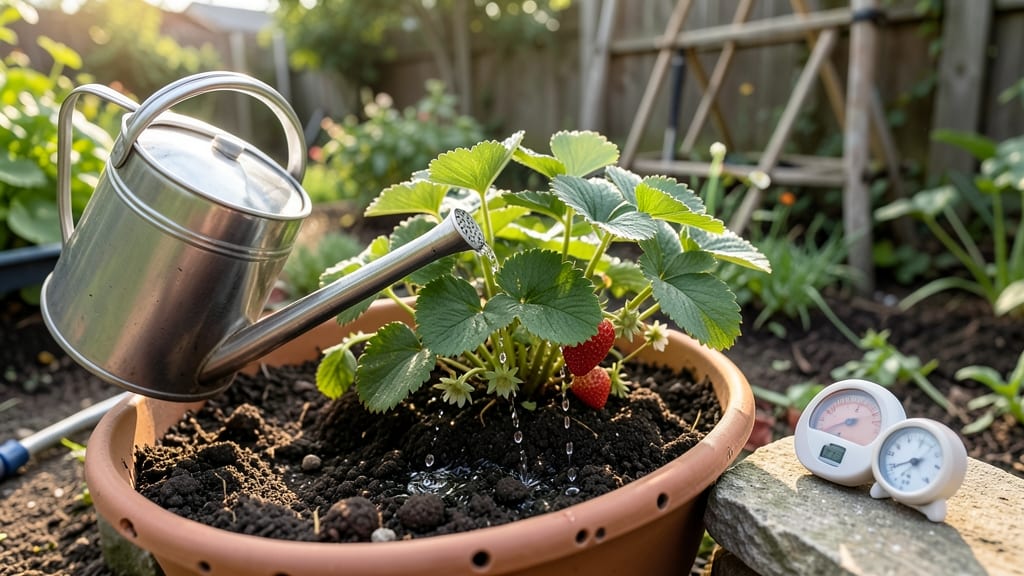
Strawberry plants need to be watered how often do strawberry plants need to be watered every 1-3 days to thrive, but timing changes dramatically from seedlings to fruiting 🍓 — and getting it wrong can mean the difference between juicy berries and sad, shriveled ones.
Picture this: You’ve spent weeks nurturing your strawberry patch, only to watch your hard work turn to mush because the soil stayed too wet, or your berries split open from thirst.
Mastering the right schedule isn’t just about dumping water at random—it’s about reading your plants and adjusting for heat, soil, and growth stages.
In this guide, I’ll break down the exact watering frequency for each phase of your strawberry’s life cycle, from tender seedlings to heavy-fruiting plants. You’ll learn how to spot over- or underwatering before it’s too late and which methods (drip irrigation, hand watering, or mulching) work best for your setup.
By the end, you’ll have a foolproof system to keep your strawberries happy, productive, and bursting with that sweet summer flavor—no guesswork required.
Strawberry plant watering schedule by growth stage (with exact timing)
Strawberries thrive on consistent moisture, but their water needs shift dramatically from tiny seedlings to heavy-fruiting plants. Too much water causes root rot, while too little leads to small, bland berries or cracked fruit.
The key? Adjusting your watering routine based on each growth stage—and your local climate. Let’s break it down by phase so you can water like a pro.
First, soil type matters most. Sandy soil drains quickly, needing more frequent watering, while clay holds moisture longer. I always test my soil’s moisture by sticking my finger 1-2 inches deep—if it feels dry, it’s time to water.
In hot climates, you might water daily, while cooler regions can stretch it to every 3 days. Let’s dive into the exact schedule for each stage.
| Growth Stage | Watering Frequency | Water Amount | Best Time | Key Tips |
|---|---|---|---|---|
| Seedlings (First 4 Weeks) | Every 1-2 days | ½ cup per plant | Morning (6-9 AM) | Keep soil moist but not soggy. Use a spray bottle for delicate leaves. |
| Runner Development (Weeks 5-8) | Every 2-3 days | ¾ cup per plant | Early morning | Focus on root zone. Reduce water if runners appear weak. |
| Flowering (Weeks 9-10) | Every 2 days | 1 cup per plant | Morning (before 10 AM) | Avoid wet flowers—water at soil base. Mulch to retain moisture. |
| Fruiting (Weeks 11-16) | Daily (hot weather) or every 2 days | 1-1.5 cups per plant | Morning or late afternoon | Deep watering prevents splitting. Use drip irrigation for consistency. |
| Dormancy (Fall/Winter) | Every 10-14 days | ¼ cup per plant | Mid-morning | Reduce water to 50% of summer. Let soil dry slightly between waterings. |
During the seedling stage, I prioritize gentle watering to prevent washing away the delicate soil around young roots. A mist sprayer works wonders here—just enough to keep the soil damp without creating puddles.
Overwatering at this stage can lead to fungal diseases like gray mold, which I’ve seen ruin entire trays of seedlings in just days. Always use sterilized water (rainwater or filtered tap water) to minimize risks.
When strawberries enter the flowering phase, their water needs spike because the plant is diverting energy to both roots and fruit development.
This is when I switch to deep watering techniques, like soaking the soil until water drains out the bottom of containers or reaches 6 inches deep in garden beds. Morning watering is critical here—wet flowers at night attract pests and promote rot.
I’ve learned this the hard way after losing blossoms to slugs in humid summers.
In hot climates, like my Zone 9 garden, strawberries need water every morning during fruiting to prevent berries from splitting—a common issue when soil moisture fluctuates wildly. I’ve found that mulching with straw helps retain moisture and keeps roots cool.
For cooler climates, you can stretch watering to every other day, but always check soil moisture before deciding. A simple finger test saves time and stress.
One critical mistake I see beginners make is watering leaves instead of soil. Strawberry leaves are prone to foliar diseases like powdery mildew when wet. Always aim water at the base of the plant and avoid overhead sprinkling.
If you must water leaves, do it early in the day so they dry quickly. I’ve also had success using a soaker hose
5 Signs your strawberries are overwatered or underwatered (and how to fix it)
Strawberries are sensitive to water stress, and their leaves and soil tell a clear story about whether they're thirsty or drowning. Overwatering and underwatering both lead to poor fruit production, but the fixes couldn't be more different.
Let's decode the signs so you can rescue your plants before it's too late.
First, check the soil moisture by sticking your finger about 1 inch deep. If it feels damp but not soggy, your plants are likely happy. But if the soil is either bone-dry or waterlogged, your strawberries are sending SOS signals through their leaves and growth patterns.
Here’s how to tell the difference—and what to do about it:
How Often Do Strawberry Plants Need to Be Watered?
✅ DO:
- Water deeply 1-2 times per week
- Soak 6-8 inches deep in soil
- Water in the morning (6-9 AM)
- Use drip irrigation or soaker hoses
- Check soil before watering (stick finger in)
❌ DON'T:
- Water lightly at the surface
- Let soil stay waterlogged for days
- Water in the evening (fungus risk)
- Use overhead sprinklers (wets leaves)
- Ignore yellowing leaves or mold
🌱 Pro Tip: Mulch with straw to retain moisture and prevent soil crusting.
One of the first signs of underwatering is yellowing leaves, starting from the bottom. The edges will crisp up, and the plant may look wilted even when watered.
If you see this, give your strawberries a deep drink—aim for 1 gallon per plant—and mulch to lock in moisture.
On the flip side, overwatered strawberries develop mushy, brown leaves that feel slimy to the touch. The soil may smell sour, and you might spot gray mold (Botrytis) on the fruit or leaves.
To fix this, stop watering immediately and let the soil dry out for 2-3 days. Remove any moldy leaves and improve drainage by amending the soil with compost.
Another red flag is fruit splitting, which happens when plants get too much water after a dry spell. This isn’t just a watering issue—it’s also a sign your soil lacks organic matter.
To prevent it, water consistently and add 2 inches of compost around the plants to improve water retention and drainage.
Finally, pay attention to new growth. Healthy strawberries should produce bright green, glossy leaves. Dull, pale leaves mean underwatering, while dark, mushy new growth signals overwatering. Adjust your schedule based on these cues, and your plants will reward you with sweet, juicy berries all season. 🍓