
Watering
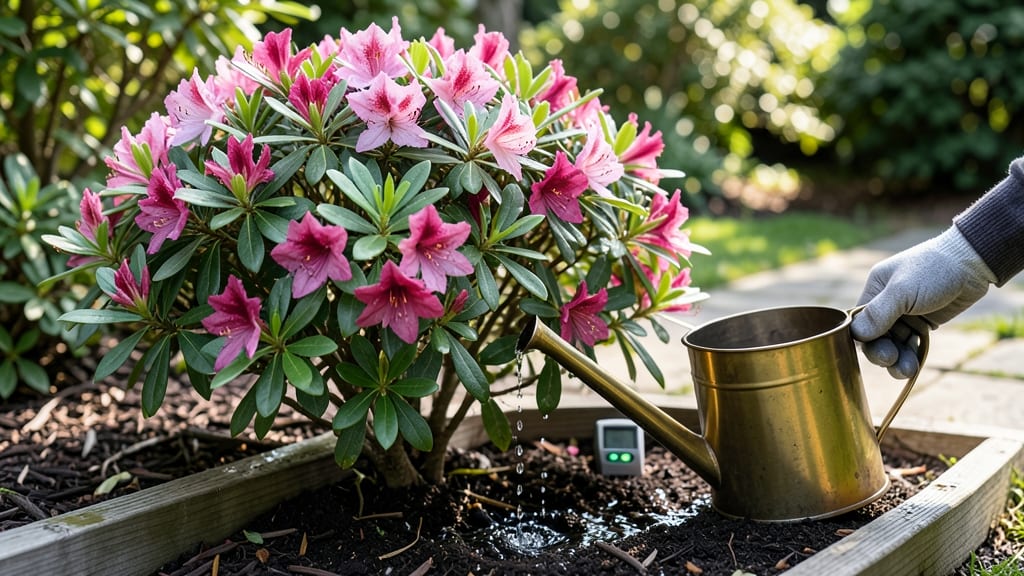
Watering azaleas the right way—how often should azaleas be watered—keeps those stunning 🌸 blooms coming back year after year without the guesswork of whether you're overdoing or underdoing it.
Struggling to keep your azaleas vibrant and blooming year after year? The secret often lies in mastering their watering schedule—too much or too little can spell disaster for these delicate shrubs.
Most gardeners assume azaleas need constant moisture, but the truth is more nuanced. These acid-loving shrubs thrive when their roots stay consistently damp but never soggy, which means deep watering matters just as much as frequency.
In this guide, I’ll break down the exact watering schedule by season, how to check soil moisture like a pro, and the telltale signs your azaleas are either thirsty or drowning—so you can enjoy healthier plants and bigger blooms with minimal effort.
The ideal azalea watering schedule by season: when and how much
Mastering your azalea's watering schedule is the difference between vibrant blooms and wilted branches. These acid-loving shrubs thrive on consistent moisture but despise soggy roots. The key? Understanding their seasonal needs and using the deep soil check method to avoid guesswork.
Overwatering causes root rot, while underwatering leads to drooping leaves—neither outcome is ideal for your azalea care routine.
Your azalea's watering needs shift dramatically with seasonal changes. In spring, focus on establishing deep roots with weekly deep watering. By summer, you'll likely need to water every 3-5 days to combat heat stress.
Fall and winter demand a gradual reduction in frequency to prepare the plant for dormancy. Let's break down the perfect watering schedule for each season.
🌸 Pro Tip: Always water in the early morning (before 10 AM) to reduce evaporation and fungal risks. Avoid evening watering, which can leave leaves damp overnight.
Let me show you the deep soil check method—this is how I determine when my azaleas truly need water. Stick your finger 2-3 inches into the soil near the base of the plant.
If it feels dry and crumbly, it's time to water. If it's still cool and moist, wait another 2-3 days. This method prevents both overwatering and underwatering by giving you real-time data.
For potted azaleas, the rules change slightly because containers dry out faster. Check the soil every 3-4 days in summer and weekly in cooler months. Potted plants need 10-15% more water than in-ground shrubs due to limited root space.
Always use a pot with drainage holes and a cache pot underneath to catch excess water.
Your azalea's soil type plays a huge role in watering needs. Sandy soil drains quickly, requiring more frequent watering (every 2-3 days in summer). Clay soil, on the other hand, holds moisture longer, so you might only need to water every 5-7 days.
Amend your soil with peat moss or pine bark to improve drainage and moisture retention—this is a game-changer for azalea care.
Watch for visual cues that your azalea is thirsty: Wilting leaves, dull foliage, or leaves curling at the edges all signal it's time to water. On the flip side, yellowing leaves, mushy stems, or white mold on the soil mean you're overwatering.
Adjust your schedule immediately if you spot these warning signs.
Mulching is your secret weapon for consistent moisture. Apply a 2-3 inch layer of organic mulch (like pine straw or wood chips) around your azalea, keeping it 2 inches away from the stem.
Mulch helps retain soil moisture, regulates temperature, and suppresses weeds—all while protecting your plant's roots.
Remember, established azaleas (3+ years old) are more drought-tolerant than young plants. If your azalea is over 3 feet tall with a well-developed root system, you can stretch the time between waterings slightly.
But never skip the deep soil check—even mature plants need consistent moisture to produce those show-stopping blooms.
💧 Final Tip: Invest in a <
Signs your azaleas are overwatered or underwatered (and how to fix it)
Azaleas thrive when their watering routine balances moisture without drowning their roots. But telling overwatered from underwatered azaleas can be tricky—both extremes show up in leaf color and plant structure.
I’ve learned the hard way that yellowing leaves don’t always mean the same thing in spring vs. summer, so let’s decode these clues together.
First, check the soil texture. Stick your finger 2-3 inches deep—if it feels soggy or smells musty, you’re likely overdoing it. On the flip side, if the soil is bone-dry at that depth, your azaleas are begging for hydration.
These simple tactile checks can save your shrubs from stress before symptoms appear on the leaves.
⚠️ callout-warning ⚠️
🌱 How Often Should Azaleas Be Watered?
Established azaleas need 1-1.5 inches of water weekly, but adjust for:
- Rainfall: Skip watering if you’ve gotten 1 inch
- Season: Water every 3-5 days in summer, reduce to bi-weekly in fall
- Containers: Potted azaleas dry faster—check soil daily
Pro Tip:
Water at soil level, not leaves, to prevent fungal diseases like powdery mildew.
Yellow leaves are the most common red flag, but their location tells the story. Overwatered azaleas show yellowing starting at the bottom leaves, often paired with brown, mushy stems.
Underwatered plants, however, turn yellow from the tips inward, and the leaves may feel crispy to the touch—a clear sign of drought stress.
Don’t overlook the blooms either. Azaleas struggling with water issues often produce smaller flowers or none at all. Overwatered shrubs may drop buds before they open, while underwatered ones might bloom late or skip flowering entirely. This is your azalea’s way of saying, “I’m not thriving—fix my water!”
To fix overwatering, improve drainage by amending the soil with organic matter like pine bark or perlite. Space waterings further apart and avoid letting the soil stay soggy.
For underwatered azaleas, deep water in the morning and apply mulch (2-3 inches of pine straw works wonders) to retain moisture and cool the roots.
Remember, azaleas hate consistent extremes. Aim for even moisture—not bone-dry, not swampy. With these adjustments, your azaleas will bounce back with lush foliage and vibrant blooms next season. Happy gardening!