
Companion Plants
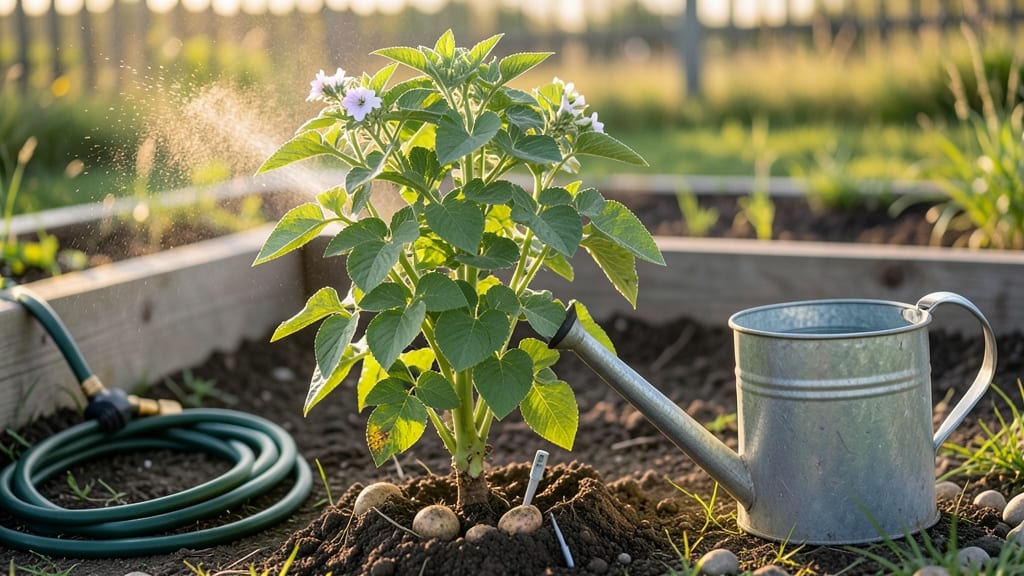
The perfect watering schedule for potato plants based on soil conditions
Potatoes need consistent moisture to develop plump tubers, but overwatering or underwatering can ruin your harvest. The key is providing 1-2 inches of water weekly while adjusting for your soil type—clay holds moisture longer, sandy drains fast, and loamy strikes the perfect balance.
I’ll show you exactly how to test your soil and tailor your watering schedule for maximum yield.
Most gardeners water based on guesswork, leading to shriveled potatoes or disease-prone plants. Instead, focus on soil moisture depth and plant signals. For example, clay soil may need watering every 5-7 days, while sandy soil could require daily checks.
The dry test method I’ll share ensures you never over- or under-water again.
Why soil type matters: Potatoes hate waterlogged roots but also suffer from drought stress. In clay soil, water pools at the surface, while sandy soil lets moisture escape like a sieve. Loamy soil—the gold standard—retains moisture without suffocating roots. Below is your customized watering guide based on your garden’s soil.
To test your soil’s moisture level, stick your finger 2-3 inches deep near the plant’s base. If the soil feels dry, it’s time to water. For clay soil, wait until it’s slightly dry—these soils stay damp for days.
In sandy soil, check daily because moisture evaporates quickly. Loamy soil is forgiving but still needs regular monitoring.
Adjust your schedule during hot weather or drought conditions. Potatoes in full sun lose moisture faster, so increase watering to daily if temperatures exceed 85°F.
Mulch with straw or grass clippings to retain moisture and reduce evaporation. I’ve found that a 2-inch mulch layer cuts watering needs by up to 30%.
Watch for plant stress signals: Wilting leaves or yellowing foliage often mean underwatering, while dark spots or mushy stems signal overwatering. Healthy potato plants have deep green leaves and sturdy stems. If you see blight symptoms (brown patches), reduce watering immediately and improve airflow around plants.
For container-grown potatoes, watering needs are more frequent because pots dry out faster. Check soil moisture every 1-2 days and water until water drains from the bottom.
Avoid letting containers sit in standing water, which causes root rot. I recommend using self-watering pots or drip irrigation for consistent moisture.
In the final 2-3 weeks before harvest, reduce watering slightly to harden the skins and improve storage life. This is especially critical for long-storage varieties like Russets. Stop watering 10 days before digging to prevent shriveling or skin damage.
Remember, consistency is key. Potatoes need steady moisture to grow, but sudden changes can shock the plants. Use a rain gauge to track weekly rainfall and supplement with 1 inch of water if nature doesn’t provide enough. With this soil-smart approach, you’ll harvest bountiful, disease-free potatoes every season.
Common watering mistakes that kill potato yields (and how to fix them)
Potatoes are surprisingly sensitive to watering extremes—too much causes rotten tubers and fungal blight, while too little leads to stunted growth and small harvests. I’ve seen gardeners drown their plants one week and then panic about wilting the next, both mistakes that shrink yields.
The key is finding that consistent moisture balance without guessing.
Most gardeners make the mistake of watering on a fixed schedule rather than checking soil conditions. Rainy days can turn your garden into a swamp overnight, while dry spells leave plants gasping for water. The solution? A simple soil dry test that takes just seconds but prevents costly mistakes.
- Rotten tubers: Too much water suffocates roots and causes soft rot in storage.
- Blight risk: Wet foliage invites late blight, a potato killer.
- Poor drainage: Clay soil holds excess water, doubling the danger.
Underwatering shows up as yellowing leaves and wilting stems, but the real damage happens underground. When soil dries out completely, potatoes stop growing and develop wrinkled skins. I’ve seen entire harvests ruined because gardeners assumed "a little water" was enough—until the plants collapsed mid-season.
Here’s the dry test method I swear by: Stick your finger 2-3 inches deep into the soil. If it feels dry but crumbly, it’s time to water. If it’s sticky or muddy, wait 2-3 more days. This simple check eliminates both over- and underwatering in seconds.
Another common trap? Watering only the leaves instead of soaking the roots. Potatoes need deep, even moisture—aim for 1 gallon per plant every 3-4 days during peak growth. Use a soaker hose or drip irrigation to deliver water directly to the soil, not the foliage.
Finally, never water at night. Damp leaves overnight create the perfect conditions for fungal diseases like blight. Stick to early morning watering so foliage dries quickly in the sun. With these fixes, your potatoes will grow plump, disease-free tubers instead of shriveled disappointments.