
Flowers
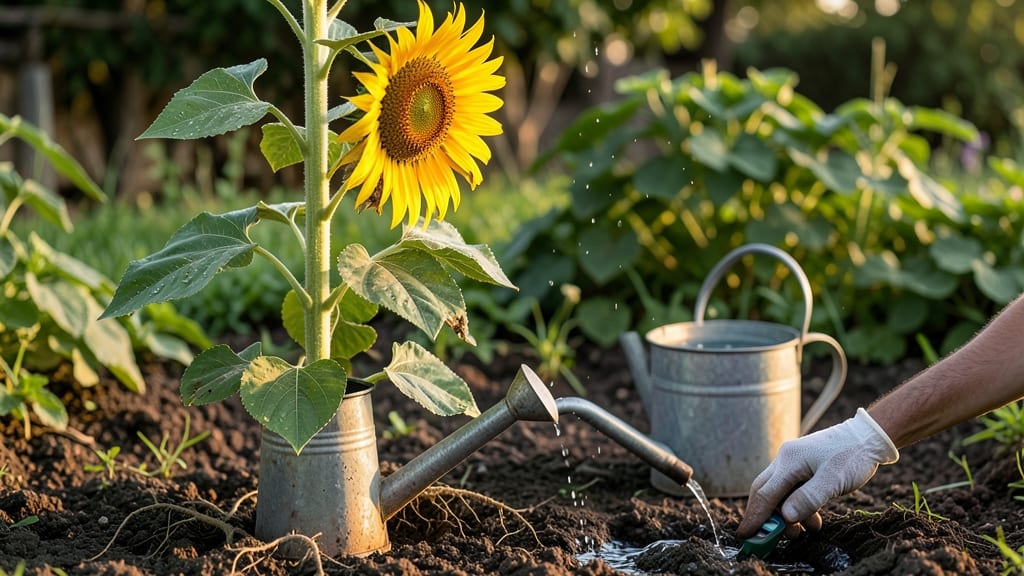
Sunflower watering schedule by growth stage: soil check method for perfect moisture
Sunflowers are surprisingly resilient, but their watering needs change dramatically from seedling to full bloom. Too much water causes weak stems and fungal diseases, while too little stunts growth and prevents those iconic cheerful blooms.
The key is checking soil moisture at the right depth and frequency for each growth stage.
Most gardeners make the mistake of watering based on a calendar rather than the plant's actual needs. I learned this the hard way when my 8-foot sunflowers wilted mid-summer despite daily watering—until I realized the soil was bone-dry 4 inches deep.
Here's how to water sunflowers like a pro using the deep-soil-check method.
🌱 PRO TIP: Always water in the early morning (before 10 AM) to prevent fungal diseases and maximize water absorption. Avoid evening watering, which keeps foliage damp overnight.
During the seedling stage, sunflowers need frequent but shallow watering to establish roots. Use your finger to check moisture at 1-2 inches deep—if it feels dry, water lightly. Overwatering at this stage causes root rot, which can kill young plants before they sprout.
When sunflowers reach the vegetative stage (3-8 weeks), shift to deeper watering every 3-5 days. Check soil moisture at 3-4 inches deep—this encourages roots to grow downward rather than staying shallow. I use a wooden dowel to test moisture: if it comes out clean, water thoroughly.
The flowering stage (8-12 weeks) is when most gardeners struggle. Sunflowers need consistent moisture but hate soggy soil. Check at 4-6 inches deep—water only when the soil feels completely dry. This prevents bud rot while maintaining stem strength for those towering blooms.
Once sunflowers have finished blooming, reduce watering to every 10-14 days. Mature plants are drought-tolerant, but check soil at 6+ inches deep before watering. This final stage prepares seeds for harvest and prevents premature wilting of the flower heads.
💧 CLIMATE ADJUSTMENT: In hot climates (like Arizona summers), water sunflowers every 2-3 days during peak heat. In cooler regions (like Pacific Northwest), stretch watering to every 7-10 days once established. Always adjust based on rainfall!
For container-grown sunflowers, increase frequency to every 2-3 days since pots dry out faster. Use a moisture meter or stick your finger 3 inches deep—if dry, water until it runs out the drainage holes. Never let containers sit in standing water.
5 Signs your sunflowers need water (and how to fix them without overdoing it)
Sunflowers are drought-tolerant once established, but their deep taproots still need consistent moisture to reach their full 8-14-foot potential. The key is spotting early signs of water stress before your plants start drooping dramatically.
I’ve learned the hard way—overwatering leads to root rot, while underwatering causes stunted growth. Let’s fix this together.
Here’s how to diagnose your sunflowers’ hydration needs using simple visual and tactile cues. Each sign comes with a tailored fix to restore balance without causing more harm. Your sunflowers will thank you with bold stems and vibrant blooms!
- 1. Wilting leaves by midday – If leaves droop by 10 AM but perk up in the evening, your sunflower is thirsty. Water deeply at the base (1-2 inches down) to encourage deep root growth.
- 2. Dry, crispy leaf edges – Brown or brittle edges mean underwatering. Increase watering to every 2-3 days in hot weather, and mulch with 2-3 inches of straw to retain moisture.
- 3. Yellowing lower leaves – While some yellowing is natural, sudden chlorosis (yellow patches) signals overwatering. Let the top 2 inches of soil dry before watering again.
- 4. Soft, mushy stems – A squishy stem at the base means root rot from overwatering. Stop watering immediately, loosen compacted soil, and let the area dry for 3-5 days before resuming.
- 5. Slow or stunted growth – If your sunflower isn’t growing 1-2 inches per week, it’s likely water-stressed. Water deeply 2-3 times per week and fertilize lightly with a 10-10-10 blend to boost growth.
For young sunflowers (seedling stage), check soil moisture daily—their shallow root systems can’t handle drought. Stick your finger 1 inch into the soil; if it’s dry, water gently until moisture reaches 2 inches deep.
Mature plants, however, only need watering when the top 2-3 inches of soil feel dry.
Pro tip: Water in the early morning (before 10 AM) to reduce evaporation and fungal risks. Avoid evening watering, as damp foliage overnight can invite powdery mildew.
If you’re unsure, use the “squeeze test”: Gently press the stem—if it feels firm but not brittle, your plant is hydrated!
Remember, sunflowers are resilient. With the right watering routine, you’ll see stronger stems and bigger blooms in just a few weeks. Start with these fixes, and soon your sunflowers will be reaching for the sky—literally! 🌻