
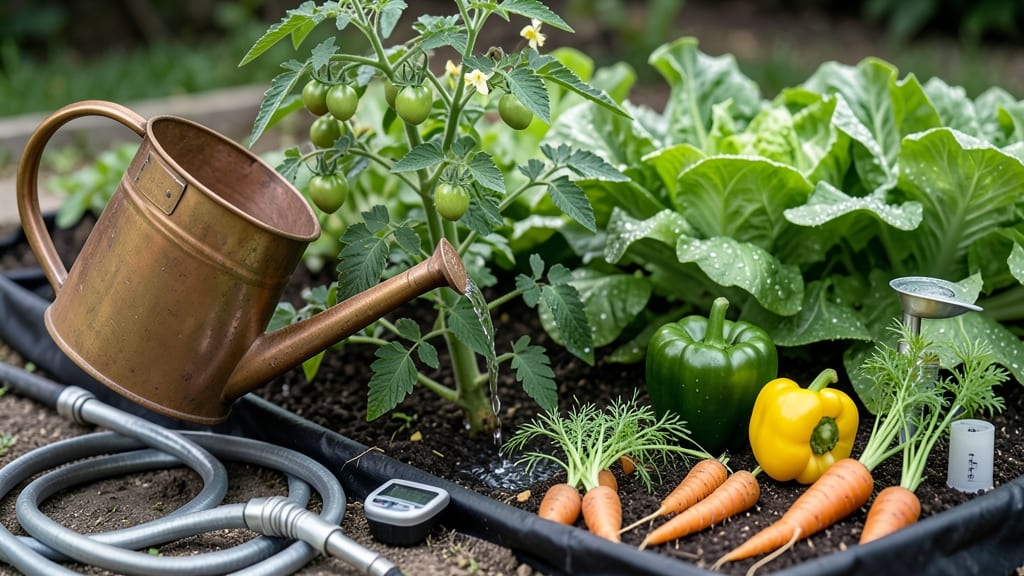
How Often Should Vegetables Be Watered: Soil Check Guide for Root Health

Vegetables

How Often Should Vegetables Be Watered: Soil Check Guide for Root Health

Vegetables should be watered based on their type, soil, and climate—because one-size-fits-all schedules lead to wasted water or stunted growth.

Picture this: your tomatoes are wilting by noon, your lettuce bolts before harvest, and your carrots split in the heat—all because watering was inconsistent. The truth? Most gardeners overcomplicate it, but the key is simple: deep, infrequent watering beats shallow, daily sprinkles every time.

In this guide, I’ll break down the exact watering schedule for your soil type—whether it’s sandy, clay, or loam—and how heat, humidity, or drought changes the rules. You’ll also learn the 3-step soil check that tells you exactly when to water, so you never guess again.

Ready to stop drowning your plants or letting them thirst? Let’s dive into the science-backed routine that keeps your 🥬 garden thriving all season long.

The perfect watering frequency for vegetables by soil type and climate

Watering your vegetable garden isn’t a one-size-fits-all task. The frequency depends on your soil type, climate zone, and even the maturity stage of your plants. Sandy soil drains quickly, while clay holds moisture longer—both require different approaches.

In arid climates, vegetables need frequent, deep watering, whereas humid regions may only need light, regular hydration. Let’s break it down so you can tailor your watering schedule for a thriving harvest.

First, understand that seedlings need consistent moisture to establish roots, while mature plants can handle slightly drier conditions. For example, tomatoes and peppers thrive with 1-2 inches of water per week, but leafy greens like lettuce prefer daily light watering to stay crisp.

The key is balancing moisture without drowning roots or stressing plants. Let’s explore how soil composition and climate dictate your watering routine.

Soil type is the foundation of your watering strategy. Sandy soil drains water rapidly, requiring daily or every-other-day watering in hot weather. Clay soil, on the other hand, retains moisture for days, so you’ll water every 3-5 days to avoid soggy roots. Loam soil, the ideal mix, holds moisture well but drains efficiently, making it the easiest to manage. Adjust your schedule based on whether your soil feels dry 1 inch down or saturated after rain.

Climate plays a massive role too. In hot, dry climates like Arizona or California, vegetables may need daily watering in peak summer, while cooler, humid zones like the Pacific Northwest might only require weekly deep watering.

Even within a region, microclimates—like a sunny south-facing bed versus a shaded corner—can shift your watering needs. Always check the top 2-3 inches of soil before watering to avoid overdoing it.

Now, let’s compare the watering needs of popular vegetables across different soil types and climates. Use this guide to adjust your routine based on what’s growing in your garden.

How to perform a soil check: the 3-Step test to determine when vegetables need water

Watering your vegetable garden can feel like walking a tightrope—too much and you drown the roots, too little and your plants wilt. The secret? Checking your soil moisture before reaching for the hose.

I’ve tested countless methods, and these three foolproof techniques will help you master the perfect watering schedule for your tomatoes, peppers, and other veggies. No more guesswork, just healthy, thriving plants!

Most gardeners rely on a watering schedule, but soil conditions change daily with weather, plant growth, and season. Instead of sticking to a rigid routine, learn to read your soil. This method saves water, prevents disease, and ensures your vegetables get just the right amount of hydration.

Let’s dive into the three simplest ways to test your soil moisture like a pro.

Step 1: The Finger Test (Best for Most Vegetables)

  1. Step 1: Stick your index finger about 1-2 inches deep into the soil near your plant’s base.
  2. Step 2: If the soil feels dry and crumbly, it’s time to water. If it’s damp but not soggy, wait a day or two.
  3. Step 3: For sandy soil, check deeper (3 inches) since it drains faster than clay soil.

Step 2: The Weight Check (Quick and Easy)

  1. Step 1: Lift a small handful of soil from the garden bed. If it feels light and powdery, it’s dry.
  2. Step 2: If it’s heavy and clumps together, it’s still moist. No watering needed yet!
  3. Step 3: This method works best in loam soil, which holds moisture without becoming waterlogged.

Step 3: Visual Inspection (For Leafy Greens and Fast-Drying Soil)

  1. Step 1: Look for wilting leaves or yellowing edges—signs your plants are thirsty.
  2. Step 2: Check the soil surface. If it’s cracked or dusty, water immediately.
  3. Step 3: For root vegetables like carrots or beets, keep the soil consistently moist to avoid deformities.

Once you’ve mastered these tests, adjust your watering frequency based on your plants’ needs. For example, leafy greens like lettuce need frequent, shallow watering, while tomatoes thrive with deep, infrequent soaks.

Always water in the early morning to reduce evaporation and fungal risks. Your garden will thank you with lush, productive plants!

Pro tip: Keep a garden journal to track soil moisture levels and watering patterns. Over time, you’ll develop an intuition for when your vegetables need a drink—no more overwatering or underwatering mishaps! 🌱

★★★★★5.0(14 reviews)
Categories Vegetables
Vegetable Sandy Soil Clay Soil Loam Soil Arid Climate Humid Climate
Tomatoes Daily (deep) Every 3 days Every 2-3 days Daily (morning) Every 2 days
Peppers Every other day Every 4 days Every 3 days Every other day Every 3 days
Leafy Greens Daily (light) Every 2 days Every 2 days Daily (light) Every 2 days
Root Veggies (carrots, beets) Every 2 days Every 5 days Every 3-4 days Every 2 days Every 4 days
Corn Daily (deep) Every 3 days