
Watering
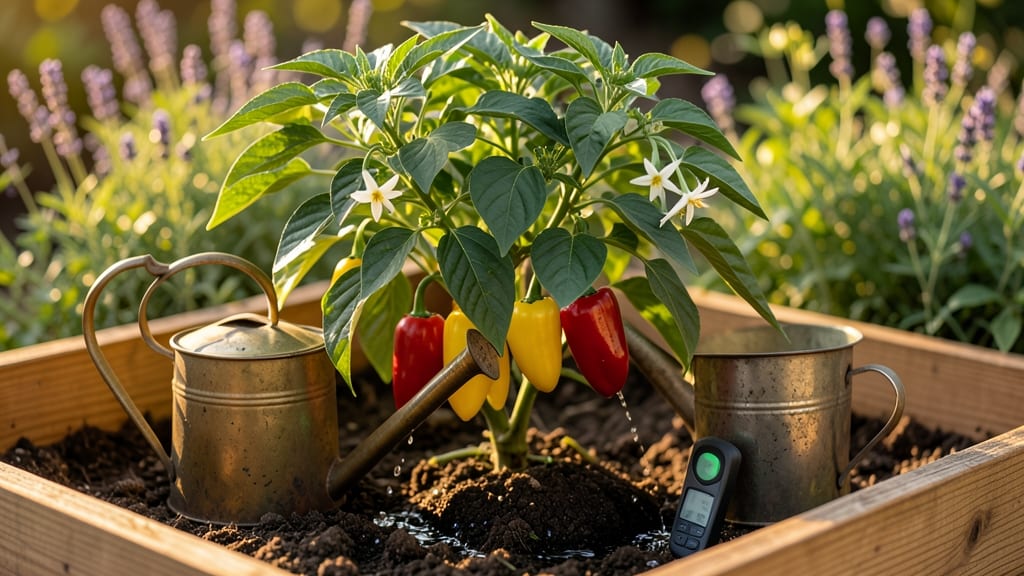
Watering pepper plants the right way means keeping them alive without drowning their roots—because too much or too little can turn your harvest into a gamble.
You’ve probably seen those sad, wilted 🌶️ plants in your garden, or worse, struggled with root rot from overzealous watering. The truth? Pepper plants need a consistent rhythm, but it changes as they grow from seedlings to fruiting powerhouses.
In this guide, I’ll break down exactly how often to water peppers at every stage—from the delicate seedlings in spring to the heavy-fruiters of summer—plus how to tweak your schedule for your soil, climate, and container setup.
By the end, you’ll know not just how much to water, but when to adjust, so your peppers stay perky, productive, and ready for the table.
Pepper plant watering schedule by growth stage (seedling to harvest)
Watering your pepper plants isn't a one-size-fits-all task—it changes dramatically as they grow from tiny seedlings to fruit-laden mature plants. I’ve learned this the hard way, watching my first batch of bell peppers wilt from inconsistent moisture or drown from overzealous watering.
The key is understanding each growth stage and adjusting your watering routine accordingly. Let’s break it down so you can keep your plants thriving from start to harvest.
Pepper plants have four critical growth stages: seedlings, vegetative growth, flowering, and fruiting. Each stage demands a different approach to watering. For example, seedlings need gentle, frequent moisture to establish roots, while fruiting plants require deep, consistent watering to support heavy pepper production.
Ignoring these differences can lead to stunted growth, blossom end rot, or even plant death. Here’s how to get it right at every stage.
Pro Tip: Always water in the morning to reduce evaporation and fungal risks. I’ve seen powdery mildew take over plants watered in the evening, so timing matters just as much as frequency. Now, let’s dive into the exact watering schedule you need for each stage.
| Growth Stage | Watering Frequency | Watering Depth | Signs of Overwatering | Signs of Underwatering |
|---|---|---|---|---|
| Seedlings (0-3 weeks) | Every 2-3 days | Light, 1/2 inch | Yellowing leaves, mold | Wrinkled soil, wilting |
| Vegetative Growth (3-6 weeks) | Every 3-4 days | 1 inch deep | Root rot, brown stems | Dry soil cracks, drooping |
| Flowering Stage (6-8 weeks) | Every 4-5 days | 1.5 inches deep | Blossom end rot, leaf drop | Stunted flowers, dry soil |
| Fruiting Stage (8+ weeks) | Every 5-7 days (deep water) | 2 inches deep | Mushy fruit, yellow leaves | Small peppers, crispy edges |
💧 Note: Adjust frequency based on climate and soil type—container plants dry faster!
During the seedling stage, your pepper plants are delicate and need gentle moisture to avoid shocking their tiny roots. I recommend using a spray bottle or a watering can with a fine rose to keep the soil evenly damp.
Overwatering here can lead to fungal diseases like damping-off, which kills seedlings before they even get a chance to grow. Stick to watering every 2-3 days and check the top inch of soil—it should feel moist but not soggy.
As your plants enter the vegetative growth stage, they’ll start putting on leafy growth and need more water to support their expanding root systems. This is when you can graduate to deeper watering—aim for 1 inch of moisture per session.
Watering every 3-4 days works well in most climates, but if you’re in a hot, dry region, you may need to water daily. Look for signs like wilting leaves or dry soil to guide your schedule.
The flowering stage is critical because inconsistent watering can cause blossom end rot or dropped flowers. Here, your pepper plants need consistent moisture to support fruit development. I’ve found that watering every 4-5 days with 1.5 inches of water per session keeps my plants happy.
Avoid wetting the leaves or flowers to prevent fungal issues. If you notice yellowing leaves or stunted growth, it’s a sign to adjust your watering routine.
Finally, during the fruiting stage, your pepper plants are working hard to produce heavy yields, and they need deep, infrequent watering to prevent stress. Water every 5-7 days, soaking the soil to a depth of 2 inches.
This encourages deep root growth and helps prevent cracked peppers or blossom end rot. If your peppers start looking small or crispy, it’s a sign they’re not getting enough water. On the flip side, mushy fruit or yellow leaves
How to adjust watering for pepper plant health (soil, climate, and container tips)
Pepper plants are fussy about water—too little and they wilt, too much and they rot. The key is adapting your watering routine to your soil type, local climate, and whether you're growing in containers or in-ground.
Let’s break down how to fine-tune your approach for healthy, productive peppers.
First, consider your soil composition. Sandy soil drains quickly, requiring more frequent watering, while clay soil holds moisture longer. If your soil feels gritty, water every 2-3 days in summer. If it’s dense and compacted, stretch watering to every 5-7 days to avoid soggy roots.
A quick soil test or the "squeeze test" (grab a handful—if it crumbles, it’s dry; if it sticks, it’s wet) helps.
Watering Adjustments for Different Conditions
For Sandy Soil
- Water every 2-3 days in hot weather
- Use mulch to retain moisture
- Water deeply to encourage root growth
For Clay Soil
- Water every 5-7 days to prevent waterlogging
- Avoid shallow watering—soak thoroughly
- Amend soil with compost for better drainage
Climate-Specific Watering
Hot/Dry Climates
- Water early morning to reduce evaporation
- Use drip irrigation for consistent moisture
- Check soil daily during heatwaves
Humid Climates
- Water less frequently (every 4-5 days)
- Avoid overhead watering to prevent fungal diseases
- Ensure good airflow around plants
Container vs. In-Ground
Containers
- Water every 1-2 days (pots dry faster)
- Use larger containers (5+ gallons) for stability
- Add water-retaining crystals to soil
In-Ground
- Water every 3-5 days (soil retains moisture)
- Mulch heavily to lock in moisture
- Water at soil level, not leaves
Your climate zone plays a huge role too. In hot, dry regions like Arizona or Texas, peppers need daily watering during peak summer, while in humid zones like Florida, you can cut back to every 4-5 days.
Always water in the early morning to let foliage dry before nightfall, reducing fungal risks like powdery mildew.
Container-grown peppers dry out faster than in-ground plants. If your peppers are in pots, check moisture daily—small containers (under 5 gallons) may need watering every 1-2 days. Use a moisture meter or stick your finger 1 inch deep into the soil; if it’s dry, it’s time to water.
For in-ground plants, focus on deep watering to encourage roots to grow downward.
Watch for visual cues like wilting leaves or yellowing stems. Drooping in the afternoon suggests underwatering, while mushy stems or yellowing lower leaves signal overwatering. Adjust your routine immediately—peppers are resilient, but they won’t recover from extreme neglect.
A little trial and error will help you find the perfect balance for your garden’s unique conditions.
Remember, consistency is key. Pepper plants thrive on routine, so stick to a schedule and adjust based on weather, soil, and container size. With these tweaks, you’ll avoid both wilting and root rot, ensuring a bountiful harvest of juicy, flavorful peppers all season long. 🌶️💧