
How To
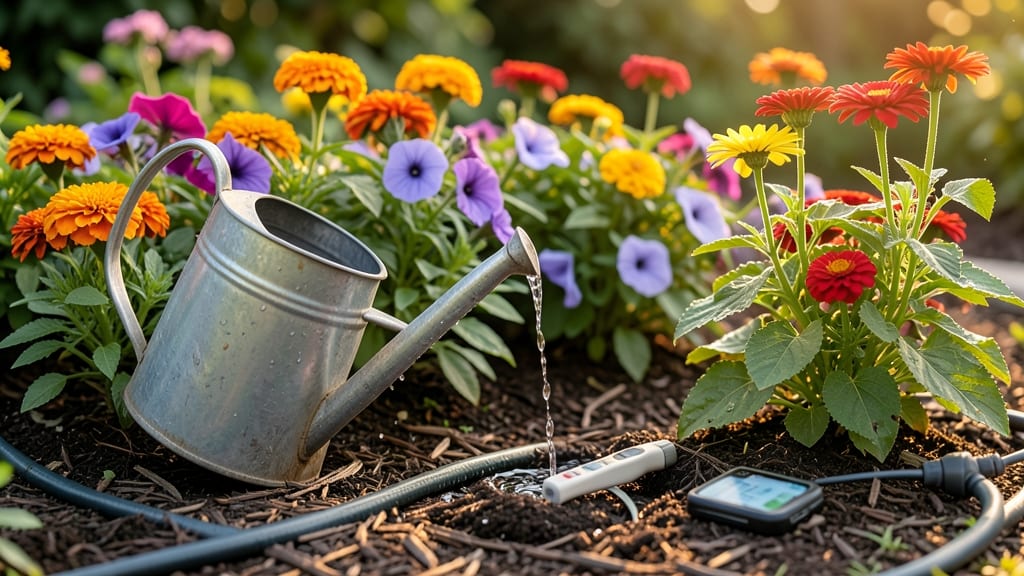
Watering annuals the right way means checking soil moisture—not guessing—because overwatering kills more plants than underwatering.
Most gardeners drown their 🌸 by following a rigid schedule, but the truth is, your tomatoes, basil, and marigolds all have different thirst levels. One finger in the dirt tells you exactly when to water, and I’ll show you how to read those clues like a pro.
Climate, pot size, and even the season throw off your watering rhythm. A drip irrigation system might save your veggies in July, while a self-watering pot keeps herbs happy in a city apartment. We’ll break down the science behind it so you stop wasting water—and plants.
By the end, you’ll know the exact triggers for each plant type, from wilting signs to the best tools to automate the process. No more guesswork, just thriving annuals all season long.
Soil-dry test triggers by plant type: when to water annuals
Annuals thrive on consistency, but their water needs vary wildly—from delicate basil to thirsty tomatoes. The key? A finger-check method that tells you exactly when to water, not just "when it looks dry."
Unlike perennials, annuals demand precision because their roots are shallow and growth is rapid. I’ll show you the soil-depth triggers for each plant type, so you water just enough—no guesswork.
Start by sticking your finger 1–3 inches deep into the soil. If it feels dry at that depth, it’s time to water. For herbs like cilantro, check the top 1 inch—they dry out fast.
For tomatoes or peppers, go 3 inches deep; their roots run deeper. The trick? Adjust based on plant maturity—seedlings need frequent, shallow water, while established plants prefer deep, infrequent soaks.
For herbs like basil, I water when the top 1 inch feels dry—usually every 1–2 days in summer. But if your tomato plants are wilting by noon, dig down 3 inches—if it’s dry, give them a deep soak.
The goal? Keep roots hydrated without drowning them. Overwatering suffocates roots, while underwatering stresses plants into early bloom or fruit drop.
Pro tip: Use a wooden skewer for potted plants—it’s gentler than your finger and reveals moisture levels instantly. For in-ground plants, press your finger sideways into the soil to avoid compacting it.
And always water early in the morning to prevent fungal diseases like powdery mildew, which thrives in damp leaves.
Watch for yellowing leaves—a classic sign of overwatering—or crispy edges, which means underwatering. Adjust your schedule based on weather: water daily in 90°F heat but reduce to every 3–4 days in cooler months.
Mulch with straw or shredded leaves to lock in moisture and cut down on weeding.
Even drought-resistant zinnia flowers need 1–1.5 inches of water weekly. If your soil is sandy, water more frequently; if it’s clay-heavy, space out waterings. The finger-check method works for all soil types—just adjust the depth.
For container gardens, I add water crystals to pots to automate moisture release, which is a lifesaver for busy gardeners.
Remember: Annuals can’t store water like succulents. Their shallow roots mean they rely on consistent moisture. By mastering these soil-dry triggers, you’ll avoid the two biggest killers—root rot and wilting—and enjoy a garden that’s always thriving, not struggling.
Start today: Grab a handful of soil and feel the difference between damp and dry. Your plants will thank you with vibrant blooms and bountiful harvests.
3 Critical factors that change your watering schedule
Your watering schedule isn’t one-size-fits-all—it shifts with climate, soil type, and even how mature your plants are. A tomato plant in July needs twice the water of the same plant in May, while sandy soil drains so fast it tricks you into overwatering.
I’ve seen gardeners drown their basil because they assumed "daily watering" worked for everything, only to watch their leaves turn yellow from root rot.
Even when you follow the "water every 2 days" rule, wilting leaves, moldy stems, or yellowing foliage can still appear. The issue? Your schedule didn’t account for humidity levels, container size, or the plant’s growth stage.
Let’s fix that by breaking down the three game-changers that force you to adjust your routine—and how to spot when your watering is actually wrong.
🌱 Factor #1: Climate and Season 🌱 Your watering rhythm changes with the weather forecast.
In 90°F heat, your marigolds might need water twice a day, while the same plants in 60°F spring thrive on every-other-day watering. Rainfall is another wildcard: After a downpour, skip watering entirely—unless your soil is sandy and drains like a sieve.
Pro tip: Use a rain gauge to track weekly totals and adjust accordingly.
- 🌡️ Climate Shift: Heatwave? Water morning + evening (deep soak). Drought? Group plants by water needs (e.g., lavender vs. zucchini).
- 🏺 Soil Type: Sandy soil? Water daily in summer (1 inch/day). Clay soil? Water every 3 days (soaks slowly). Potting mix? Check moisture every 1-2 days.
- 🌱 Plant Maturity: Seedlings? Keep soil consistently moist (mist daily). Mature plants? Water deeply 2-3x/week. Flowering stage? Reduce water slightly to prevent bud drop.
- ⚠️ Troubleshooting: Wilting? Check soil 1 inch down—if dry, water immediately. Yellow leaves? Likely overwatering (let soil dry 1 inch between waterings). Mold? Water at soil level, not leaves.
🏺 Factor #2: Soil Type Determines Drainage Speed 🏺 The biggest mistake? Assuming all soil behaves the same. Sandy soil lets water rush through in minutes, while clay soil holds moisture for days—sometimes too long. Test yours: Grab a handful and squeeze.
If it crumbles easily, it’s sandy (water more often). If it stays in a ball, it’s clay (water less). Potting mix is a middle ground but dries out faster than garden soil, so check it daily in summer.
🌱 Factor #3: Plant Maturity Changes Thirst Levels 🌱 A 2-week-old basil seedling needs a misty environment to prevent wilting, while a 6-month-old tomato plant can handle deeper, less frequent watering. Flowering annuals, like petunias, often need slightly less water to prevent bud rot.
Pay attention to new growth: If leaves feel limp but the soil is moist, your plant might be root-bound and needs repotting.
⚠️ When Your Watering Is Wrong (And How to Fix It) ⚠️ Wilting leaves? Stick your finger 1 inch into the soil—if it’s dry, water deeply. Yellowing leaves? You’re overwatering; let the top 2 inches dry out before adding more. Mold or fungus on stems?
Water at the base (not overhead) and space plants for airflow. Remember: annuals are resilient, but their needs change faster than you think. Adjust weekly, and your basil, tomatoes, and marigolds will reward you with vibrant growth all season.