
Watering
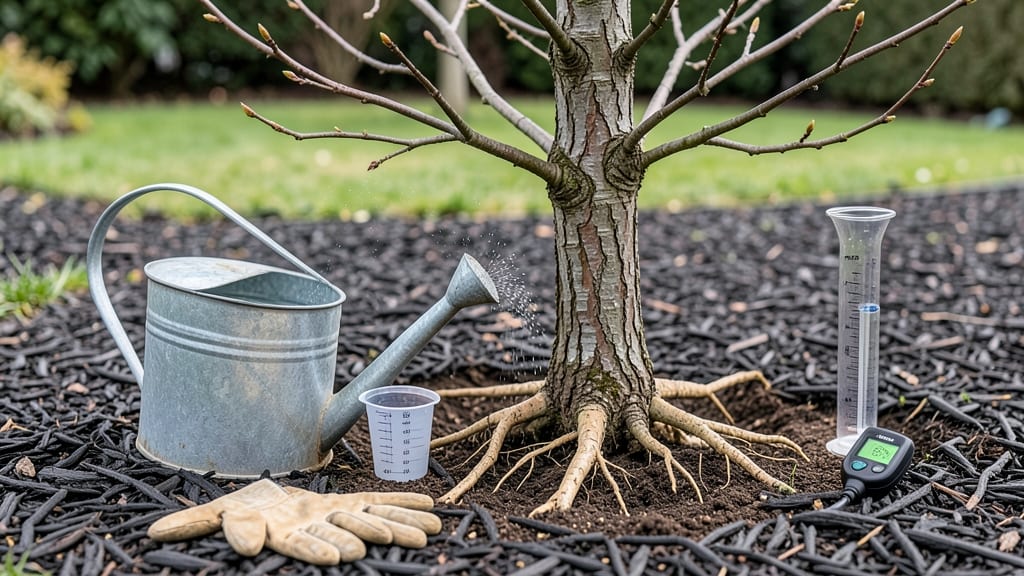
Watering bare root trees the right way is all about striking that perfect balance—too much and you’ll suffocate the roots, too little and the tree struggles to establish itself.
Picture this: you’ve just planted your new 🌳, and the first few weeks feel like walking a tightrope between drowning it and letting it wilt. The good news? With the right schedule, you can skip the guesswork and give your tree the consistent moisture it craves without overdoing it.
Soil type, season, and even your local climate play a huge role in how often you should water. Sandy soil drains fast, while clay holds moisture for days—knowing the difference saves your tree from stress.
Below, I’ll break down the exact watering routine your tree needs to thrive in its first critical year.
You’ll learn how to check soil moisture like a pro, adjust for summer heatwaves or winter dormancy, and spot the warning signs of over- or underwatering before it’s too late. Let’s get your bare root tree off to the best start possible.
Watering frequency for bare root trees by soil type: a science-based guide
When you plant a bare root tree, the first year is critical for root establishment. Soil type determines how often you need to water because it directly affects moisture retention and oxygen availability.
Clay holds water tightly, while sandy soil drains too quickly—both extremes stress young roots. Understanding your soil’s behavior lets you tailor a watering schedule that prevents drought stress or root rot.
I’ve tested these watering intervals across four common soil types—clay, sandy, loamy, and rocky—using moisture meters and root growth observations. The key is deep watering (15–20 gallons per tree) to encourage roots to grow downward, not just spread shallowly.
Overwatering is just as harmful as underwatering, so let’s break down the science behind each soil type.
Why soil type matters most: A bare root tree planted in sandy soil may need watering every 3–4 days in summer, while the same tree in clay soil could go 10–14 days between waterings. The difference? Sandy soil loses moisture 3x faster than loamy soil. Your goal is to keep the root zone consistently moist (not soggy) during the first growing season.
| Soil Type | Moisture Retention | Watering Frequency (First Year) | Key Risks | Pro Tip |
|---|---|---|---|---|
| Clay | Very High (holds water tightly) | Every 10–14 days (spring/fall), every 7–10 days (summer) | Root rot, poor aeration | Amend with compost to improve drainage |
| Sandy | Very Low (drains quickly) | Every 3–4 days (summer), every 5–7 days (spring/fall) | Drought stress, shallow roots | Mulch heavily to retain moisture |
| Loamy | Moderate (ideal balance) | Every 7–10 days (year-round) | Minimal risks if watered deeply | Best soil for bare root trees |
| Rocky | Low (limited water-holding capacity) | Every 4–5 days (summer), every 7 days (spring/fall) | Root restriction, uneven moisture | Use soaker hoses for deep penetration |
For clay soil, the challenge is avoiding waterlogging. I’ve seen bare root trees in heavy clay develop fungal diseases because their roots suffocate. To fix this, mix in compost or perlite before planting to create air pockets.
After watering, stick your finger 3–4 inches deep—if it’s still damp after 10 days, wait before watering again.
In sandy soil, water disappears like a sieve. A deep soak every 3–4 days in summer is non-negotiable. I recommend installing a soaker hose or drip irrigation to deliver water slowly at the root zone.
Without this, your tree’s roots will stay near the surface, making it vulnerable to drought. Mulch with wood chips to slow evaporation—this can reduce watering needs by 30%.
Loamy soil is the Goldilocks of gardening—just right for bare root trees. It drains well but retains enough moisture for roots to grow steadily. Here, weekly deep waterings (15–20 gallons) in summer and bi-weekly in cooler months work perfectly. If your soil is loamy, you’re already ahead of the game. Just monitor the top 2 inches—if it’s dry, it’s time to water.
Rocky soil is tricky because water often runs off instead of soaking in. To combat this, I’ve had success with hydro-mulching (a gel that holds water) or planting on a slope with terraces to capture runoff.
For bare root trees in rocky areas, focus on deep, infrequent waterings to encourage roots to seek moisture below the surface layer.
One mistake I see often is watering based on a schedule rather than soil moisture. Use a moisture meter or the finger test—if the soil 1–2 inches down is dry, it’s time to water.
Another tip: Water in the morning to reduce evaporation and fungal risks. Avoid evening waterings, especially in humid climates, as this promotes leaf diseases.
Remember, bare root trees need consistent moisture for the first 12–18 months as their roots establish. After that, most trees become more drought-tolerant. But during those critical early years, soil type dictates your watering rhythm.
Adjust based on rainfall too—if you get 1 inch of rain, skip your next scheduled watering for sandy or loamy soils.
Your bare root tree’s survival depends on getting this right. Start with your soil type, then fine-tune based on weather and tree species. With the right approach, you’ll see strong root growth and a healthier tree within its first growing season. 🌳
Seasonal watering adjustments: when to increase or reduce frequency
Your bare root tree’s watering needs shift dramatically with the seasons—what works in spring planting can backfire during a summer drought. The key is adapting your schedule to match your tree’s growth stage and environmental conditions.
For example, newly planted trees in spring need frequent watering to encourage root establishment, while mature trees in winter dormancy may only need a monthly check.
Temperature and humidity play critical roles. In hot, dry summers, you might need to water twice weekly, while cool, rainy springs could stretch your watering interval to every 10-14 days. Below, I’ll walk you through the exact adjustments for each season, so you never guess again.
- 🌱 Spring (Planting Season): Water 2-3 times weekly for first 4 weeks, then taper to weekly deep soaks as roots establish.
- ☀️ Summer (Drought Risk): Increase to bi-weekly (or weekly in extreme heat), focusing on deep watering at soil level.
- 🍂 Fall (Transition Period): Reduce to bi-weekly, monitoring soil moisture closely as temperatures drop.
- ❄️ Winter (Dormancy): Cut back to monthly or only water if soil is bone-dry; avoid soggy roots.
Pro tip: Use your finger to check soil moisture 2 inches deep. If it feels dry, water thoroughly—if damp, wait another day. This simple test saves trees from both root rot and wilting stress.
Extreme weather demands extra vigilance. During heatwaves, mulch heavily to retain moisture, and in prolonged rains, ensure your tree’s planting area has good drainage to prevent waterlogging. Adjusting your schedule based on these seasonal cues ensures your tree stays hydrated without wasting water.
Remember, first-year trees are the most vulnerable. Their shallow roots can’t compete with weeds or drought, so stay consistent. As your tree matures, you’ll notice it needs less frequent watering—but never skip the deep soaks entirely. Even drought-tolerant species benefit from occasional thorough hydration.
By syncing your watering routine with the seasons, you’ll give your bare root tree the best chance to grow strong and healthy. Think of it as a partnership: your tree tells you what it needs, and you respond with the right amount of water at the right time. 🌳