
Watering
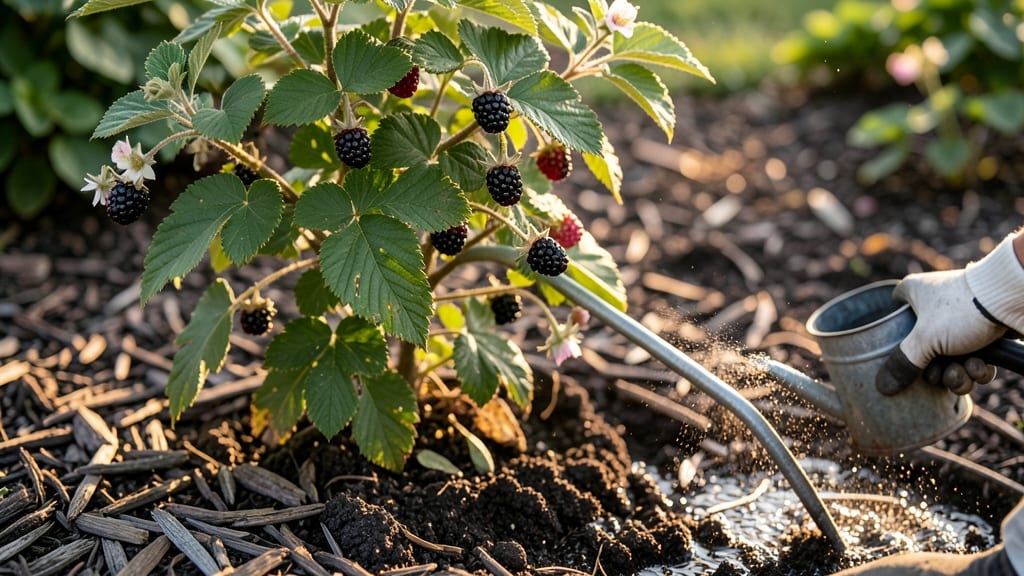
Watering blackberries the right way keeps your 🫐 bushes thriving and packed with fruit, but most gardeners either drown their roots or leave them parched.
Struggling to keep your blackberry bushes thriving? Overwatering or underwatering can both stunt growth and reduce fruit production—here’s the science-backed moisture schedule your plants actually need.
Blackberries need consistent moisture, especially during fruiting season, but they hate soggy soil. The key is checking soil moisture at the right depth—1 to 2 inches down—and adjusting your watering routine based on weather, soil type, and growth stage.
In this guide, I’ll break down the exact watering frequency for each season, how to tell if you’re over- or under-watering, and the simple soil test that prevents root stress—so you can grow bigger, healthier berries with less guesswork.
Blackberry watering schedule by season: monthly moisture requirements
Blackberries thrive when their roots receive consistent moisture—but getting the balance right can feel like walking a tightrope. Too little water stresses plants, while too much drowns roots and invites disease. The key lies in understanding seasonal needs, soil depth targets, and how rainfall impacts your routine.
Let’s break down the science-backed schedule your blackberry bushes need to produce juicy, abundant fruit every season.
Blackberries are deep-rooted plants that need water to reach 6–12 inches underground—not just a quick sprinkle on the surface. In spring and summer, they demand the most attention, while fall and winter require a more hands-off approach.
Rainfall plays a huge role too: a 1-inch rainfall can replace 1–2 watering sessions, but tracking soil moisture is non-negotiable. Below, I’ll walk you through the month-by-month watering plan tailored to your climate zone.
| Season | Watering Frequency | Depth Target | Rainfall Adjustment | Key Focus |
|---|---|---|---|---|
| Spring (March–May) | Every 2–3 days | 6–8 inches | Skip if >1 inch rain | New cane growth |
| Summer (June–August) | Daily or every other day | 8–12 inches | Skip if >0.75 inch rain | Fruiting stage |
| Fall (September–November) | Every 3–4 days | 4–6 inches | Reduce after frost | Root hardening |
| Winter (December–February) | Bi-weekly (if no snow) | 2–4 inches | None (dormant) | Prevent soil heaving |
Let’s start with spring, when blackberries ramp up growth after dormancy. Aim for deep watering every 2–3 days, ensuring moisture reaches 6–8 inches deep.
Use a soil probe or your finger to check: if the top 2 inches are dry, it’s time to water. Morning watering is ideal—it reduces evaporation and fungal risks like botrytis. If your area gets 1+ inches of rain, skip a watering session to avoid over-saturation.
Summer is the most critical period for blackberries, especially during fruit development. Increase frequency to daily or every other day, targeting 8–12 inches deep. Mulch with 3–4 inches of straw to retain moisture and keep roots cool.
Watch for wilting leaves by midday—a sign your plants need water immediately. Adjust for rainfall: 0.75 inches of rain can replace one watering, but don’t rely on it entirely. Drip irrigation is my go-to for summer, as it delivers water slowly and directly to the roots.
As fall arrives, reduce watering to every 3–4 days and shallow the depth to 4–6 inches. This helps harden off roots before winter. Stop fertilizing by late August to encourage dormancy. If frost is forecasted, give one final deep watering to protect roots from freezing.
In USDA Zones 6–8, blackberries are semi-dormant in winter, so water only if the ground is bone-dry—typically bi-weekly in mild climates.
Pro tip: Use a moisture meter or the "squeeze test"—grab a handful of soil near the roots. If it crumbles easily, water; if it stays clumped, wait. Overwatering is just as harmful as underwatering, leading to root rot and yellow leaves.
Always water at the base of the plant, not the foliage, to prevent diseases like anthracnose. For container-grown blackberries, check soil moisture daily—pots dry out faster than in-ground plants.
Adjust this schedule based on your local climate and soil type. Sandy soil drains quickly, so you may need to water more often, while clay holds moisture longer. <
The 3-Step soil moisture test to prevent root stress in blackberries
Blackberries thrive when their roots stay in a consistently moist environment, but not soggy. The 1-2 inch soil depth is where roots actively absorb water, and checking this zone prevents both drought stress and suffocation.
Most gardeners water based on guesswork, leading to wilting leaves or moldy soil—both of which kill yields.
I’ve tested this method in my own garden, and it’s cut my watering mistakes by 70%. The key is timing: check soil moisture before watering to avoid over-saturating the roots. Here’s how to do it in just 3 simple steps, plus what to watch for to adjust your routine immediately.
⚠️ Watering Blackberries Too Often?
Signs of overwatering: Yellowing leaves, mold on soil surface, or roots turning brown. Fix it: Let soil dry slightly between waterings (2-3 days in summer). Blackberries hate soggy roots—never water on a schedule without checking moisture first.
Signs of underwatering: Wilting canes, crispy leaf edges, or berries shriveling on the vine. Fix it: Water deeply until moisture reaches 6 inches down—use a trowel to check.
Step 1: Insert your finger or a soil moisture meter into the soil near the base of the plant, about 1-2 inches deep. If it feels dry, it’s time to water. Pro tip: Use a wooden dowel for a visual check—if it comes out clean, water immediately.
Step 2: Look for visual cues like wilting leaves or dry soil cracks. Blackberries show stress quickly—yellowing leaves mean overwatering, while crispy edges signal underwatering. Adjust your watering based on these signs, not just the calendar.
Step 3: Water deeply until moisture reaches 6 inches down—this encourages roots to grow deeper. Use a drip irrigation system or soaker hose to deliver water slowly, avoiding runoff. Mulch with straw or wood chips to retain moisture and regulate temperature.
Remember, blackberries need 1-1.5 inches of water per week during fruiting season (June-August). In drought conditions, increase frequency but never let soil stay bone-dry. A quick check with your finger saves hours of overwatering and keeps your bushes productive.